

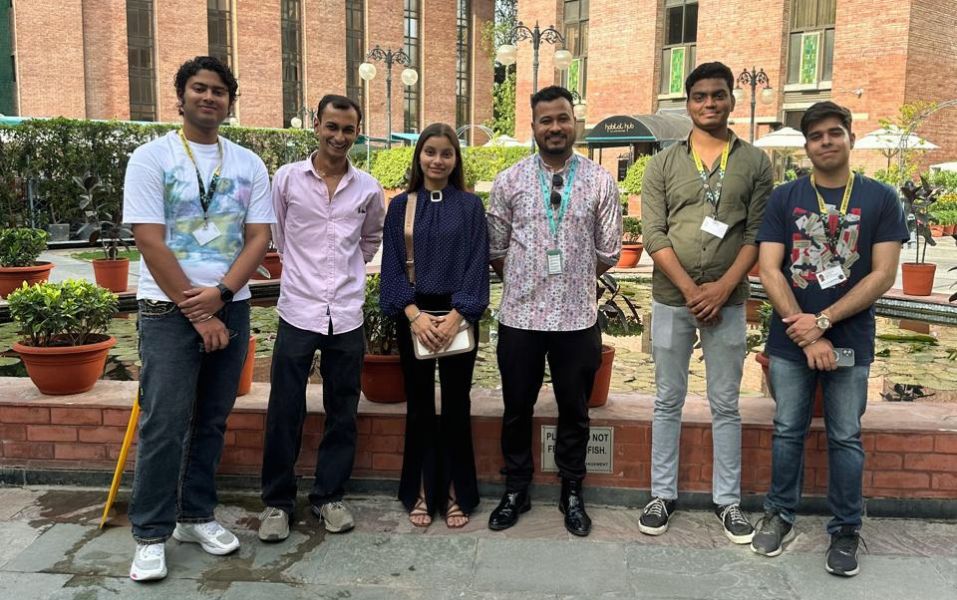
Spaces are rarely noticed for what they do, only for how they look.
But at the India Habitat Centre, design reveals itself through movement, balance, and quiet functionality.
Our Interior Design Jediiians stepped into this environment not as visitors, but as observers of space, studying how landscape and architecture come together to shape everyday experiences. Guided by Rohit Bharti, the Head of Department (HOD) of Interior Design, the visit turned into a close reading of how design works beyond drawings and into real life.
At India Habitat Centre, design is not loud, it is thoughtfully integrated. Students were encouraged to slow down and observe how different elements come together to create a cohesive spatial experience.
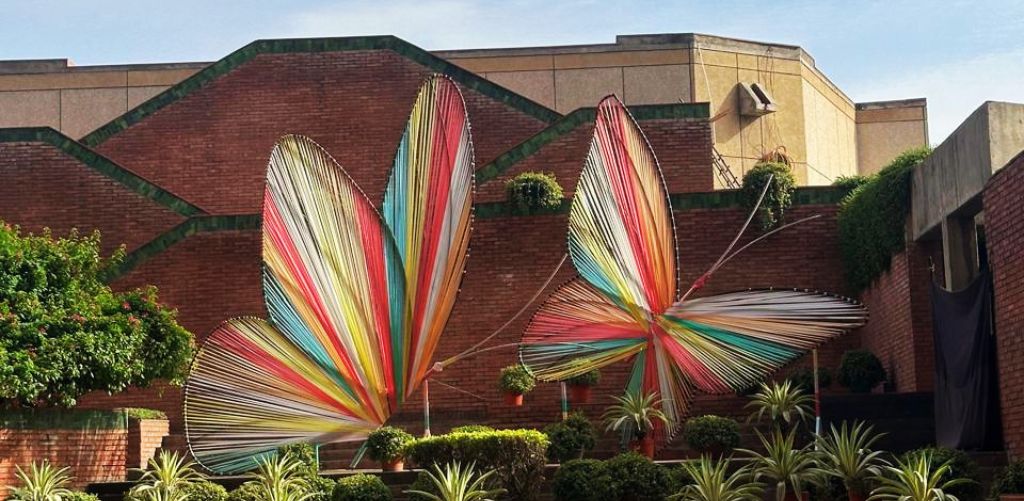
They explored:
Instead of memorising concepts, students could now see and feel how these principles shape environments.
As the session progressed, students began analysing the relationship between built structures and landscape. The focus was not just on what was designed, but how and why it was designed that way.
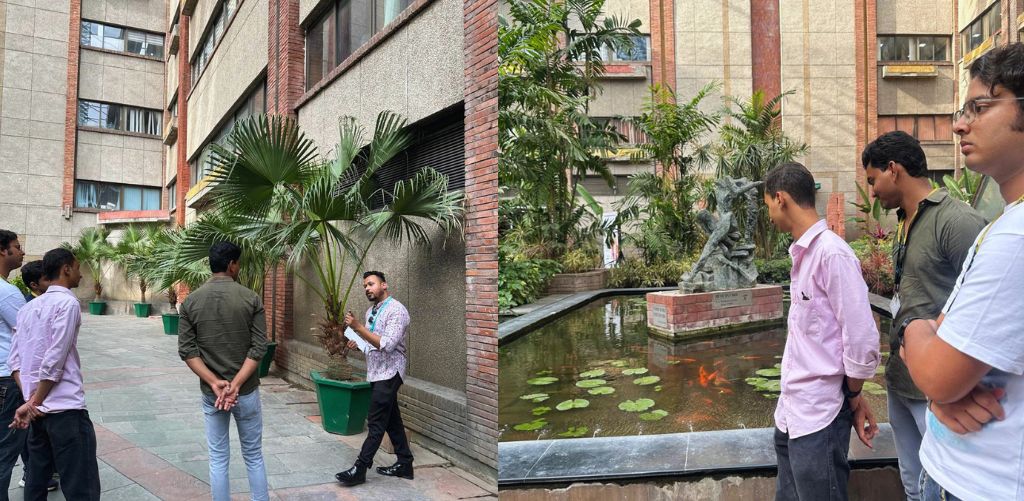
They studied:
This helped them understand that landscape design is not decorative, it is functional, intentional, and deeply connected to user experience.
The visit did not end at observation. Students documented their findings and will now translate them into detailed drawings and analysis, reinforcing what they experienced on-site.
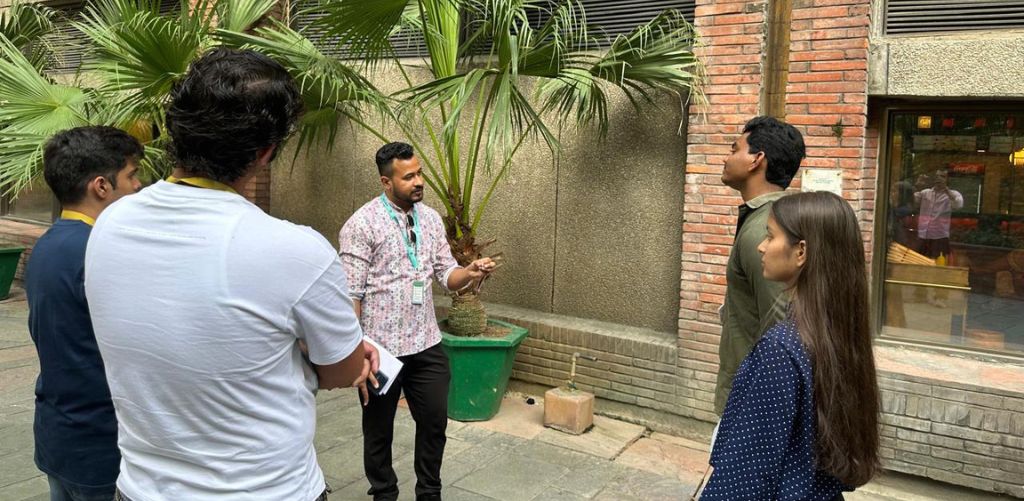
This step ensures that learning moves from:
Seeing → Understanding → Applying
Students who were unable to attend have been encouraged to visit the site independently, ensuring that the learning remains consistent and complete for everyone.
By the end of the visit, students developed a more refined way of looking at spaces.
They gained:
This experience reinforced them to learn that good design is often invisible, it works quietly, guiding how people move, feel, and interact within a space.
At JD Institute, students are encouraged to step into spaces not just as observers, but as analysts of experience. By engaging with real environments, they begin to understand that design is not limited to drawings or concepts, it exists in how spaces are used, felt, and interpreted.
A well-designed space doesn’t ask for attention, it earns it through experience.
 Design Blogs
 Watch on youtube


 Downloads

Copyright © 2025 JD Institute of Fashion. All Right Reserved
Designed by




 Quick Menu