

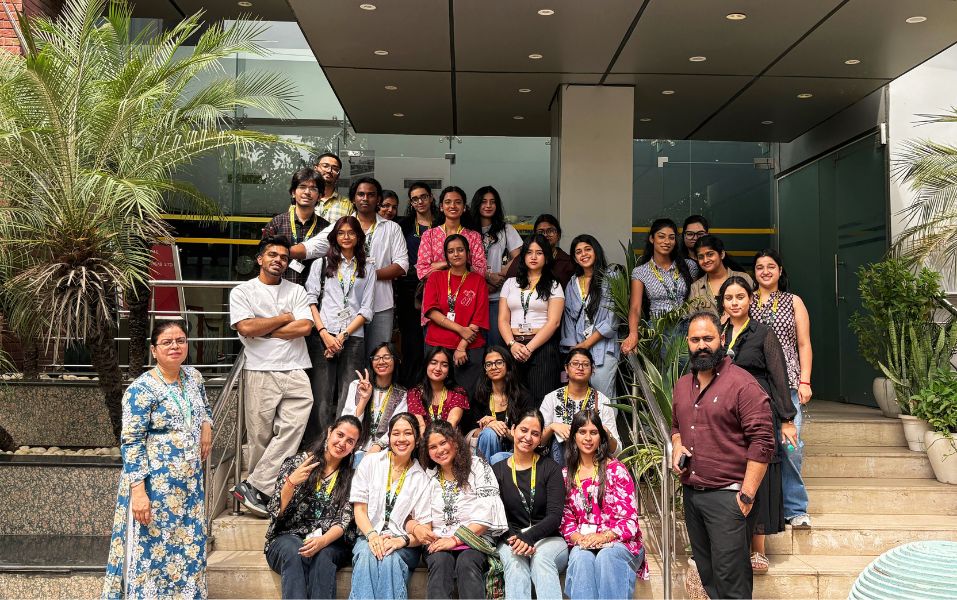
A garment seen in stores often begins far from the spotlight.
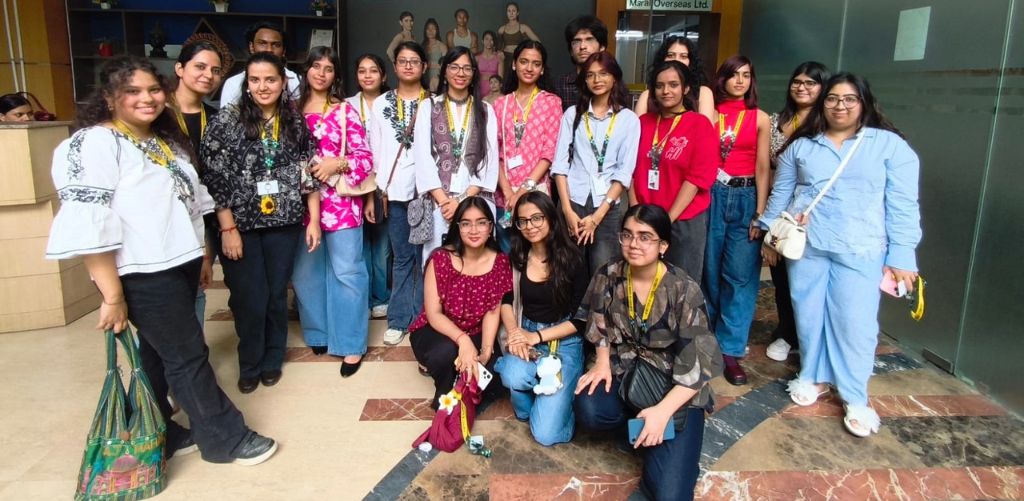
Before it reaches shelves, it passes through a world of precision, coordination, testing, and technical expertise. To understand this journey, JD Institute’s Fashion Design students from the Kamla Nagar and Hauz Khas Village campuses visited Maral Overseas, an export house producing garments for leading global brands such as Adidas, Brooks Brothers, Superdry, and Marc O’Polo.
The visit gave students direct exposure to the end-to-end garment manufacturing process, helping them understand how creative concepts are transformed into finished products at an industrial scale.
Students were guided through the complete production cycle, beginning with fabric preparation and ending with final packaging.
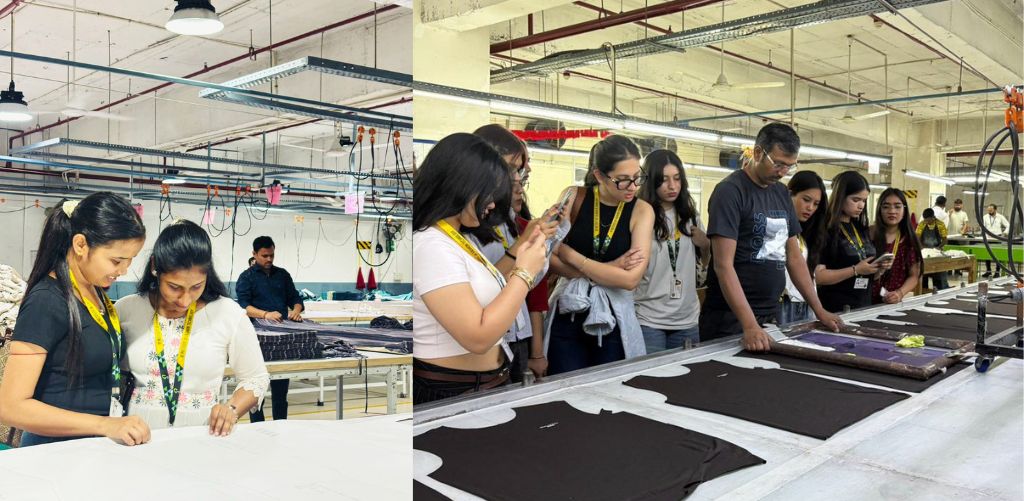
They observed:
1. Fabric Relaxation
Before production began, fabric was allowed to rest so that any built-up tension could be released. This helped prevent shrinkage and ensures consistency during further processing.
2. Spreading
Layers of fabric were spread evenly across cutting tables, ensuring accuracy and minimising material wastage.
3. Cutting
Using precise patterns, the fabric was cut into garment components that was later assembled.
4. Ticketing & Bundling
Each cut piece was labelled and grouped for easy identification, tracking, and smooth movement through production lines.
5. Sampling
Sample garments were created to test fit, construction, design details, and quality before bulk production began.
This sequence helped students understand that manufacturing is built on discipline, order, and precision.
The visit also introduced students to specialised methods used to enhance garments and meet brand-specific requirements.
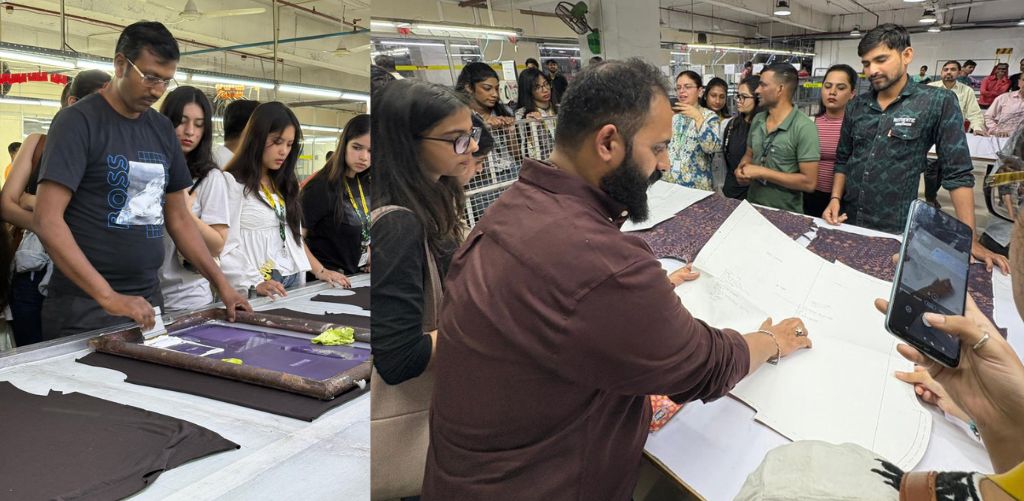
They explored:
These techniques showed students how functionality and branding are integrated during production.
The final stages of production demonstrated how garments are prepared for international markets.
Students observed:
Garments are labelled with brand tags and folded according to specific brand guidelines.
Checks are carried out at every stage to maintain consistency, accuracy, and defect-free output.
Finished garments are packed carefully for export, meeting global shipping and presentation standards.
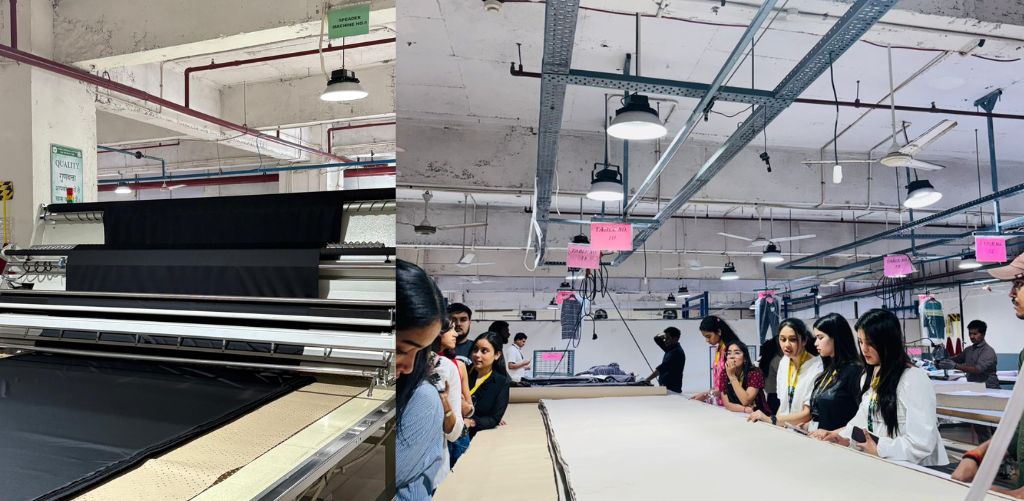
This helped students understand that the final impression of a garment is shaped as much by finishing as by design.
By the end of the visit, students gained a broader understanding of fashion as both a creative and operational industry.
They learned:
This experience reinforced that a successful design is one that can be executed efficiently without losing its intent.
At JD Institute, students are encouraged to see design as more than creation, it is also collaboration, production, and real-world execution. By placing them inside functioning industries, they learn how ideas move through systems, teams, and technical processes.
Great fashion is not only designed well, it is produced well.
 Design Blogs
 Watch on youtube


 Downloads

Copyright © 2025 JD Institute of Fashion. All Right Reserved
Designed by




 Quick Menu