

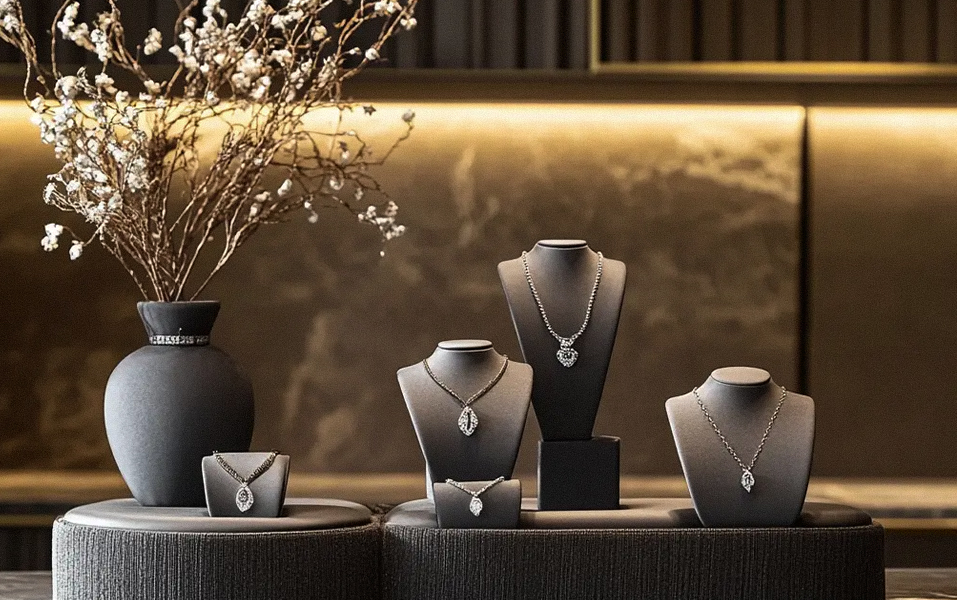
Ever notice how jewellery stores never feel cluttered?
Just one necklace on a velvet stand, soft lights, and lots of empty space, yet it feels expensive instantly. That’s the power of jewellery visual merchandising.
These displays aren’t just clean and minimal for looks, they’re built to make every piece shine, literally and emotionally. And if you’re a future visual merchandiser, this is your first styling masterclass.
At JD Institute, the Visual Merchandising course, teaches exactly how to craft these high-end presentations that feel simple but sell smart, the real secret behind why jewellery displays always look so clean and minimal.
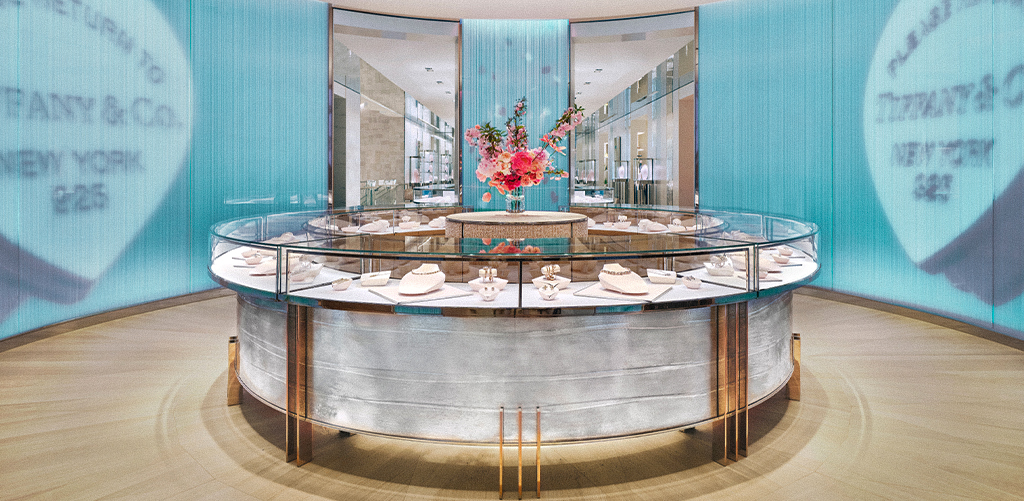
Think of Tiffany & Co., their iconic displays usually have one item, perfectly centered, with tons of empty space around it. That’s no accident. This is called negative space, and it gives the product a stage of its own.
Why it works?
Minimalist layouts keep your eyes focused on the piece. No clutter, no chaos, just one powerful statement. It adds to the luxury feel, almost like the jewellery is saying, “I’m too important to be surrounded by noise.”
Aspiring VM students must master how to use space smartly. It’s not about filling every inch of a window, it’s about knowing what to leave out. This is a big focus in JD Institute’s course of Visual Merchandising, where students explore spatial storytelling as a luxury display tip.
Ever seen a Cartier window at night? Their pieces literally glow. That’s because they use targeted lighting, spotlights, soft halos, sometimes even LEDs beneath the product to bring out every sparkle. This kind of high-end presentation makes even the simplest gold band feel special.
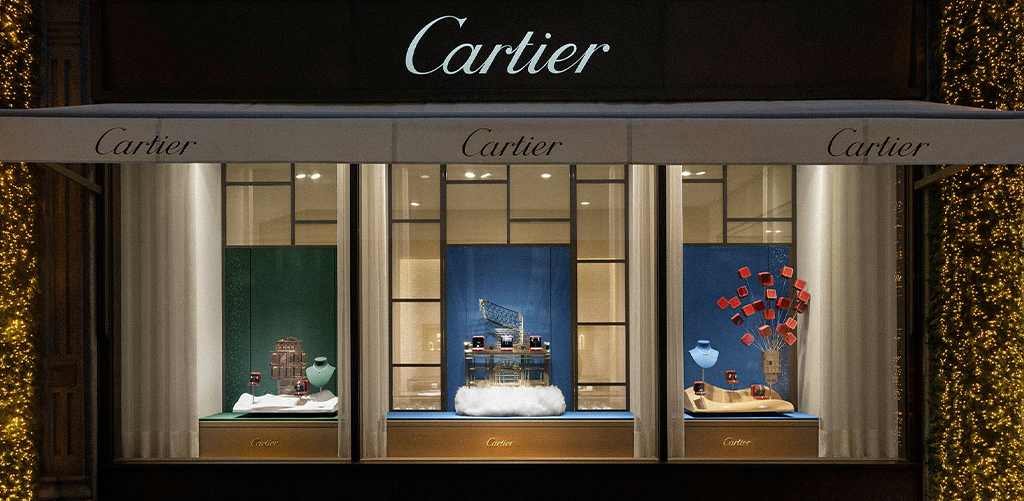
Great VMs know: jewellery doesn’t shine unless you make it shine. Lighting can create depth, drama, and desire all without saying a word. Students learning Visual Merchandisng must experiment with lighting angles and reflections.
You won’t find loud posters or 50% off signs in a Bvlgari or Chopard boutique. Instead, they let the product and environment tell the story. A single pearl necklace next to a minimalist coral sculpture might whisper, “Inspired by the sea.” That’s quiet storytelling, and it’s powerful.
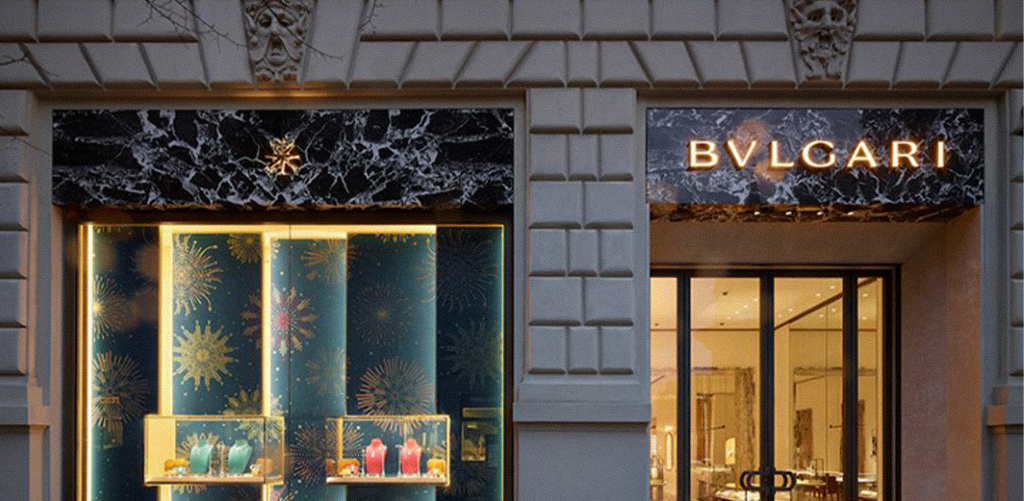
Minimal displays let customers project their own story on the product. The clean setting becomes a blank canvas, helping shoppers imagine how the piece fits into their life. Aspiring merchandisers must learn how to hint at a theme using subtle cues, materials, textures, and props without overcrowding.
Let’s take Mejuri, a digital-native brand known for its modern, minimalist aesthetic. Even in their physical stores, the atmosphere feels light and breathable, as if there’s a purpose to every angle and every surface.
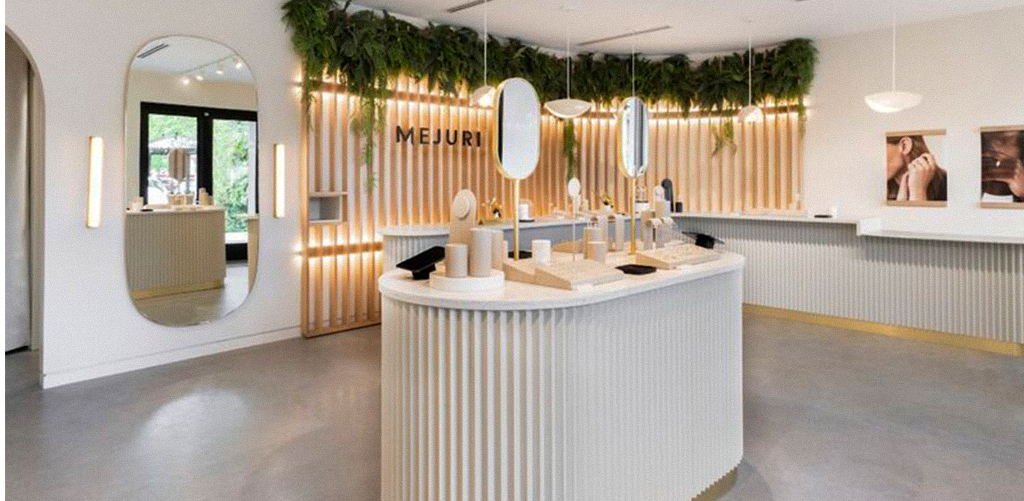
From mirror placement to product stands, nothing feels random. This kind of intentional design helps customers relax, take their time, and explore. It also helps the jewellery pop because clean surroundings elevate details.
For students entering this field, it’s key to understand that minimal doesn’t mean boring. It means being extremely thoughtful.
Yes, even minimal jewellery displays are embracing tech, but only when it enhances the product. For example, Kendra Scott stores use sleek digital screens to show how a necklace looks when layered, but the screens are seamless and never overpower the product display. The goal? Keep it clean, but smart.
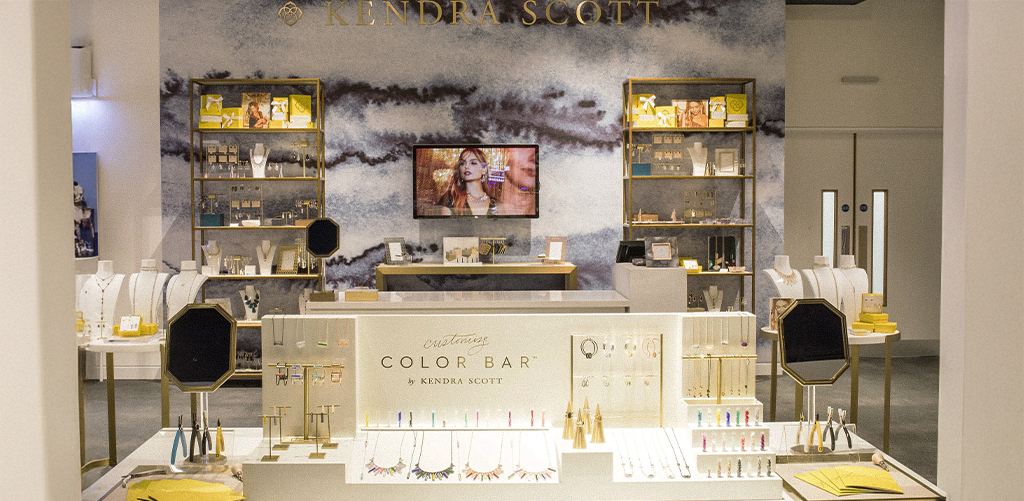
Future VMs must learn when to bring in tech, and when to let the product shine on its own. Smart integration of event tech in display design is the kind of forward-thinking skill every student must master.
If you’re someone who notices the way a single ring is spotlighted on a velvet cushion or how a store layout subtly tells a story, you’re already thinking like a Visual Merchandiser. So why not take that instinct further? JD Institute doesn’t just teach trends, it trains your eye to design experiences, especially in luxury retail. And if that sounds like your kind of challenge, it’s time to turn your talent into your career.
 Design Blogs
 Watch on youtube


 Downloads

Copyright © 2025 JD Institute of Fashion. All Right Reserved
Designed by




 Quick Menu