

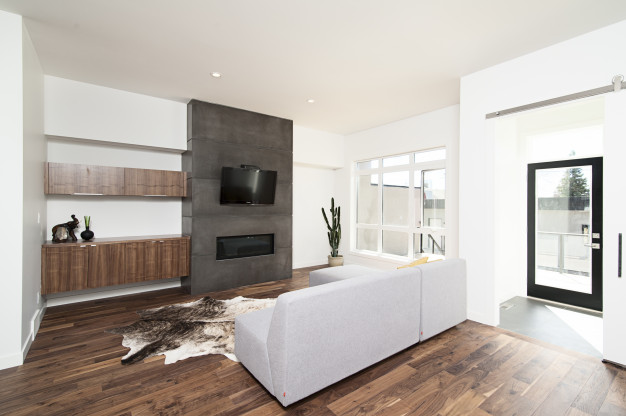
Decorating your home is not a big ball game that you can’t achieve. Be it managing budgets or handling other stuff, there are some quick and easy things you can do to make your interiors stand out. Right from writing a design brief to finding your own design style, here we suggest some of the eight basic decorating tips that you can use while styling your place.
1. Find your interior designing style: The “Style & Error” technique is one of the fundamental methods you should use for solving problems that involve right from designing to interior decorating. “Style & Error” basically means to do varied and repeated attempts in order to find the right style that fits just right in at your place. It can be as unsystematic as you like. Don’t expect this method to come out as static and finite, it can also be unsystematic. This “Style & Error” operation continues throughout your life of interior designing. This method is the fun part of your whole interior designing career. Enjoy finding out your own interior designing style and work accordingly.
2. Create a design brief: Even if you are going to design your place on your own, you still need to follow a particular process. The right way to start all of it is with a design brief or a wish list containing all of your design wishes. A good design brief certainly focuses on the outcome of the chosen designs. A design brief is like a referral that includes all the details including what needs to be done in this particular project, design ideas, budget and how to go about all of it. You can even draw inspiration from multiple sources. Brainstorm all the ideas you have on your mind. You can fetch out to any source of inspiration right from magazines to journals. These will provide you with all kinds of design ideas.
3. Make good use of provided design samples: Samples are a very useful tool when used efficiently and properly. At the beginning of every project, you would be provided with a possible number of sample options from which you can choose. The sample acts as a reference and to draw inspiration for many other materials. As we move forward in the project, these samples act as a record of selections. Always try to keep samples with you. It acts as a reference as to what colour and texture we could use. Keep samples safely in a master file from where all of it can be safely accessible. While choosing a fabric, make sure to order extra fabric as an insurance policy. This trick is done just to make sure that if something unthinkable happens you would still be able to restore all of your designs within a particular span of time. Be prepared for whatever lies ahead during your interior designing project.
4. Don’t forget to layer your lighting: Great interiors always have a varied variety of layered lightings that can be individually used according to the preference and mood of the individual. Most rooms require three types of lighting that are named as general, accent and task lighting. General lighting lights the room in a uniform manner. Accent lighting emphasises the decorative and art features of the room. Task lighting is all about directional light sources like study lamps and reading lights. Always try to illuminate your room according to the preferred mood and choice. Get used to playing with different types of lights in your room when you are planning to be your own interior designer.
5. Try stuff before you buy them: Many stores and suppliers allow you to take the interior designing pieces to your home for a trial purpose. Make use of this opportunity and always try before you buy any product. You can’t buy the product on the first go. Therefore, we would suggest you take it home and try it. This gives a perfect insight on what kind of product would suit your interiors. Finalize only after trying it in reality.
6. Understand your space well: The easiest way in order to understand the size of your space is to mock the space within a shed. Include all of the key elements you want to include in this space or use stack cardboard boxes to indicate the same. You have to figure out what can fit well into space and at the same time look absolutely amazing. You need to understand your space well in order to do great with interior designing your space.
7. Spend the right amount of money in cushion selection: You obviously need to have the right amount of money and time in order to get these things right. Understand how to position the cushions in a place that make it look more structured and symmetrical. Systematic positioning of cushions give out a formal look and therefore it can be used in drawing rooms but this positioning won’t work in the bedroom. You do not just need to understand the positioning but also have to understand the colours and patterns that would perfectly go with your space. You can even play with different cushion shapes options present in the market. Create a mix of all of it and move forward wisely. You can’t afford to go wrong in this.
8. Consider choosing the right furniture: Allow yourself to be extremely thoughtful while choosing the furniture for the space you are designing for. Consider the flow and space wisely that fits in your furniture. Study the movement pattern and routes you are gonna drag your furniture through. According to that choose the size of any element you think of adding on to that space. Fixing all the loopholes would drastically improve the experience of living within that space.
These are the eight basic strategies you need to know for a beautiful home interior. You can wisely gain experience in interior designing by doing an interior designing course from a renowned designing institute. There are a whole bunch of interior design careers you can opt for more than just being an interior designer for your home.
 Design Blogs
 Watch on youtube


 Downloads

Copyright © 2025 JD Institute of Fashion. All Right Reserved
Designed by




 Quick Menu