
Apply Now

Author Archive

How to Boost Positive Energy in Your Home

Tuesday, March 9th, 2021

It is very essential for a house to radiate the right kind of energy to become a home to live in. According to various traditional beliefs, every home has its own type of energy. A person living in a particular house is considered to come under the influence of a specific type of energy. This specific type of energy influences the person in return in one way or the other. Keeping in mind all of these, it is very essential to understand the link between the art of Vastu Shastra and our homes. For those of you who don’t know what Vastu Shastra is, Vastu Shastra is the ancient Indian science of architecture that acts as a guideline for designing your home in order to enhance the aroma of positive energy in your homes. Below are a few ways you can enlist in order to bring positive energy to your homes.  

How to boost positive energy in your home: 

1. Vastu Shastra tips for the Main Entrance: 

  • According to Vastu Shastra, the main entrance is considered to be not only the entry point for the people but also for all kinds of energies. 
  • As per Vastu Shastra, the main door should be constructed in a way that ensures you face the north, east, or north-east direction when you step out of your home. 
  • The main door of your home should always be constructed with high-quality wood. It is said that the main door should always tower above the other doors of the house and look the most appealing to the people. 
  • Avoid placing any decorative water-centric element like a fountain outside the main door.
  • According to Vastu Shastra, one should avoid placing a dustbin or a shoe rack outside the main door.
  • It is also said that there should never be a bathroom near the main door and the main entrance should always be well lit. 
  • Do not paint the main door black.
  • According to Vastu Shastra, it is considered auspicious to decorate the main door with beautiful torans.
  • Do not place any animal statues or figurines near the main door.
  • Ensure your main door is always open in a clockwise manner.

2. Vastu Shastra tips for the Meditation Room: 

  • It is very essential to designate a room in the house solely for meditation and prayers in order to ensure spiritual growth. It is always considered essential for an individual to connect their inner self to a higher power. 
  • According to Vastu Shastra, the north-east or east direction of your home is perfect for yoga, meditation, or any kind of spiritual activity.  
  • It is advised to face east while meditating as it increases positivity. 
  • Consider creating a sacred altar and decorate it with incense sticks or candles. 
  • According to Vastu Shastra, great colour options for a spiritual room in a house is White, light yellow, beige, or green. 

3. Vastu Shastra tips for the Living Room:

  • In a house, the living room is the area where most of the activities take place. It creates the first impression when guests enter your living room for social gatherings. Therefore, it is essential to keep your living room clutter-free.
  • According to Vastu Shastra, the living room should always face either east, north, north-east, or north-west.  
  • It is always advised to keep your heavy furniture only in the south-west or west direction of the living room.
  • If you wish to install electronic appliances in your living room, then install them in the south-east part of your living room. 
  • If there is a mirror in the living room then ensure to place it on the north wall of the room.

4. Vastu Shastra tips for the Courtyard:

  • According to Vastu Shastra, Brahmasthan is a unique feature of ancient Indian architecture. It is the center of your home and is considered to be one of the holiest places in your house.  
  • This part of your house should be effortlessly clutter-free. A circumference of up to 1.5 meters of the Brahmasthan should not have any obstructions from any outside element of the house.
  • Avoid the placement of the bathroom, kitchen or a pillar near this area as it attracts negative energy that could have an adverse effect on the health of your family members.

5. Vastu Shastra tips for the bedroom:

  • Sometimes, the smallest things in your house can bring good luck and good fortune. Using some Vastu Shastra tips for the bedroom can enhance the positive energy of the room and even improve bonding between couples or family members.  
  • According to Vastu Shastra, the bedroom placed in a south-west direction brings prosperity and good health. One should always avoid placing their bedroom in the north-east or south-east direction of the house as it may cause health issues or quarrels among the couple. It is advised to place the bed in the southwest corner of the bedroom with your head facing west.
  • It is advised to avoid placing a mirror or television in front of the bed. It is because the reflection of you must not be seen in a mirror when in bed as it causes domestic fights and disruptions.  
  • Avoid painting your bedroom walls black. It is advised to paint your bedroom walls in neutral or earthy colors as it radiates positive energies around the room. 
  • According to Vastu Shastra, avoid having any kind of paintings depicting water or a fountain in the bedroom as it can cause emotional outbursts among the family members.
  • One can use mood lighting or burn aromatic oils in order to create an oasis of calm in the bedroom.

These were some of the Vastu Shastra tips one should follow in order to create the essence of positive energies in their house. Positive energies in the house are signs of good well-being and health of individuals living at the house. It is essential to follow these Vastu Shastra tips to experience the heaven of personal harmony and forever peace in your house.

SUSTAINABILITY IN DESIGN

Tuesday, March 9th, 2021

Image Source: Designconsortiumindia.com

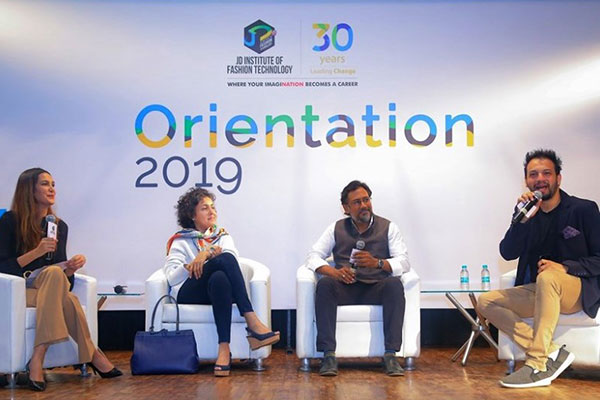
Ar. Nilanjan Bhowal (Founder, Design Consortium) in conversation with Director Ms. Akshara Dalal

“Design is nothing but putting habitat in Nature”

JD Institute of Fashion Technology, one of the leading design institutions of India hosted another interactive webinar session with people from the fashion & lifestyle fraternity having great exposure and expertise. As part of our continuous commitments of pushing the boundaries of conventional education, making the process of learning more fulfilling, intriguing and holistic all our students, we have recently undertaken a series of web-sessions featuring prominent personalities including renowned designers, industry leaders and experts in post-pandemic world.

Amid the unsettling atmosphere of hopelessness and profound uncertainty triggered by the pandemic as well as the rapidly disintegrating natural world around us, made worsened by ‘global heating’, incorporation of sustainable principles, design features is no longer just an luxurious alternative. Rather it has become a necessity.

Image Source: Designconsortiumindia.com

Our mission again is focused on uplifting the students and motivating them to keep at their creativity and imagination. With over 30 campuses PAN India JD Institute puts its foot forward to keep the students mentally engaged in a thought-provoking environment. JD Institute conducted a webinar with Mr. Nilanjan Bhowal on Sustainability in Design. The motto of the webinar was to educate and inspire students to expand the wings of imagination and sore high in their own journeys. Mr. Nilanjan Bhowal practices as the Principal Architect at DESIGN CONSORTIUM since. With an experience of 20 years and counting his projects include cities like Pahalgam and Gulmarg in Kashmir in the north to Cherai beach in Kerela in the South, to Goa and Mumbai in the west to Kolkata, Bhubaneshwar & Manipur in the East. He is a Gold-Medallist in Architecture from Institute of Environmental Design, Gujarat, he earned Masters in Architecture from Katholieke University, Belgium and post-graduate specialization in energy-efficient architecture from Istanbul Technical University.

Session topics in discussion

The session detailed about the major impact the natural world had on the architect that started taking shape when he visited his native place in West Bengal for the first time and over many more subsequent trips. From the smell of the fresh earth after the first shower of the season, the sound of the raindrops falling on a thatched roof to the sensation of heavily greenish pond water against his bare skin to the particular way the sun would cast it’s magnificent shadows on the wall slipping onto the floor on a late afternoon- the deep intimacy that he shared with the natural world from his early childhood days would ultimately dictate his life long quest of exploring architectural expressions through the eyes of nature. And an innocent childhood obsession soon turned into a celebrated career spanning over three decades following his admission into an architecture school.

His childlike curiosity as well as the tendency to play peekaboo with nature in terms of spatial planning, without compromising it any manner whatsoever, is reflected throughout his architectural career. Perhaps nowhere his love and admiration for the natural world is more evident than the resort project that he had undertaken early in his career in the Jim Corbett National Park. Set up amidst the lush green forest canopy of native tress, it is home to a ‘Machan’/ entrance reception, a dining area and a number of informal, slopped roof, mud walled cottages (with a combined capacity of 50 people) scattered throughout the five acre plot but connected beautifully with narrow, meandering pathways. With an exception of the cafeteria/ dining (only structure with a few concrete structural members) the entire area is designed and built using materials that are hundred percent sustainable, locally sourced and in harmony with nature.From the mud houses, thatched roofs, structural members made of bamboos, sofas (Charpais) constructed with local traditional materials or the use of solar lanterns, or the initiative of leaving every single tree intact/ uncut… the project is a homage to sustainable leisure living at its best, with the least (almost zero) impact on the environment.

Image Source: Designconsortiumindia.com

Takeaways from the session

Restrains : Challenges are part and parcel of any innovative developments and building sustainable infrastructures is no exception. Context, climate, traditions, materials and construction technologies are five fundamental parameters that dictate the construction and execution of any sustainable developments all over the country, according to Ar. Bhowal. With a brilliant demonstration using the failed city of Fatehpur Sikri or the Floods in Mumbai, the architect has attempted to guide our focus towards the often overlooked yet extremely crucial aspects of spatial/ infrastructural developments, i.e., consideration of natural resources and topography, solely emphasising on the lack of thoughtful action in the planning stages, while carrying out development works. Rampant disregard to natural environments or our selective inaction is one of the leading causes of man-made catastrophes. And it would be certainly unwise to continue with our quest of development (irrespective of the scale, whether grand or modest) by turning a blind eye to the context and our fragile ecosystem.

“Eyes want to touch & Hands want to Taste”:‘Organitechture’, coined by the architect himself, refers to designing spatial environments that is rooted in context, tradition, locally sourced materials like Jaisalmer stones (but also includes non-traditional materials such as glass as well) in a contemporary incorporating modern technologies.He goes on to explain the importance of texture in design and its extensively explored by his design practice. Daring to look beyond our visual (primary) senses, by incorporating our five senses within the paradigm of design education with, we can further extend our level of intimacy with physical spaces, which can be rather rewarding in certain ways.

Image Source: Designconsortiumindia.com

Retrofitting: There are a number of ways we can make our houses more energy efficient and like selecting materials that have lower entropy, using double glazing on windows and doors, window shades, extended balconies, covering the roof of the buildings with light reflecting tiles/ rooftop gardens or installing cavity walls and solar panels. Reusing refurbished materials whenever possible or utilising waste in reasonable ways we might be able to extend the life span of conventional materials significantly.

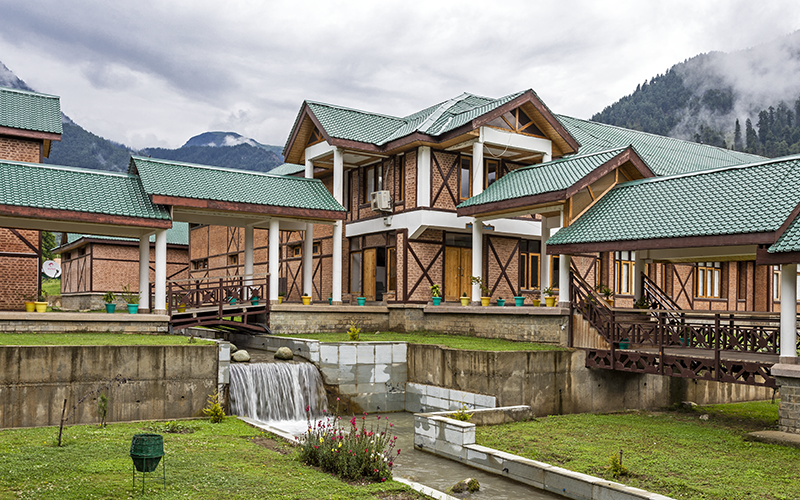
Use of Modern technology on mitigating challenges for spatial design in a post pandemic world: The influence of technology can be far reaching specially in a situation like this, where safety and privacy both are respected and maintained efficiently. He highlighted the importance of embracing difficult time and use it in their advantage, exploring the new ways of creating for disaster proof designs. With his detailed presentation of resorts in an earthquake prone zone in Pahelgam, Kashmir and Manali, we get to learn some valuable insights for designing in a disaster prone area like structures made with wooden lattice work and infilled brickwork to provide greater flexibility and also how to use the natural flow of water (adjoining the sites) to enhance the ambience without causing major disruption. In sync the core convictions of sustainable design, both the places aims to connect the occupiers with the natural surroundings in a profound way, emphasising on the tactile and the auditory senses. With the use of recyclable shipping containers for Globus Transitos in Delhi, he pointed out how efficiently we can adapt to newer challenges and still continue with our path of innovation.

He spoke at length about the contributions and impacts the current generation of students as well as fresh graduates should aim to have minimal invasion of the natural world and touching as many lives as possible.

Importance of Fashion Business Management in the Industry

Tuesday, March 9th, 2021

Fashion industry holds a significant part of the global economy. In the modern day world, this industry is rapidly growing, and it is expected that the growth is unstoppable in the near future. Fashion industry is one of the most chosen career fields in the world today. The greatest reason being that nowadays  fashion is not limited to creativity, designing, styling and artistic skills. Students with good entrepreneurial and managerial skills are entering the fashion industry. Presently, Fashion business management is a rewarding career field fashion market is booming and becoming economically competitive. If you’re interested in fashion and have good business acumen and entrepreneurial skills, you must plan on taking fashion business courses. Read more to find out what fashion business management is all about: 

What is a fashion business management course?

Fashion business management course trains the students about both fashion and management by developing their analytical, marketing, leadership, organisational, problem solving and decision-making skills. The course focuses on aspects of fashion market, leadership, global supply chains and innovations 

The students pursuing fashion business management courses are taught about the basics and fundamentals of domestic and international fashion business. The dynamic curriculum is designed in such a way that students get business skills relevant to the fashion industry. 

Scope of Fashion Business Management 

There are a plethora of career opportunities that one can opt for after the completion of Fashion business management course. The different career paths one can aim for while pursuing this course are 

1. Fashion buyers: they travel to different fashion shows and production houses all over the world to buy garments and accessories based on the latest trends 

2. Sales managers: Their job is to take care of the logistics process the orders, manage the stock and the distribution chain

3. Fashion product managers: these individuals analyse the market demand and consumer requirements to fix the pricing of the products

4. Fashion brand managers: their job is to develop the brand value by incorporating different strategies after analysing the consumer demands

5. Visual merchandisers: their job is to take care of the displays in the retail shops that can attract the customers 

6. Retail merchandisers: these individuals are the link between the buyers and the producers, the role is to maximise sales and profits and ensure proper quality of products

7. Marketers: these individuals come up with marketing strategies to attract customers to buy products. Fashion digital marketers also evolving in the present world whose job is to improve the social media presence of the brand and increase its reach to more and more customers

Skills Required to Be Successful in the Fashion Business Management Field

1. Communication skills: these are regarded as one of the greatest and most important skills required to be successful in the fashion business industry. The individuals need to have good verbal and written communication skills in order to express their ideas and take inputs from the consumers.

2. Problem-solving skills: the individuals must be able to take business related decisions by analysing the market changes and socio-economic factors

3. Multi tasking skills: The individuals must be able to look into the financial aspects as well as involving human resource management. The job also includes supply chain management, service operations and strategy making.

4. Responsiveness: the individuals in this field must have a quick response to the problems and should be able to come up with solutions and ideas for business growth.JD Institute of fashion technology is a pioneer Institute in India offering fashion business courses to the students who are passionate about fashion and have great entrepreneurial and managerial skills. The students are trained by Fashion experts who help them acquire theoretical and practical knowledge about fashion industry.

Future Trends of Garment Manufacturing

Monday, March 8th, 2021

With the advancement in technologies in recent years, the changes witnessed in the manufacturing industry were also really quick and advanced. Fashion production manufacturing has been no exception as it too has witnessed major changes in terms of how the industry works. The industry has to evolve from time to time to respond quickly to the needs and wants of the customers at the right time. Numerous trends were seen in the fashion manufacturing industry. Let’s witness some of them. 

Future trends of garment manufacturing: 

  • The rise of machine learning: We are all aware of a machine’s ability to learn and adopt intelligent human behavior. Nowadays, these advanced algorithms in the machines are transforming the way the manufacturing industry collects information, predicts consumer behavior, and performs skilled labor. 

Some machines even can predict trending patterns, themes, silhouettes, colors, and styles to provide customer sentiment around products and display images. These machines are almost taking the place of humans in terms of detecting when is the right time and what is the product for a particular customer. This garment manufacturing technology is doing exceptionally well. 

  • 3D Design, printing, and mass customization: Nowadays, many brands are exploring how 3D printing can help them produce goods on great demand and create new personal avenues for customization. This has become increasingly in-demand as now competitiveness lies more in delivering products that are tailored according to the customer’s tastes and needs in a timely and speedy manner. 

Some of the latest 3D rendering technology, such as CLO, enable brands to tweak designs on the fly and see updates in real-time. This aids in the improvement of product quality by allowing designers to review fit and silhouette earlier in the production process, reducing waste and mistakes.

  • Robot Designs for the Manufacturing Floor: Robots have always been considered ideal to perform tedious and repetitive tasks in the factories. Though the latest technologies have also equipped the robots with great memory and agility making them highly collaborative and programmable. It is a wise decision to let the robots do the tasks in dangerous situations. This will essentially keep humans safe and also the robots will do more smart work.  

Sewbots” have been developed by several firms, such as Program Automation. These are robots with robotic arms and vacuum grippers that assist them in carefully directing a piece of fabric through a sewing machine. These robots can be used for a variety of tasks in the garment manufacturing industry.

  • Digital Factories: Digital factories are also one of the great garment manufacturing technologies. Most of the leading garment manufacturing companies are now digitizing their production and supply chains. In the process of digitizing, they deploy the key technologies that include big data analytics, real-time planning, end-to-end, workers augmentation and autonomous systems. These digital technologies allow brands to produce highly-customized products. 

In the future, the factories will be completely automated with self-servicing and self-repairing structures. This would require minimal human intervention. The completely automated smart factories will have a detailed snapshot of all production phases thanks to these real-time processing and data collection.

  • Rapid Data Analysis For Quick Adaptation: It is all because of the Internet and new software brands that factories can now receive real-time feedback and alerts regarding any defects or damaged goods. This helps in saving money and eliminating any unnecessary waste. This also ensures the delivery of the products at the right time. 

Nowadays, as cloud computing has grown, it lets the workers work in the company and factory from any part of the world at the same time. This helps in quick access to relevant data and facilitating clear communication. Now, manufacturers can even keep their financial and client information safely on one platform.

  • Manufacturing CRM: Now, manufacturers are adopting new processes to manage customer relationships and improve product sales. Manufacturing CRM software allows manufacturers to easily organize customer data and efficiently close deals more quickly in one platform. It allows a manufacturer to get insights into a customer’s needs and wants.
  • Supply-Chain Optimization: As people are nowadays becoming extremely impatient regarding the lead times and delivery. Therefore, many companies have taken a step further in “in-house” production to increase the speed and supply chain efficiency. 

Things like materials sourcing, creative and technical design, samples, production and shipping are all done under the same roof. And for all these things to run smoothly, the teams have to ensure everyone has access to the same data regarding the products. This “in-house” production thinking is already being implemented by many brands like Gucci. 

  • Better working conditions: Lately, many global fashion brands have started to make agreements to work with suppliers, NGOs and governments to provide a fair amount of living wage and better working conditions to the workers. The fragmented production model has allowed various companies to do severe exploitation of workers. Therefore, some big companies have signed an open letter to the government to improve labour standards for the workers.   

The use of new internet-based technologies can have the potential to gather relatable information. These internet-based technologies also help in connecting various individuals and groups. These technologies also help people be aware of the various laws that are made to protect workers. Thus, ensuring better working conditions for all the workers. 

  • Fashion on demand: Fashion on demand is one of the latest garment manufacturing technologies trends to watch. Consumer demands are moving to just-in-time output due to emerging innovations like data processing and automation. Many brands have switched to manufacturing the products only on demand. As a consequence, there is less overstock and less clothing that is thrown out. One can also witness that brands have started to take into consideration the importance of small-batch production as it helps in avoiding any over the top expenses and wastes. Fashion on demand has drastically changed the overview of the production process.

Step by Step Process of Garment Manufacturing

Monday, March 8th, 2021

The clothes or garment manufacturing process is a confusing process for many people due to which many people give up the thought of launching a clothing brand. JD Institute is here with a step by step process of garment manufacturing ( in this case of a women’s dress)  so that the aspirants can get a better hold of the environment:

  • Inspiration Shopping

The foremost step is to hit the stores and shop making it the easiest step in the process of designing. In fashion design, mostly everything has been designed already but is reinvented. 

  • Garment Design

Once you have the inspired garments, buy them if it is not too expensive which will make the process much easier while if it is expensive a cheaper version of it can be bought. Many times a client demands different styles together for example- the bottom portion of one dress and sleeves of another

  • Print + Colour Design

Next in the process comes to print and colour design. Is your line going to be about different colours or solid colours? One of the best methods to predict it is to google it while there are tons of fashion shows which reflect the recap of fashion shows showing the upcoming season’s fashion trend

  • Source and Order Fabric + Trim

You can start sourcing fabric and trim once you know what your garment will look like. New designers often go for fabric shopping first and then go for designing garments which should be the case when you are working towards product development while from a design perspective, it is the opposite

  • Tech Packs

The Tech pack reflects the blueprint of the garment. It conveys to the factory about each element of the garment such as fabric, colour, where to get labels form etc.

  • Preliminary Costing

Once your design or tech pack is ready, send it to your clothing manufacturer. Upon this, your supplier will give a preliminary costing but only after a sample has been done can you now the final costing. Ask your supplier to cut down cost if costing comes out too high from the tech packs.

  • Pattern Development

To cut the fabric you will require a pattern. While some factories offer pattern making of their own but some brands wish to work with a local sample maker who can deliver and make these patterns near to where they live. Working with a local sample maker can be helpful if you want to make a lot of changes.

  • Development Sampling

Next in the process is sampling which contains 5 steps namely:

  • Lab dips + strike-offs
  • Fit samples
  • Protos
  • Sms or Sales Man Sample
  • Final costing
  • Pre-Production Process

It’s time to move onto production once you have your photos and final costing. If any brand is into wholesale they take this time to get orders from retailers. While if some brands are in direct contact with the consumer they may open up for pre-sale

  • Grade Patterns

Until now, your samples are made into sample size only. Most brands make their sample in medium or small size. But if you target plus size, you should go for the sample size that you sell the most

  • Quality Control Check

You or a third party should indulge in a quality check before you bulk. There can be a few pieces that are damaged etc due to which the step is significant.

  • Packing

Once everything is approved you should move onto packaging. There are numerous ways to pack a garment and there are tons of regulations on the types of boxes, hangers, how many pieces should be there in a box etc. 

  • Shipping + Logistics

There is still work left to be done once your garment is out of the factory. You need to ensure that your garments reach the destination. While part of the job being clearing customs, then from customs making it to the warehouse.

 If you are interested in garment manufacturing (with the latest garment manufacturing technology etc), education from a good institution is significant. JD Institute Of Fashion technology is one of the best institutes providing garment manufacturing courses etc with each course being industry-based so that the students get the necessary exposure or are ready for the real world. Due to their exemplary contribution to education, JD Institute has been awarded various token of appreciation such as the leaders in education award, the time’s power icon award, international glory award, best vocational institute of the year and many more. IT also reflects a record-breaking placement of 99% ensuring that talent meets opportunity.

How to Find the Clothing Manufacturer for Business

Sunday, March 7th, 2021

If you’re a beginner, it is no secret that the fashion industry is difficult to break in as it is the most popular niche when it comes to e-commerce. If you are planning on launching your clothing brand, it is important to include elements that lead to your brand standing apart from the crowd. One of the most significant elements when it comes to launching your clothing brand is choosing the right manufacturer. JD Institute Of Fashion technology is here with tips regarding finding the appropriate manufacturer which will aid in a successful business but first what you need to think about is if you need a clothing manufacturer?

If you are a beginner or just starting with your business knowing that working with a clothing manufacturer can be a financial and time-related risk is important. There are huge freedoms such as creative freedom to create clothes of your liking, control over marketing and building a brand image however the cons are that you have to buy items in bulk and upfront investment is needed.

  • Industry Meetups

Industry meetups can be valuable when seen in terms of searching for the right manufacturer for your business. Attending these events or trade shows on a larger scale will help you find people who have connections with people who are great in garment manufacturing.

  • Directories

Directories can provide you with a ton of clothing manufacturers for your clothing business. Online directories can be referred for example- markers row in the USA

  • Search Engines

This method may not come as a surprise to you as search engines like google can help find an appropriate clothing manufacturer. One thing that needs to be focused upon is in many cases clothing manufacturers do not update their websites regularly. So to find appropriate results you might have to scroll through a few pages

  • Facebook Groups

You can find a lot of groups on platforms like Facebook which are filled with entrepreneurs who are supportive and looking to give back to the community. You can ask any question regarding your clothing brand on these groups

Choosing the Right Clothing Manufacturer 

After you have gone through the resources which are mentioned, there is a high probability that you will have many potential clothing manufacturers for your clothing business. So how can you refine the list? We’ve got you covered:

  • Price and quality: opt for the clothing manufacturer which gives you the best quality products in a price range that aligns with the funds of your current business
  • Time for shipping: choose the manufacturer who can deliver the product with the fastest shipping time ( which depends on whether you have chosen an overseas supplier or a domestic one)
  • Experience: Work with the manufacturer reflecting solid experience and great reviews in the industry to be sure that they will be able to deliver what you are asking for 

Do your research and ask around who is having the latest garment manufacturing technology etc. If possible, visit the clothing manufacturer before ordering any products which will help you to validate your decision of working with them along with building a business relationship.

If you are interested in garment manufacturing and want to make a career out of it, education from a good institution is significant. JD Institute Of Fashion Technology is one of the best institutes providing garment manufacturing courses etc with each course being industry-based for example- providing exposure to the industry, learning from industry experts etc. 

JD Institute shares a vision of providing the latest cutting edge technology, resources, infrastructure or advanced facilities etc to create a path ahead converting their imagination into reality and enabling the students to stand shoulder to shoulder with the experts of the industry they wish to enter. Due to their exemplary contribution to education, JD Institute has been awarded a various token of appreciation such as the time’s power icon award, international glory award, leaders in education award, best vocational education institute of the year and many more. It also reflects a record-breaking placement of 99% with its students working for top companies like PepperFry, Sabyasachi, Tommy Hilfiger, H&M and many more. Enrol now. 

What are the 7 Common Interview Questions?

Saturday, March 6th, 2021

While no two work interviews are the same, there are a few questions that all recruiters ask when interviewing prospective applicants. By preparing confident answers some of these questions will give you an edge over other prospective candidates. You need to be extremely mindful while answering these most common questions to the recruiter. It can either make or break the situation. Below are 7 common interview questions that a recruiter can ask. 

7 common interview questions: 

  • Where Do You See Yourself in Five Years’ Time?

An interviewer will definitely get impressed if you are clear about short-term and long-term goals. While answering this question, you must talk about the kind of job you eventually want to do and what major steps you are taking to achieve it. Show the interviewer that you have the determination and ambition to make the most out of any job you do. 

Be extremely mindful of not letting the interviewer know that you specifically want their job. This decreases the value of the job seeker in the eyes of the recruiter. While answering this question emphasis on how your previous job roles have helped you progress in your career and how your past experiences have increased your knowledge and skills.  

  • What are Your Strong and Weak Points?

Many candidates, including those with considerable experience, find this question difficult to answer. However, if done properly, it is possible to resist ‘bragging’ about oneself when addressing one’s abilities or come across as a jerk when discussing one’s shortcomings.

Strengths – When talking about your strengths, make sure to select three attributes to reflect in a candidate that the employer is looking for. Put it out in front of the recruiter while connecting these strengths to your work situation. Based on the job description, you should ideally include a mixture of tangible and intangible skills. 

Weaknesses – When talking about your weaknesses,  the best approach is to talk about a weakness that you have already addressed by taking positive steps. Consider how you have approached your weaknesses in the past and what you have positively done to address them. Talk about your weakness to the interviewer before actually telling him/her about the positive steps you have taken to resolve it. 

  • Why Should I Hire You?

While answering this question, focus on your assets and what makes you different from other prospective candidates. Don’t forget to list out your major strengths. Talk about what you can offer to this company in terms of personality, experience and enthusiasm. Make sure the recruiter knows that you are the best fit for the job. 

  • Tell Me About Yourself/Your Work Experience? 

This question is the opening question of the interviewers most of the time. It is also considered to be the most important question. As you all know that first impression is the key. Therefore, keep it brief and know your CV inside out. When answering this question, focus on delivering a one to two-minute advertisement about yourself.

This shall highlight the key achievements of your employment history. Also, make sure to build your resume keeping in mind all the resume writing tips and samples. Hunt through some of the best resume writing examples and work accordingly on yours.

  • Why Do You Want This Job?

Do proper research on what the company you are applying for is all about. This question gives you a fair chance to discuss all that you know about the job and how are you a suitable match for it. Be aware of the fact that the interviewer is waiting to listen to the answers that indicate you have given this job a thought. Therefore, do your homework of researching the job and the company properly.

How to Do Proper Research – Make sure to have an in-depth look at the company’s website and try to understand as much as you can about their business. Try to understand how they operate and what are the products or services they provide. It is also important to go prepared with some of the questions you may want to ask the interviewer out of curiosity. Don’t be afraid to take forward the questions to the interviewer. 

  • What are Your Salary Expectations?

It is always advised to not mention the salary unless and until it is asked for. It is very important to understand the value of your skills. When asked this question make sure to be flexible and indicate that you are willing to negotiate for this right opportunity. 

Make sure to transmit the fact that you value this position strongly. Most often, problems arise when you price yourself out of the position you are applying for. Therefore, it is advised if the salary is mentioned in the job description then make sure to answer the salary somewhere around that amount only.

  • Why are You the Right Fit to Succeed in This Role?

You should always use the interviews as a golden opportunity to say something very interesting about your skills and experiences that relates to the role you are applying for. Remember that the interviewers will always be looking for someone who matches the job description. Therefore, it is important to demonstrate key skills that match with the behaviour of the job. 

It is often advised to prepare beforehand for these things. Let us list some of the key traits employers look for in a candidate. This includes: Project management skills, Managing stakeholders, Problem solving, Delivering on targets or goals etc. 

Conclusion:

Interview questions may not be as straightforward as they seem. And answering even one question wrong may put you out of the running for a job. Therefore, it is advised to be mindful while answering certain questions. Above were 7 most common interview questions that an interviewer asks. Prepare these questions from the next time and slay your job interview. It is also advisable to try out answers of these questions with at least two people and then revise them based on their feedback. We at JD Institute make sure you learn the ropes of interview giving. We make you prepare for the real world.

Why is Fashion Communication Important

Friday, March 5th, 2021

Fashion communication is a subfield of fashion study that primarily focuses on developing the verbal and written communication skills relevant in the fashion industry across the world. The fashion industry is an immensely popular and glamorous professional field. Fashion communication holds great significance in the fashion industry to communicate with the clients and build brand strategies. Working in the fashion world involves being in close association with celebrities, fashion models, stylists, fashion designers, etc. So, a fashion industry professional needs to have great communication skills. 

If you wish to pursue a career in the field of fashion communication, you need to enroll yourself in a reputable design school. JD institute of fashion technology is a pioneer institute in India that offers fashion communication courses. The fashion communication courses involve various areas of study including fashion journalism, photography, public relations, visual merchandising, fashion illustration, typography, and styling. It is a study of expression and interpretation of areas related to fashion. The job of the professionals associated with the fashion communication field is basically to design portfolios, communicate with the clients, be involved in graphic designing, and create an alluring, comfortable and aesthetic space for customers to try on their clothes and in the later stages, photographing and styling their looks. 

In the modern-day world, technology is taking over almost all kinds of professional fields and every industry is either going fully digital or on the verge of turning digital. Nowadays, people have developed the habit of buying everything online. Fashion trends that are all over the internet often influence the styling sense of people across the world. Thus, the fashion industries need to come up with a unique brand identity and express their ideas and opinions on a global level. 

Scope of Fashion Communication 

Presently, there is an increasing demand among students from all over the world to join fashion schools. Fields like fashion communication give the students a great opportunity to share their fashion knowledge with a large audience through their writing or any other medium of expression.

There is a myriad of career opportunities in this field:

  • Fashion journalist
  • Fashion designer
  • Graphic designer
  • Fashion stylist 
  • Visual merchandiser
  • Event manager
  • Art director
  • Fashion marketing official
  • Fashion blogger
  • Retail space designer
  • Advertiser 

Educational Qualification Required to Study Fashion Communication 

If you want to pursue a career in fashion communication, you need to take fashion communication courses at a bachelor or Master’s degree level. You need to complete your 10+2 in any discipline from a recognised board. A bachelor’s degree in Mass communication, photography, fashion designing, creative writing et cetera will be helpful if you are planning to pursue a master’s degree in fashion communication. You can also opt for a short-term diploma certificate course. These courses teach you the fundamentals of communication relevant to the fashion industry.

Popular Job Opportunities in Fashion Communication 

1. Fashion Journalist 

A fashion journalist’s job involves writing and reporting about the latest fashion trends and events that take place in the fashion industry. Top fashion magazines like Vogue, Bazaar, Elle recruit these journalists to write about fashion and celebrities. The Fashion journalist job is a highly rewarding and extremely glamorous profession. You need to have excellent written communication skills to get a job as a fashion journalist.

2. Fashion Designer 

There is no other profession in the fashion industry better than fashion designing that allows individuals to express their fashion knowledge and styling skills. Various design schools in the country offer bachelors, and masters level degree courses in fashion design. 

3. Fashion Photography 

If you are passionate about photography and have the skills required to become a fashion photographer, there is no harm in going for it. Start by showcasing your photography skills on social media. This will help you reach a wider audience. A photography course will be hugely beneficial in developing your raw skills.          

4. Visual Merchandiser

The job of a visual merchandiser involves working on the brand’s aesthetic aspects, choosing the garments or accessories that will be on display inside the stores or online shopping sites. The goal of a visual merchandiser is to allure as many customers as he can to buy the products of a brand.

The fashion industry is evolving and growing with time and is offering great job and internship opportunities to the youth in the present day. If you are creative and passionate about fashion, fashion communication seems like a great job profession for you.

Four Tips for Men’s Office Wear

Friday, March 5th, 2021

There are different outfits to be worn according to the occasion, place, or season. For example, you wouldn’t wear a shimmery outfit to your workplace or a formal outfit to a party. The tastes and preferences of the people influence their sense of style as well. Nowadays, menswear collection is becoming more varied than ever before, and many changing trends can be seen in the fashion industry concerning the male population. So, it might be too confusing and overwhelming at the same time while choosing workplace outfits.

Men worldwide are becoming extremely conscious about their looks these days and want to stand out everywhere, even at their offices. We bring you four handy tips that will help you choose the perfect office wear. These tips will also be beneficial for students who are enrolled in the field of fashion designing and fashion communication:

  • The Right Fit Matters The Most 

Nowadays, men do not prefer to wear readymade suits anymore because of fitting issues. Men are switching over to custom-made office outfits that are made solely for them based on their body size. It is also essential to find a good tailor who can stitch the outfits perfectly according to your fit. 

  • Choose The Right Colour and Fabric 

Neutral shades are the most accepted for official wear. But in the present day, checked shirts and striped shirts are quite trendy in the formal wear section. It is always advised to go for cool tones rather than warm tones when it comes to office wear. 

Wrinkle-free shirts have grown to be very popular in the fashion world as it gives you a sharp and refined look and saves ironing time. Make sure your shirts are always ironed before leaving for work. Choose a fabric that’s easy to manage and looks smooth and sleek. 

  • Go Semi-Formal 

Casual shirts and waistcoats are the best outfits for business meetings and when you want to play it cool at your workplace. Learning to ace a casual look in the workplace is very important. Being confident is the key. Casual outfits are in trend everywhere, but you have to understand how casual is okay in the workplace and dress accordingly.

  • Accessorize Your Outfits 

Accessories not only complete every look but also enhance them. Accessorizing your office wear is the most crucial step of styling. Be it a watch, a briefcase, a tie that complements your suit, belt, a pair of cuff links, or a premium leather wallet, every piece is essential to leave a lasting impression. While accessorizing, the most important thing to keep in mind is to match the accessories with your outfits. If you are confused about your look, go for the classic black colour for your shoes, belt, wallet, etc. and wear a neutral shade outfit to match the accessories. 
The students pursuing fashion communication courses study these styling techniques and fashion trends to be able to develop unique pieces of office wear outfits and accessories. JD Institute of fashion technology offers fashion communication courses. With the guidance of experts and strong determination, one can succeed in the fashion industry.

An Overview of Visual Merchandising

Thursday, March 4th, 2021

The good visual appeal of your brand and goods is extremely important for making a name in the market. A bad presentation and poorly displayed products would never fetch you, customers. Just like the customers demand good food presentation in a restaurant, the same way retailers and brands have to present their products in a visually pleasing manner. You might have some of the best products in the market but if your stores display products blandly and poorly then people would go for something else. Therefore, you need to be extremely mindful of visual merchandising.

  • What is Visual Merchandising?

Visual merchandising is the practice of displaying the products in a store with the goal of engaging the customers with the product and boosting sales in the long run. Visual merchandising is done by creating displays that accentuate a product’s features, appearance, uses, and benefits in an extremely visually compelling way.

The main point of visual merchandising is not just to make the products look good, but it is also to present the products in a way that increases the sales and the revenue of the brand. We often think that visual merchandising is all about how products are displayed in a store via mannequins, window displays, interactive experiences, signage, etc. That is true, but with the rise of online channels, visual merchandising skills must also extend to the online market.  

  • The Importance of Strong Visual Merchandising: 

Visual merchandising is a powerful way to make your products stand out from the crowd. When there are so many stores and products that are asking for a consumer’s attention, it is most likely that the consumer will overlook most of them. Therefore, consumers have to be served with visually presented products that catch the eye of the consumers. 

The job of a visual merchandiser starts with the makeover of the entire retail space, whether it is a store, a mobile app or a website. The ultimate role of the visual merchandiser is to design spaces that combine the brand aesthetics and the unique selling points of their products. This is done like this to communicate the value of the brand and the products. It is all about giving your customer a visually appealing, wholesome experience across all channels that in a way conveys what you are willing to convey about your brand to your customer. 

Visual merchandising is done to catch the attention and interest of the customer which would ultimately lead your consumer to decide on the purchase. Visual merchandising can still catch people’s eye, pique their curiosity, and contribute to sales.

Types of Visual Merchandising: 

Most brands and retailers have already stepped into doing visual merchandising for their brands. But if you are someone who is just starting and looking to improve, here are some of the different visual merchandising techniques you can start with. 

  • Interactive Displays: Touchscreen technologies are one of the great ways to draw people’s attention to a specific display to learn more about the specific product and brand. Some fashion retailers, such as Rebecca Minkoff, are incorporating these innovations into their outlets, while home goods retailers, such as Wayfair, have created smartphone applications that enable customers to choose designs to see how they will look in their home in real-time. High-tech technologies aren’t always needed for interactivity. Other methods, such as field marketing, may also be efficient. Field marketing is a great way to show what your brand is all about and instead of telling you just let your customer try your products out. 
  • Window Displays: As the saying says, the first impression is the last. If you can make a good first impression on your customer, it can prove to be very advantageous for your brand.  A window display is something that catches the eye of a shopper and wins their interest in the brand as they enter into a retail space. Windows screens are infinitely adaptable and can be used in a multitude of ways to share essential knowledge about the goods and brand.
  • Mannequins: Mannequins are the major source of attraction at any retail store. They allow the customers to have a deeper insight into how the clothes would look on a person without having to force someone to try them on. The art of visual merchandising with the help of using mannequins has been in the market for a longer time. Visual merchandisers place mannequins in a manner that is both fascinating and attractive to consumers.
  • Signage: Signage is considered to be a simple yet effective visual merchandising technique. Signage is a time-tested technique that conveys a lot of information about a product or a brand in a very eye-catching way. It can either be a very simple poster or can even go up to a complex digital sign that not only entertains but also informs the customer. Just like the window displays and mannequins, signage is also one of the effective visual merchandising techniques that work well for a brand.

While using these visual merchandising techniques, you also need to be mindful of how to effectively do it. Various tips and tricks efficiently keep you going in the field of visual merchandising. Foremost is to always be aware of your customer’s choices and preferences. Be mindful of what attracts your consumers’ eyes and what appeals to the shopper in them. Only after being mindful of how to attract your consumer by using visual merchandising techniques, you would be able to generate sales. 

There are various other factors like light, colors, and mood that make a difference in visual merchandising art. Therefore, we at JD institute always train our students in the best way possible that they don’t miss out on any aspect of visual merchandising. We regularly offer our students with industry lectures and alumni sessions that give them a handful of real-time exposure to the industry.

Copyright © 2025 JD Institute of Fashion. All Right Reserved

Designed by Red Lemon

Whatsapp icon
Apply Now
Enquire
Quick Enquiry