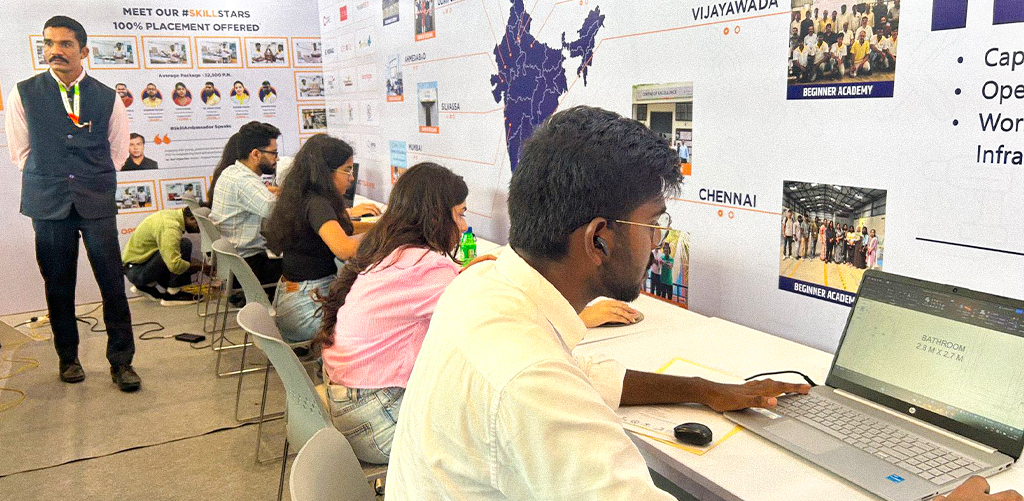
The world of interior design thrives on creativity, adaptability, and the ability to think on one’s feet. This spirit was perfectly captured at Index Plus 2025, Interior Design Competition, held at Yashobhoomi (IICC), Dwarka, Delhi, where Interior Design students from JD Institute of Fashion Technology excelled in a high-stakes competitive environment. This premier design and interiors showcase provided Jediiians with unprecedented exposure to industry innovation, trends, and talent.
Design Unfolded: The 3-Hour Studio Sprint
The competition challenged students to design a compact living space under unique climate and cultural constraints. With only three hours on the clock, participants were required to think critically, sketch rapidly, and develop layouts that reflected both creativity and functionality.
What made “Design Unfolded” stand out was its real-world approach. Students weren’t just working on theoretical designs, they were responding to practical challenges that designers often face in the industry. From limited space optimization to sustainable material selection, every decision counted.
The event beautifully showcased how design can adapt to different lifestyles, climates, and cultures, proving that creativity truly has no boundaries when guided by thoughtful planning.
Real-World Application and Professional Triumph
JD Institute students participated enthusiastically, translating their academic learning into detailed layouts and innovative concepts under strict timed conditions. The experience was invaluable, allowing them to:
Develop Quick Problem-Solving Abilities: Learning to make instant, informed design decisions when time is the critical constraint.
Refine Presentation Skills: Effectively articulating their design philosophy, concept rationale, and solutions to a professional jury of industry experts and experienced design mentors.
Gain Exposure to Industry Standards: Observing how leading firms approach design briefs, timelines, and material sourcing in a competitive setting.
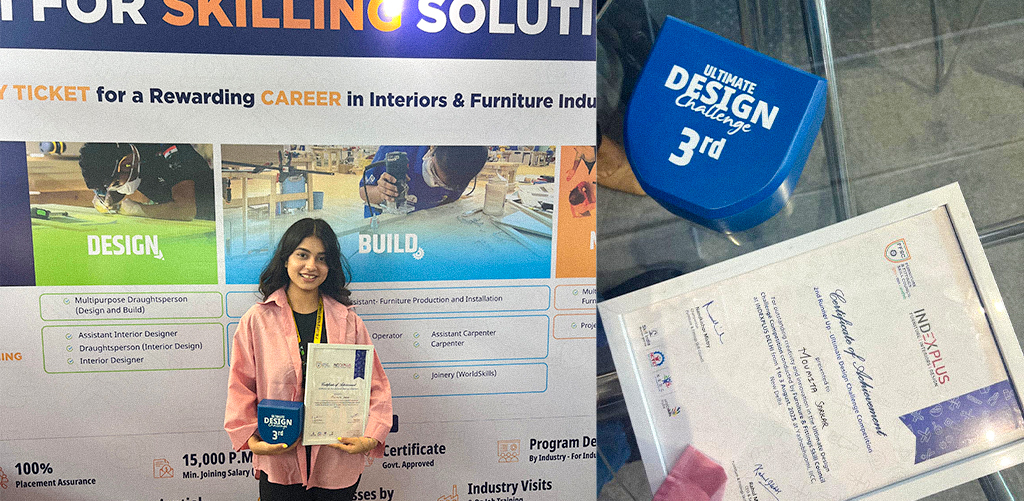
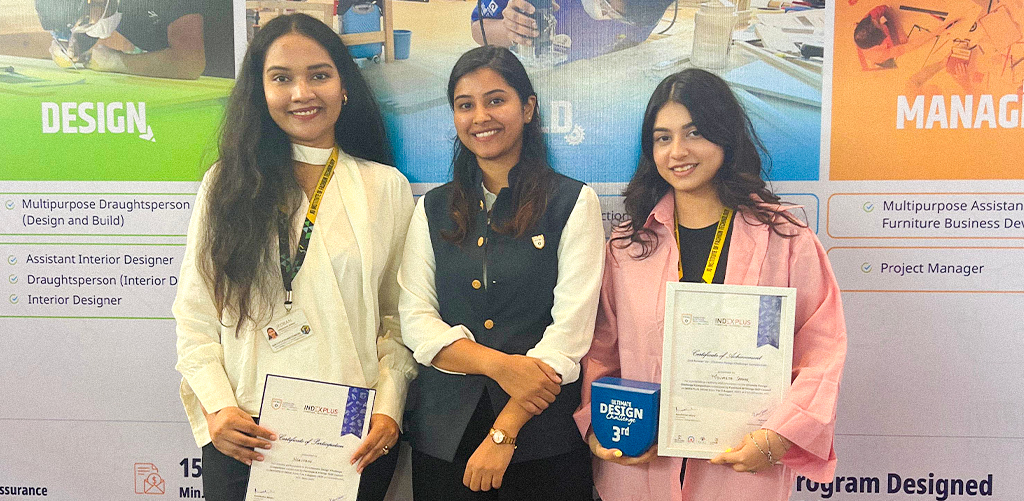
The success of JD Institute’s participation was officially validated when one of the students secured the 3rd Prize in the highly competitive “Design Unfolded” challenge.
This remarkable achievement stands as a testament to the talent, rigorous training, and dedication of the participants.
Industry Experts and Mentorship
The event was supported by a panel of industry experts, design mentors, and experienced faculty members who evaluated the entries. Their feedback gave students meaningful insights into current market trends and evolving client needs.
The furniture masterclass was another highlight, where professionals demonstrated techniques used in furniture design and fabrication. It was an excellent opportunity for participants to interact directly with experts, understand material behavior, and witness how design ideas transition into real-world prototypes.
Inspiring the Designers of Tomorrow
The participation of JD InstituteInterior Design students in Index Plus 2025 stands as a proud testament to their creativity, technical understanding, and innovative thinking.
Winning the 3rd Prize added another feather to the institute’s cap, but the real success lay in the learning, exposure, and confidence students gained throughout the event.
Such experiences continue to inspire the next generation of designers to think differently, act swiftly, and design spaces that make a real difference in people’s lives.
The intersection of fashion design and technical innovation is rapidly changing the global footwear market. For young designers, gaining practical experience in this dynamic field is critical. Our students at JD Institute of Fashion Technology received an opportunity when KobSook, a contemporary sneaker brand, launched its exclusive Student Design Competition, giving students the platform to showcase their design skills, specifically in footwear styling and innovation.
About KobSook – Redefining Modern Footwear
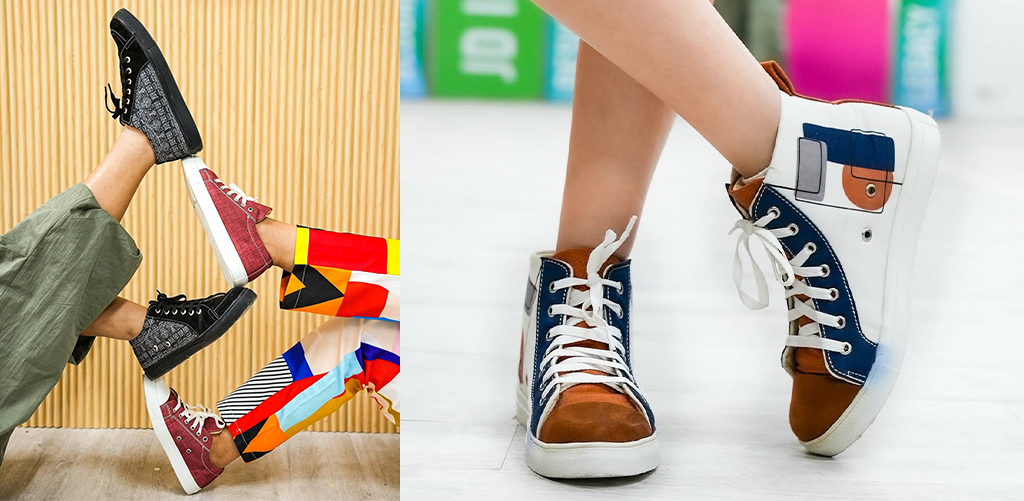
KobSook is more than just a footwear brand. It represents a lifestyle built around style, comfort, and individuality. Known for its modern sneaker aesthetics, KobSook collaborates with creative talents from across the country to bring innovation and fresh perspectives into footwear fashion, especially differently-abled artists. They are trained to use digital tools, creating stunning digital art on the sneakers.
By combining functionality with artistic flair, the brand continues to push boundaries, making it a perfect partner for emerging designers and stylists looking to make their mark in the fashion world.
Collaboration on the Ramp
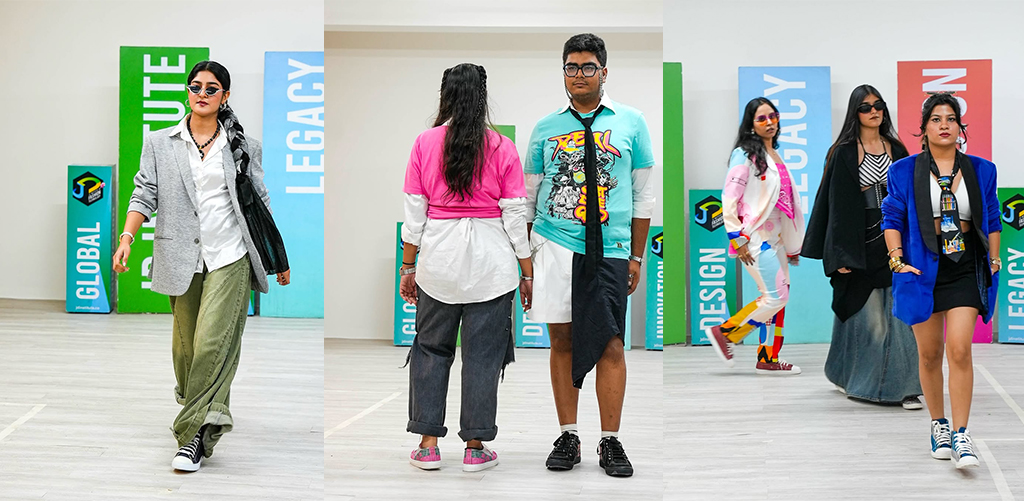
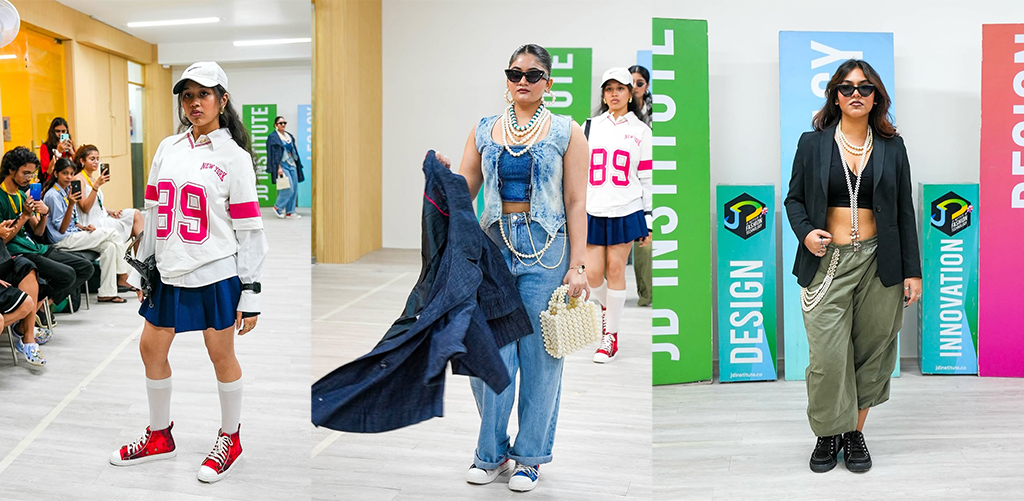
The highlight of the event was a spectacular collaborative presentation that transformed the seminar hall into a vibrant fashion stage. This ramp walk was a showcase of cross-disciplinary synergy, emphasizing how different creative batches work together in the professional world:
Fashion Design Students took to the runway, modeling the latest KobSook sneakers.
The entire look, from head-to-toe, was expertly styled and executed by students from the Fashion Styling batch, creating creative and contemporary ensembles to complement the footwear.
This competition allowed students to gain crucial practical experience in multiple professional domains simultaneously, fashion presentation, complex styling coordination, and representing a major brand’s aesthetic vision. They learned the technical and logistical challenges of preparing for a live show, ensuring every detail from the garment’s silhouette to the sneaker’s lace color was perfect.
Insights from an Industry Founder
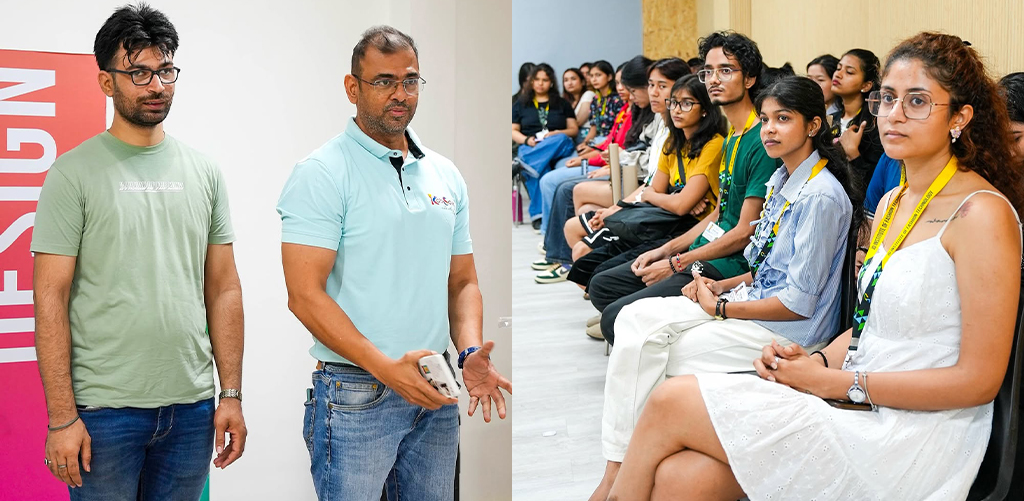
To formally launch the competition and set the benchmark for quality, the event featured a detailed presentation by Mr. Aziz, representing KobSook. Mr. Aziz provided students with valuable professional insights into the specialized world of the footwear design industry. During his session, he formally presented all the competition details and necessary guidelines.
Learning about competition guidelines and brand expectations directly from an industry figure like Mr. Aziz helps students align their academic creativity with commercial viability.
Elevating Skills: Practical Learning and Innovation
By integrating a brand-sponsored challenge into their academic calendar, JD Institute ensures that its graduates are equipped not just with theoretical knowledge but with the adaptability and collaborative spirit essential for success.
Through their participation, the students gained valuable learning outcomes, including:
Fashion Presentation Expertise: Mastering the art of showcasing footwear and apparel in a dynamic environment.
Styling Coordination: Developing the ability to unify diverse garment elements into a cohesive, brand-appropriate look.
Brand Representation: Understanding how to interpret and translate a brand’s ethos into visual content.
Innovation in Footwear: Getting direct exposure to the need for design innovation in the rapidly evolving sneaker market.
The Launch of the Student Design Competition by KobSook serves as a testament to JD Institute’s commitment to providing industry-relevant education.
The fashion industry is undergoing a powerful, necessary shift toward sustainability. For students looking to become future leaders in design, understanding this movement is non-negotiable. That’s why the experience gained by JD Institute of Fashion Technology students at the Conscious Effort Trunk Show was so crucial. Held at The Lodhi, New Delhi, this exclusive event provided a perfect intersection of ethical business and high-end retail, accelerating the students’ journey into sustainable design practices.
The Conscious Effort Platform: Redefining Retail
The Conscious Effort Trunk Show is a premier platform dedicated entirely to promoting sustainable, ethical, and mindful fashion. It is designed to showcase designers and brands that prioritize eco-friendly practices, transparent sourcing, and responsible consumption. For those studying fashion and design, being immersed in an environment where responsible business models are celebrated offers invaluable real-world context, reinforcing the global importance of sustainability in creative fields.
Gaining Hands-On Experience with Penny Arora
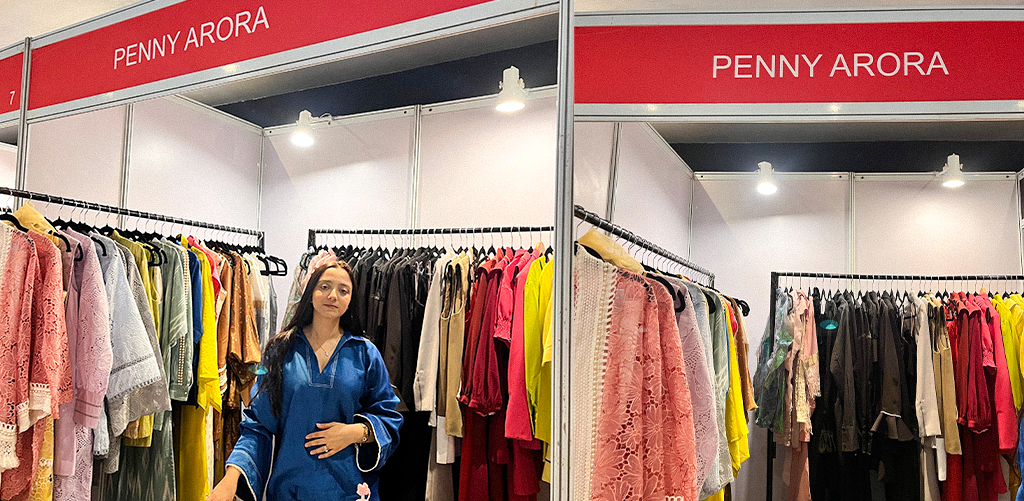
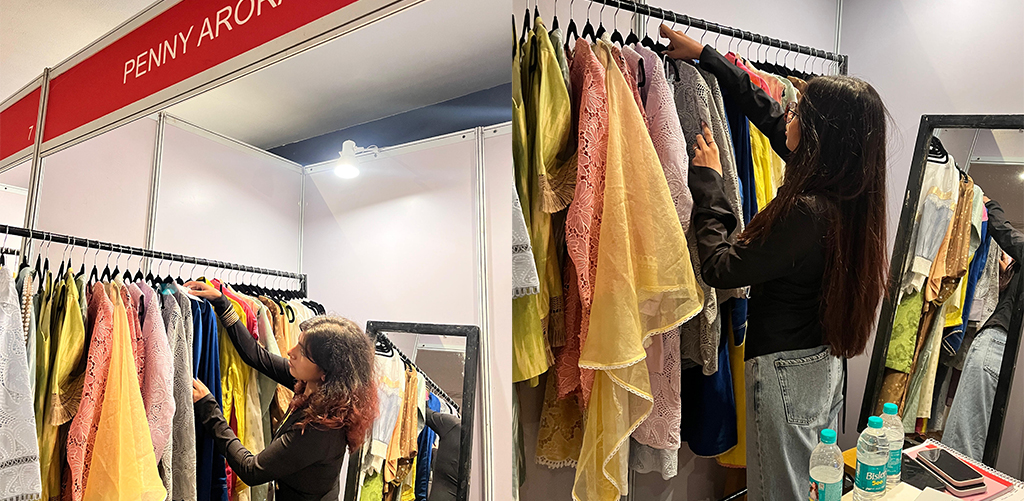
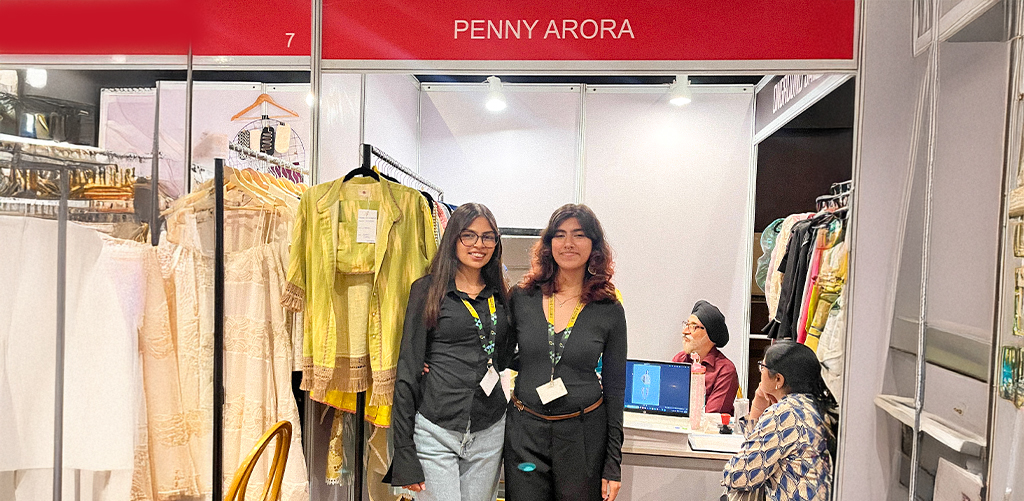
JD Institute established a direct collaboration with the esteemed brand Penny Arora, a label celebrated for its dedication to mindful fashion, which participated in the show. This partnership allowed two selected students, Ms. Ashita Goel and Ms. Radhika Sharma, to volunteer directly at the brand’s stall throughout the day.
Their participation went far beyond simple observation. By being stationed full-time at the stall, the students gained essential, practical exposure to industry operations, high-level consumer interaction, and the detailed art of sustainable product presentation. Their active contribution was instrumental in ensuring the stall’s seamless operation and significantly enhanced the overall event experience for customers.
Student Spotlight: Inside the Brand Representation Role
The experience offered Ms. Goel and Ms. Sharma a deep dive into event-based brand representation, a vital skill in today’s retail landscape. Their duties covered key aspects of trade and sales, providing immediate insight into consumer-facing roles:
Stall Management: They actively assisted with the logistics and visual merchandising of the stall.
Visitor Engagement: They interacted extensively with visitors, sharing intricate details and stories behind the Penny Arora brand.
Sales Support: They directly supported sales and promotional activities, learning how mindful fashion is successfully marketed and sold.
Crucially, the students spent the day observing consumer behavior in a live, high-end retail setting. Understanding why customers choose sustainable products, what questions they ask, and how they perceive ethical branding is knowledge that textbooks simply cannot replicate. Recognizing their dedicated contribution, the brand ensured meals were provided during the busy day, and formally acknowledged their effort with an electronic certificate.
Networking Success: Bridging Academia and Ethical Industry
Beyond the practical skills of retail and stall management, the Conscious Effort Trunk Show provided an unparalleled opportunity for professional networking. The event is a known magnet for influential figures in the ethical design space, attracting renowned sustainable fashion designers, high-profile industry professionals, and media representatives.
Ms. Goel and Ms. Sharma had the chance to engage and learn directly from these industry leaders. These interactions are critical for JD students, helping them to solidify their professional network and understand the current trends and challenges facing sustainable fashion. This exposure ensures that when they graduate, they enter the market not only with technical skills but also with a rich understanding of ethical practices, ready to contribute meaningfully to the industry’s future.
JD Institute: Shaping Mindful Leaders
The experience at the Conscious Effort Trunk Show highlights JD Institute’s commitment to providing robust, real-world learning that focuses on the core values shaping the modern design world.
By integrating students into platforms dedicated to sustainability, the institute ensures its graduates are prepared to meet the demands of ethical consumerism and responsible business. The successful participation of Ms. Ashita Goel and Ms. Radhika Sharma proves the transformative power of blending academic excellence with practical, industry-specific opportunities.
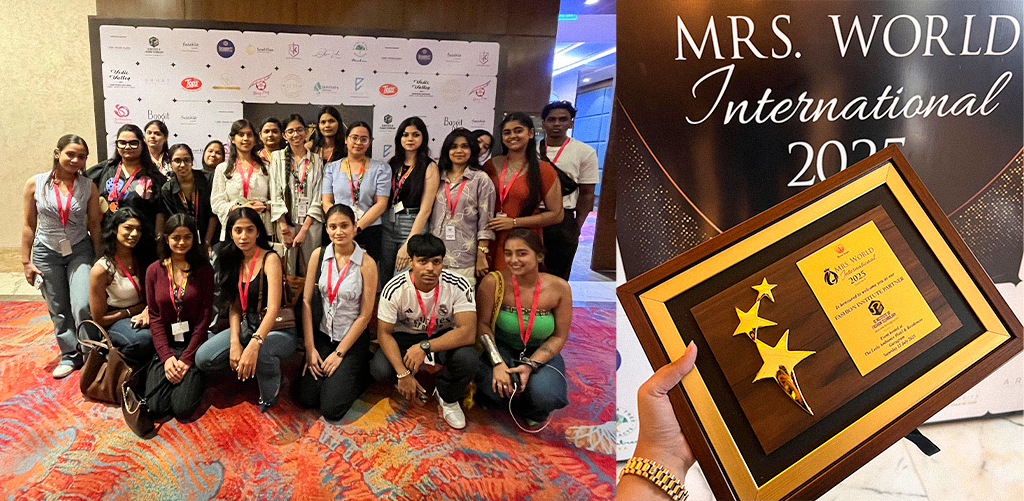
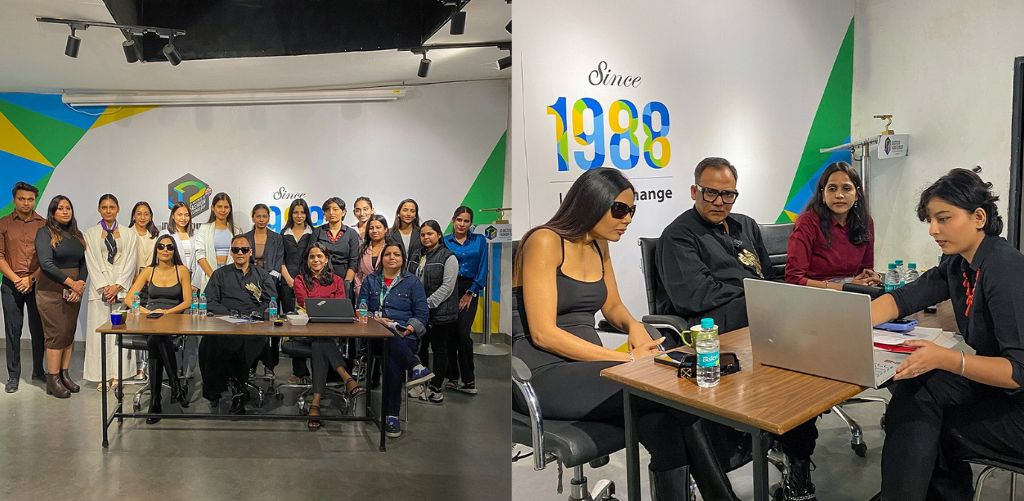
Organized by Glamour Gurgaon, the three-day event became a remarkable platform for fashion students to witness and engage with the world of professional events, offering them firsthand exposure to large-scale event management and fashion coordination.
Bridging Classroom Learning with Industry Exposure
The partnership with Mrs. World International 2025 offered JD Institute students an exceptional opportunity to connect their academic knowledge with practical experience. With branding visibility across stage backdrops, LED screens, event boards, and social media promotions, the institute not only showcased its expertise but also highlighted its role in nurturing industry-ready talent.
This collaboration provided a realistic glimpse into the high-paced environment of beauty pageants, allowing students to experience how fashion, styling, and event management come together seamlessly to create a spectacular live show.
Student Participation: Roles That Shaped Experience
JD Institute students actively participated across all three days of the event, gaining exposure to multiple facets of fashion and event execution.
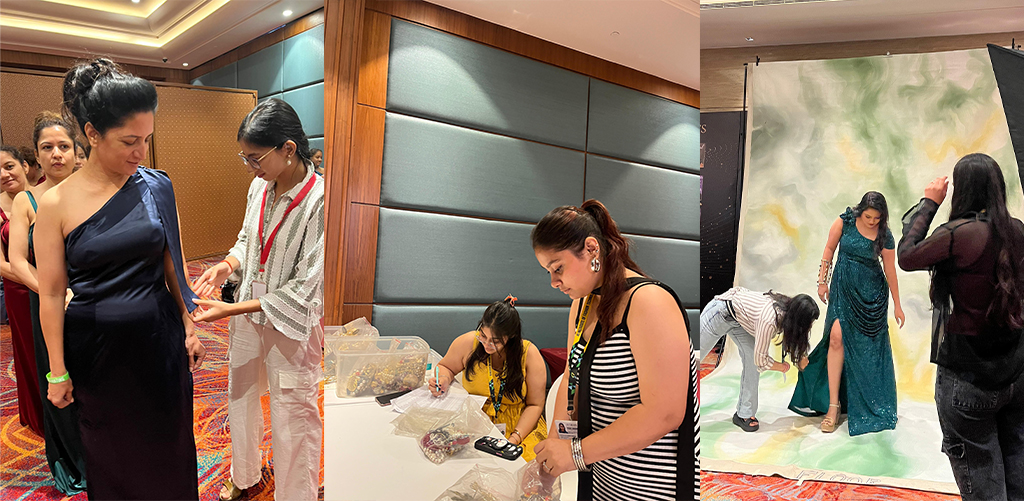
Fittings & Trials: Students assisted in wardrobe fittings, styling, and overall preparation for the contestants. This phase helped them understand the meticulous attention to detail required for live events and the importance of precision in styling.
Photoshoot: During the photoshoot, students contributed by coordinating styling, assisting with logistics, and supporting photographers and models. This experience emphasized teamwork, time management, and adaptability, crucial skills for any aspiring fashion professional.
Grand Finale: The final day witnessed students managing backstage activities, including cue flow, last-minute fittings, and seamless communication between designers and the organizing team. Observing and participating in the live execution of a high-profile event gave them an invaluable insight into professional event management dynamics.
Through these roles, students not only honed their technical skills but also gained confidence in managing real-world challenges, from time-bound tasks to coordinating multiple stakeholders in a fast-paced environment.
Learning From Industry Experts
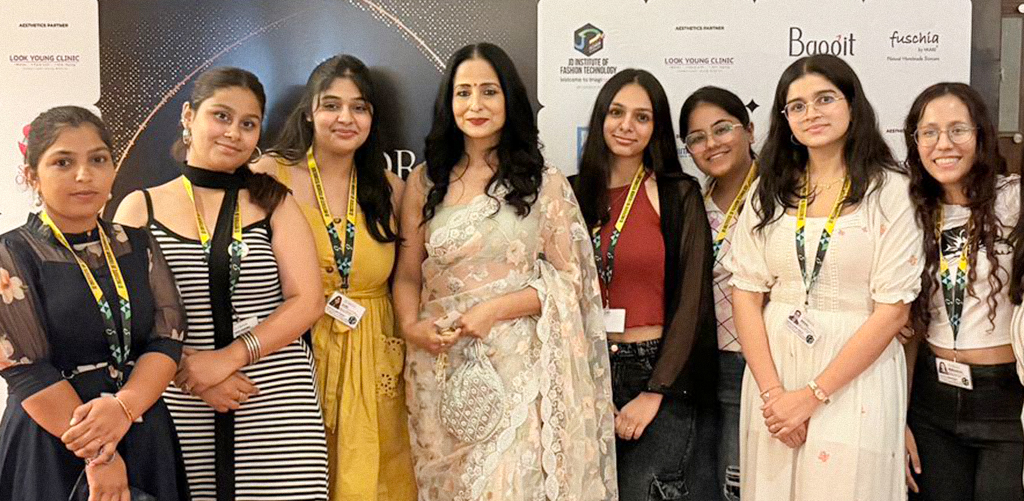
One of the highlights of Mrs. World International 2025 was the presence of renowned personalities like Lataa Saberwal, a celebrated Indian television actress and certified Image Consultant. Her participation offered students a chance to observe industry practices, professional demeanor, and the application of fashion knowledge in real-time scenarios.
Learning from such experts allowed students to understand the nuances of styling, personal branding, and stage presence, complementing their academic curriculum.
A Transformative Experience
For JD Institute students, being part of Mrs. World International 2025 was more than just an event participation- it was a transformative learning journey. It allowed them to see the bridge between education and professional exposure, turning theoretical knowledge into practical skills.
Participating in such a large-scale event provided insights into the fashion industry’s workflow, including coordination, logistics, styling, and backstage management. It also reinforced essential professional qualities like confidence, teamwork, adaptability, and effective communication.
The Impact of Strategic Partnerships
Partnerships like these underline JD Institute’s commitment to providing students with holistic education in fashion and design. By aligning with esteemed platforms like Mrs. World International, the institute ensures its students are not only industry-ready but also inspired to pursue excellence in every aspect of their professional journey.
This engagement reflects the institute’s philosophy of merging classroom learning with industry practice, ensuring students graduate with both knowledge and experience that set them apart in the competitive world of fashion and event management.
Bringing It All Together
This event proved to be a milestone event for JD Institute of Fashion Technology, offering students an unparalleled opportunity to engage with the fashion industry, gain hands-on experience, and learn directly from accomplished professionals.
As the institute continues to foster talent and provide immersive experiences, such partnerships remain pivotal in shaping the next generation of creative leaders in fashion and design.
One of the first decisions you will have to make while entering the field of design is the direction to go in. With so many types of design fields, it is natural to wonder if you should express yourself through fashion, shape the spaces people live in, or bring brands to life with communication design?
However, the right choice depends on your interests, strengths, and future goals. With each field offering unique opportunities, we will help you understand the key differences so you can find the design path that’s truly right for you.
Why Even Choose a Career in Design?
Choosing design means you get to use your creativity to make a difference in people’s lives. It could be by creating sustainable fashion, turning small spaces into cozy homes, or helping brands communicate better. Every part of design solves a problem in its own way. And the good news? The demand for designers is only growing, making now the perfect time to step into this world.
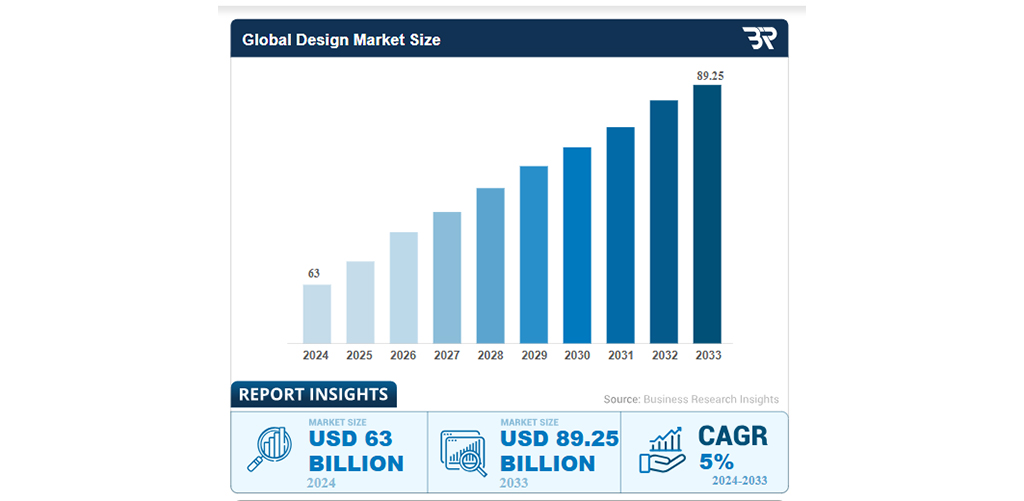
Don’t just take our word for it, the graph below shows how fast the global design market is growing!
Bar graph showing the growth of the global design market from USD 63 Billion in 2024 to a projected USD 89.25 Billion by 2033 with a CAGR of 5%.
Now that you’ve seen how design is growing globally and how designers are needed everywhere, it’s clear that design is one of the most promising careers you can choose.
Exploring Types of Design Fields
Fashion Design: Are You a Trendsetter?
Fashion design is the art of bringing style and self-expression to life through clothing and accessories. With the rise of sustainability and digital fashion, this field is constantly evolving, and if you love experimenting with fabrics, colors, and future-forward ideas, fashion design could be your perfect fit. This field is perfect for those who:
Enjoy sketching outfits, selecting fabrics, and forecasting trends.
Want to create collections, work with brands and celebrities, or even start their own label.
Thrive in fast-paced, ever-evolving environment.
At JD Institute, sustainability is not just taught, but lived. That’s why we host iFestival- India’s Largest Student Design Festival, where our Jediiians present their prototypes that reimagine sustainability as a way of life, and also connect with renowned designers, artists and creators around the globe. As a second-year fashion student, Anya, shared after iFestival,‘Presenting my sustainable denim project wasn’t just a college assignment; I was getting feedback from real designers. It was terrifying and amazing!’.
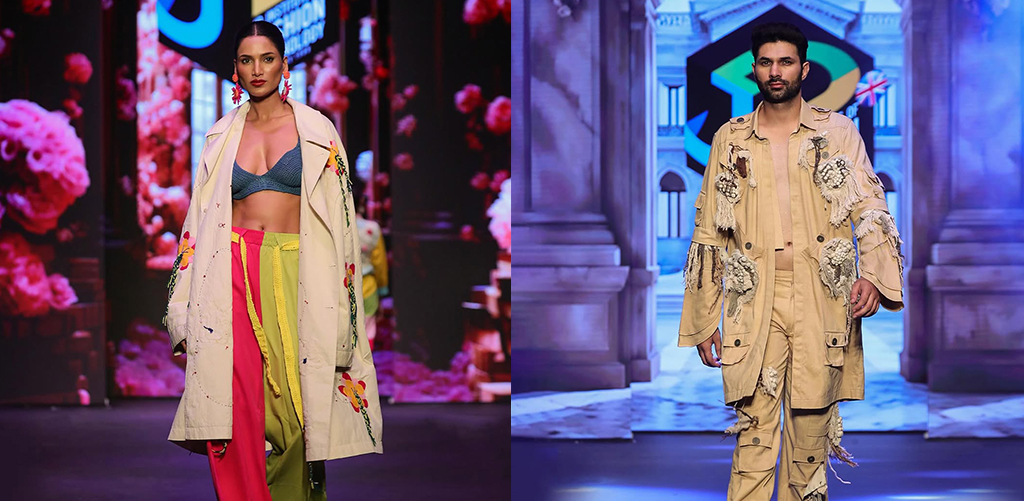
Collections by our Jediiians at iFestival crafted with eco-friendly materials and ethical production methods. This is the ambience of being a Jediiian, where sustainability and community lie at the heart of design.
A degree in fashion can thus lead you to roles such as a fashion designer, stylist, textile designer, or even a fashion journalist. If fashion feels like your calling, take the first step, visit our JD Institute, and explore our fashion courses today.
Interior Design: Do You Love Shaping Spaces?
Interior design is about much more than making a room look beautiful. It’s about creating spaces that are functional, comfortable, and reflective of people’s lifestyles, while balancing safety, aesthetics, and utility. This is a rewarding field for those who:
Love planning room layouts, playing with colors and textures, and working with spatial arrangements.
Have a keen eye for both creative and technical tasks, using software like AutoCAD and SketchUp to focus on detail.
Are skillful at managing client relationships and coordinating with builders and architects.
Want to design homes, offices, retail spaces, or even luxury resorts.
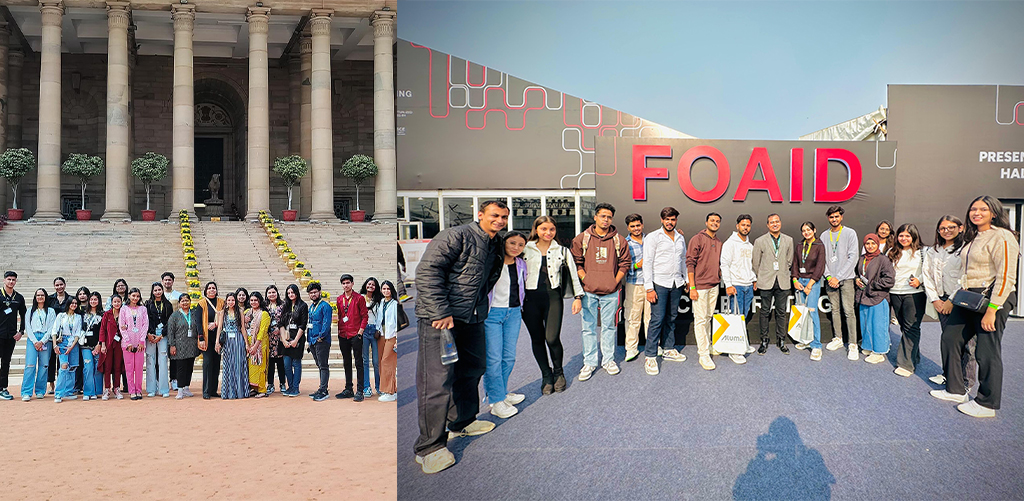
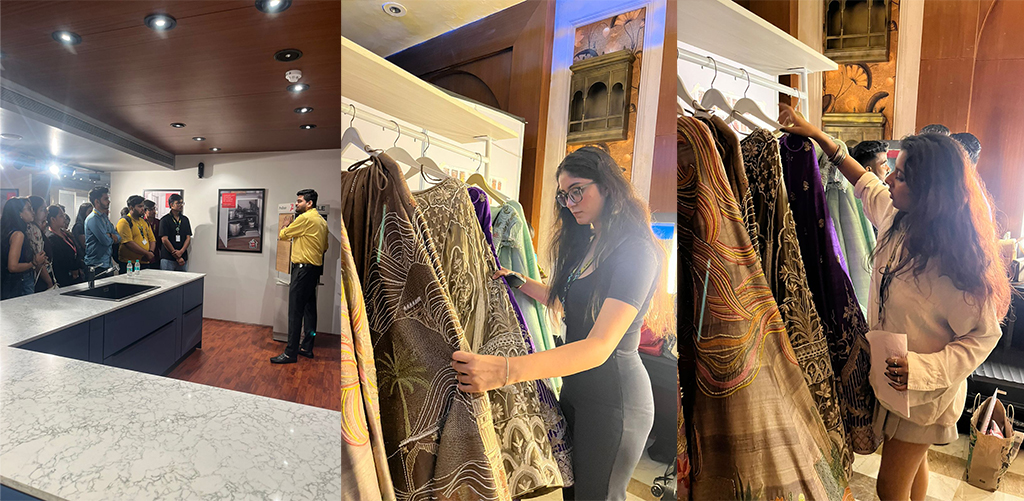
Our interior design Jediiians are shaping the future just like our fashion students. This can be seen as they gain real industry exposure through visits to places like the National Crafts Museum, Rashtrapati Bhavan, FOAID New Delhi, .ID Exhibition, and more.As Mr Rohit Bharti, our Head of Interior Design, often says, “We teach our students to design for people, not just for pictures. A space has to feel right, not just look right.”
Our Interior Jediiians explored the world of design inside out, gaining historical insights at Rashtrapati Bhavan and futuristic perspectives at FOAID, New Delhi.
If interiors excite you, it’s time to explore your creative side just like our students do. Check out our Interior Design course and discover exciting careers waiting for you.
Communication Design: Are You a Visual Storyteller?
Communication design, often a broader term for graphic design, is concerned with how media communicates with people. It is about conveying ideas visually, through graphics, branding, digital content, or campaigns. You’ll enjoy this field if you:
Love creating visuals that influence emotions, decisions offering visual problem-solving solutions.
Are curious about digital platforms, advertising, and brand identity.
Enjoy merging creativity with market insights.
If careers like graphic designer, branding specialist, social media manager, visual merchandiser, or digital content creator interest you, our Communication Design course is the right fit to shape your future. Just ask Dr. Deepti Wadhawan, our Course Director, who brings over 15 years of industry experience. She says, “Every brand in the world, from a local coffee shop to a global tech company, needs a visual storyteller. We train our students to be those essential creators.”
How to Decide Which Field Fits You Best?
Choosing among the different types of design fields is a personal journey, and there is no single “best” field. The right choice depends on your passions, skills, and the kind of work you want to do every day and to be honest all these careers have immense growth potential and global opportunities promising exciting and impactful careers.
Take the Next Step Towards Your Dream Career
Whether you dream of creating fashion collections, designing beautiful homes, or working on creative campaigns, a strong design education is crucial to success in any of these fields.
At JD Institute of Fashion Technology, our curriculum is designed to give you the skills you need to become an industry leader and with our Industrial Collaboration with Subharti University, we ensure our students graduate with a recognized degree and the practical expertise to succeed in any of these vibrant industries.
Explore all our specialised programmes and choose your design career that fits your goals.
FAQs
What are the main types of design fields?
The three major types of design fields are fashion design, interior design, and communication design, a broader term for graphic design. Fashion deals with clothing and style, interior focuses on spaces and functionality, while communication is about visual storytelling and branding.
Which design field has a better scope?
Each field have excellent scope and fruitful careers. The best choice depends on your personal interests and skills.
Do I need a degree to have a successful career in design?
It is highly recommended to have a degree as it provides a strong credible qualification which is very beneficial to get the best job as the design world is evolving day by day.
Why should I choose JD Institute for design education?
With over 36 years of legacy, international collaborations, and a proven track record of nurturing successful designers, JD Institute offers unique opportunities that few institutions can match.
Do you often find yourself get excited about colors, patterns, sketches, and ideas that break the ordinary? If yes, then design may be your true career calling. But here’s the real question: how do you know if design is truly the right career path for you?
Let us help you reflect, discover, and align your creativity with the world of design.
Understanding What a Career in Design Really Means
A career in design is not just about color, pattern, sketches or doodles, but is also about using your creativity, problem-solving skills, and technical expertise to come up with and make solutions that look good and work well for different clients or users. Whether you want to work as a fashion,interior, or communication designer, you need to be good at art, know how to use technology, and be willing to learn new things every day.
To help you figure it all more, let’s walk you through a series of self-assessment questions to help you determine if a career in design is the right path for you.
Self Discovery Questions to Help you Make a Thoughtful Decision
A lot of people think you need to be an artist to get into design. But honestly, design is so much more than just being artistic. Ask yourself these questions to uncover your core design skills:
Do I often look at everyday objects and think of ways to make them better? For example, when you see a bad app design, do you think about how you would fix it?
Are you a visual storyteller? For example, if you love brainstorming, experimenting, and expressing yourself visually, design could be an ideal match.
Do you value aesthetics and functionality together? For example, if you notice beauty and usability both at the same time, you are thinking like a designer already.
Can you handle feedback and collaboration? For example, a career in design involves teamwork with clients, peers, and industries. Do you have that open mindset to constructive criticism and feedback?
Are you motivated to master new skills? The design industry evolves fast, you have to explore new tools, materials, and techniques as per the trends to adapt your creativity with time.
If you see yourself motivated or influenced by these scenarios, design might just be your calling.
Pathways to Getting Started in a Career in Design
So, you’ve assessed on your creativity, passion and analytical skillset, now what comes next?
The journey to a successful career in design begins with taking the right first steps.
Build a Portfolio Early On- Build a portfolio showcasing your design process, not just polished results- recruiters want to see how you think, not just final results.
Find Mentors and Network- According to AIGA (American Institute of Graphic Arts)“the best way to land a first job is to build relationships and get to know different types of people.” Therefore, you must connect and engage with other designers, professionals, mentors and peers to learn about opportunities and gain insight.
Gather Real-World Experience- Many designers start with internships or beginner roles to build expertise and gain industry exposure. So, stay curious and open to exploring certifications, workshops, and real-world internships.
Choose the Right Education Platform- Selecting a trusted design education institution is the single most important step in building a fruitful career in design. Look for platforms that balance theory with practical exposure, provide industry-relevant curriculum, and offer support for skill-building and placements.
These little self-reflection points are just to help you think about whether design is right for you. So, remember, every big name in design once started right at the beginning, where the only difference was, they had the courage to take that first step.
Why JD Institute is Your Right Platform
When it comes to building a successful career in design, choosing the right education platform makes all the difference. At JD Institute of Fashion Technology, we go beyond textbooks- we prepare you for the industry with a blend of creativity, innovation, and real-world exposure. Here’s how we stand apart:
Courses Pan India- From degrees to diplomas, in fashion, interior and communication, we offer design courses for every kind of learner (whether you are seeking a deep understanding or want to enter the industry quickly with a strong technical foundation), that too with 35 campuses across India.
Strong Industry Exposure- We believe that learning extends outside the classroom. Our students get the chance to visit places like Hafele, Rashtrapati Bhawan, the Modern Art Gallery, The Ramp Asia to name a few, where they interact with industry professionals. These experiences not only broaden their knowledge but also open up great placement opportunities. As one of our B.Sc Interior Design students, Rohan, shared after visiting the Rashtrapati Bhawan, “It wasn’t just a tour. We were analyzing the design philosophy and colonial architecture with our professor. It felt like walking through a living textbook. That’s an experience you can’t get anywhere else.”
Our Interior Jediiians gaining hands-on learning at Hafele, while our Fashion Jediiians volunteering at the Ramp Asia Fashion Show. This is the real industry exposure that shapes our future designers.
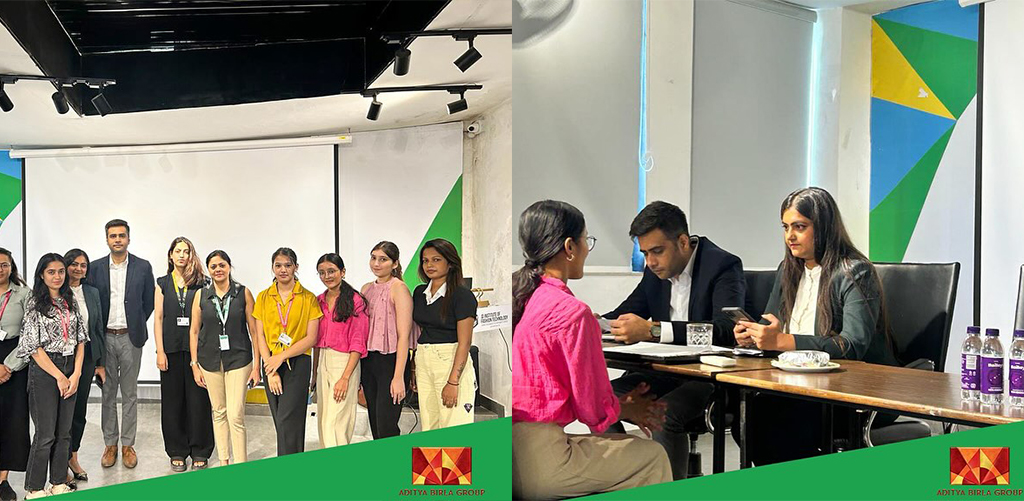
Internships and Placement Opportunities- From internships and portfolio building to placement drives, we connect our students with industry leaders such as Reliance, Aditya Birla, Arvind Brands, Tommy Hilfiger, Manish Malhotra, Pepperfry, and more.
Being interviewed by Aditya Birla Fashion & Retail Ltd., our Jediiians gained insights on customer management to visual merchandising.
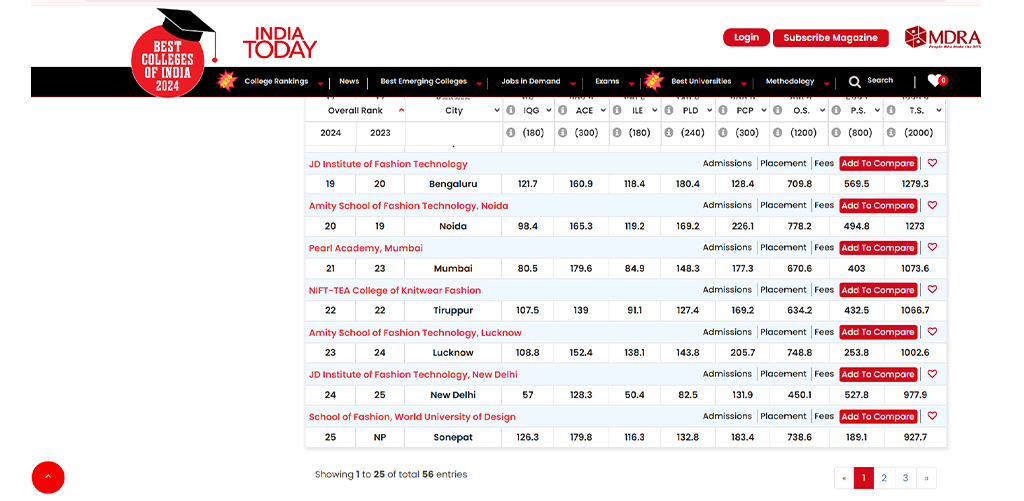
Recognized and Globally Connected- From India Today’s top rankings to tie-ups with India Fashion Week London, Subharti University, HTL in Spain, Nawaloka in Sri Lanka, and NABA in Italy, to name just a few, you’ll step into a reputed institute with global exposure that really adds value to your career.
Ranked among the Top Fashion Design Colleges in India 2024 by India Today– Once you step in with us, you know exactly where your career is headed: towards a place among the best.
What you see here are just a few of the many doors JD Institute opens for you. Step in, and you’ll discover the true power of being part of a design school that shapes futures.
Shall we get you started?
Choosing a career in design is as much about self-discovery as it is about skill-building. So, if you feel inspired by the possibilities and match some of the qualities above, let us discover your path with our courses tailored to your ambitions.
FAQs
What career opportunities can I explore after studying design?
A design background gives you opportunities in many fields such as fashion, interiors, communication, product, UX/UI, events, and visual merchandising. You can work with top companies, start your own brand, or even freelance worldwide.
What educational background is required to start a career in design?
To begin a career in design, you’ll need at least a high school education. Many students then go for a diploma, certificate, or bachelor’s degree in fields like fashion, interior, or graphic design.
Why should I choose JD Institute for my design education?
With a 36+ year legacy, and unmatched international opportunities, JD Institute ensures you graduate with exposure and experiences no other design institute can match.
What is the salary potential in a career in design?
Salary potential in a design career varies greatly by industry and specialization with typically high incomes, especially in major cities like Delhi.
How important is a portfolio and internship in design?
Both a design portfolio and internship are crucial for success in the design field. Your portfolio shows your skills and creativity, while internships give you real-world experience and projects to add to it.
Are you curious about what it’s really like to work as a designer in India? As we move into the forefront in 2025, the Indian design industry is combining traditional and modern styles to make designs that are both very personal and influenced by the world.
It has developed into a powerful impact that drives innovation and economic expansion.
So, if you are wondering about careers, money, or the future of design in India, let us provide you a thorough overview of the Indian design industry and explain why pursuing a creative profession in this field is a wise decision for your future.
A Look at Growth of the Indian Design Industry
The design industry in India is growing really well. Over the next ten years, areas including interiors,fashion, communication, and product design are all expected to increase gradually by 5% to 12% per year. This indicates that there is a greater need than ever for qualified designers in India.
But what actually contributes to this growth? Let’s have a look at some of the major factors:
Urban lifestyles: As more people move into cities, there is a greater need for modern housing, offices, and clothing.
Digitalization: The growing use of digital platforms like social media, apps, and e-commerce is opening up a lot of opportunities for branding, UX/UI design, and communication design.
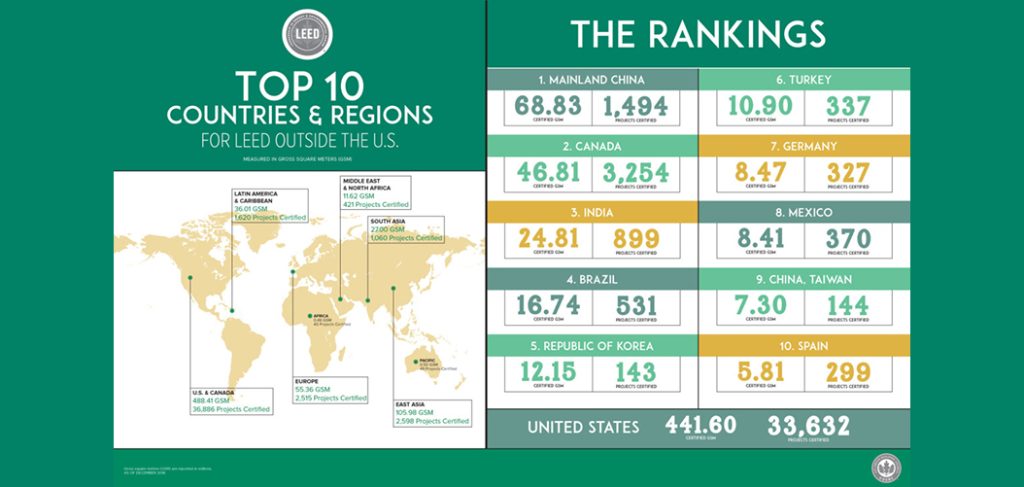
Sustainability Shift: You know people now demand eco-friendly clothing, accessories, and interiors and that is no longer a trend but a necessity. And here’s something interesting- India ranked consistently 3rd on U.S. Green Building Council’s (USGBC) 2024 list for LEED green buildings, as per GBCI (Green Business Certification Inc.)
This means there is a rising need for skilled designers in the Indian design industry to meet local demand and match global standards.
Personalization: People today want designs made just for them, that’s why the demand for customised design is growing everywhere.
Through its “Make in India” and “Design in India” programmes, the Indian government also acknowledges the value of design and seeks to establish its design industry as a global centre for design.
Salary and Career Scope in India’s Design Industry
In the Indian Design sector, the blend of your creative imagination and income potential, promises a fruitful career. Let’s have a look at the list of highest paying design careers in 2025:
Design Role
Experience Level
Salary Range (LPA)
Fashion Design
Entry Level
4-6 LPA
Mid Level
6-9 LPA
Senior Level
9-18+ LPA
Interior Design
Entry Level
3-5 LPA
Mid Level
5-8 LPA
Senior Level
8-15+LPA
Graphic Design(Communication Design Role)
Entry Level
2-4 LPA
Mid Level
4-8 LPA
Senior Level
8-15 LPA
UI/UX(Communication Design Role)
Entry Level
3-6 LPA
Mid Level
6-11LPA
Senior Level
11-15+LPA
Product Design
Entry Level
3-6 LPA
Mid Level
6-10 LPA
Senior Level
10-15+ LPA
Even better are opportunities available globally. Many Indian designers work internationally and even have their own labels abroad. This offers you even higher earnings.
Why is JD Institute The Best Launchpad?
See, the design job market is growing really fast, but just being creative isn’t enough anymore. If you want to stand out and get paid well, you need proper training, that is both the theory and the practical skills. That’s exactly what JD Institute has been doing for over 36 years, and here is why our students have an edge:
Recognized Degrees: Our Fashion, Interior and Communication design programs are offered in collaboration with Subharti University, which means that you will graduate with a recognized degree and the hands-on, real-world experience that employers demand.
Placements with Top Brands – With a stellar placement success rate of 84-91% and 100% placement assistance, we ensure that our graduates don’t just enter the industry, they redefine it. Our students are placed with high-end Indian names like Manish Malhotra, Tarun Tahiliani, Lalit Dalmia, House of Masaba, White Hanger, and Essentia Environments, to name a few.
As one of our graduates, Pratiksha, now a Fashion Design Intern at Lalit Dalmia, recalls:“Getting as a Fashion Design Intern at Lalit Dalmia felt like a faraway dream until JD Institute made it real. From building my portfolio to preparing me for placements, everything was structured to make sure I was industry-ready. Today, when I walk into work at Lalit Dalmia’s studio, I know that journey began at JD.”
Our Jediiians being interviewed by renowned fashion designer Lalit Dalmia, who has styled leading Bollywood celebrities including Esha Gupta, Gauhar Khan, and Akshay Kumar.
Experienced Faculties: Our faculty are not just teachers but industry experts, who mentor you with insights that only come from years of real-world experience. They focus on bridging the gap between traditional craftsmanship and modern innovation, ensuring our students are prepared for the jobs of tomorrow.
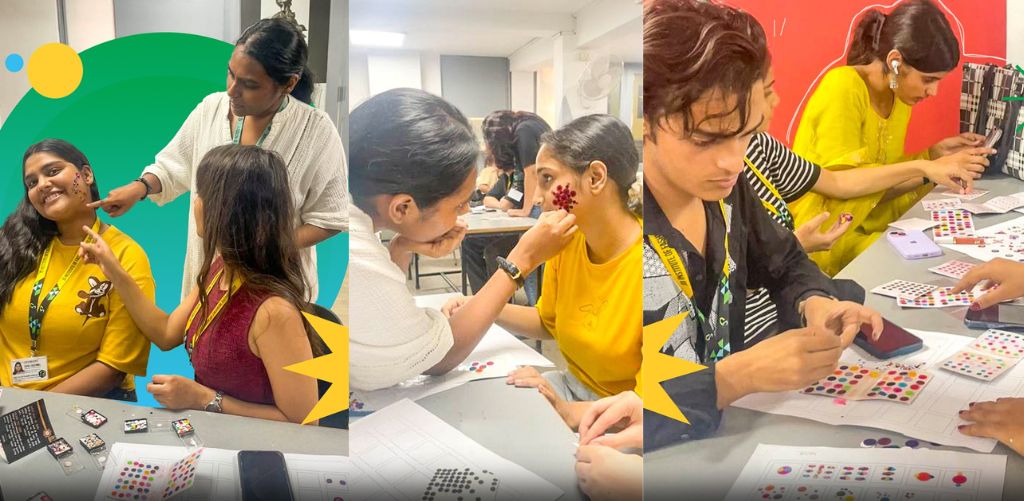
Our faculty use the bindi, an age-old Indian accessory, to teach students about the mysteries of colour, proportion, and cultural meaning. This is what learning at JD Institute means- beyond convention.
Our Rich Alumni Base: One of JD Institute’s strongest pillars is its alumni network. From fashion icons like Rocky S, Shane Peacock, Maheka Mirpuri, Jigar Mali, who have designed for Bollywood and global celebrities like Beyonce, Paris Hilton, Katty Perry, to our interior design graduates like Sanjyt Singh, Aanchal Gulati, who run renowned studios and international projects, alumni are not just shaping design industry in India, but globally too.
By choosing JD Institute, you’re not just picking a course; you’re joining a community that will prepare you to be at the forefront of not just just the Indian design industry but across the world as well.
Ready to take the next step?
The world is searching for fresh perspectives and exceptional talent, and India’s design sector is well-positioned to lead the worldwide creative movement. And if you’re serious about turning your creativity into a career, JD Institute of Fashion Technology is here to make it happen.
Download our course brochure that will prepare you for the future.
FAQs
What is the future of the design industry in India?
India’s design industry has a bright future, growing fast with the digital shift. There’s high demand, but not enough skilled talent. Designers who bring creativity, problem-solving, and tech knowledge will find big opportunities ahead.
What kind of careers can I pursue in design?
You can build a career in many areas of design like graphic, UI/UX, product, interior, fashion, architecture, or even game design. These areas open doors in tech, marketing, manufacturing, and entertainment, with options to work in studios, corporate firms, or as a freelancer.
How does JD Institute prepare me for placements?
At JD Institute, we help you prepare with portfolio reviews, practice interviews, real projects, and working with industry experts. Many of our graduates have found jobs with top brands like House of Masaba, Manish Malhotra, Tarun Tahiliani, White Hanger, Lalit Dalmia, and Essentia Environment, to name a few.
Can I build an international career if I study design in India?
Of course! Many Indian brands are known worldwide. Even our alumni like Rocky S and Shane Peacock started here and went on to style global celebrities, while our interior graduates like Sanjyt Singh run studios with projects in the Middle East, Europe, and beyond.
Design is everywhere you look, from the app that helps you keep track of your fitness to the inside of your favourite cafe to the newest sneakers that went viral. People are now looking for innovation, creativity and more problem-solving approach. That’s why choosing a career in design isn’t just another choice, but a powerful step towards shaping a world that looks and feels different. So, if you’ve been wondering whether design could be your thing, let us explore why this career may be an ideal fit for your future.
What Are The Benefits of Choosing a Career in Design?
When parents and students envision the future, they want a career that is safe, fulfilling, and allows for growth. This is why design is a perfect fit:
High Pay Potential: Talented designers with impressive portfolios can expect high compensation, particularly in the fields of communication, interior design, and fashion.
Flexibility: A career in design provides a range of work possibilities that suit various lifestyles, from full-time positions to freelancing.
Diverse Career Opportunities: There is a demand for designers in a variety of fields, including media, fashion, interior design, travel, healthcare, and technology.
Business Future: A lot of designers establish their own career pathways by successfully starting their own studios, agencies, or brands.
Global Presence: Because design skills are universal, they can lead to partnerships and employment opportunities worldwide.
Know The Expanding Scope of Design
Design shapes sectors like digital media, branding, communication, product innovation, and even technology; it is not just found in fashion or interior design.
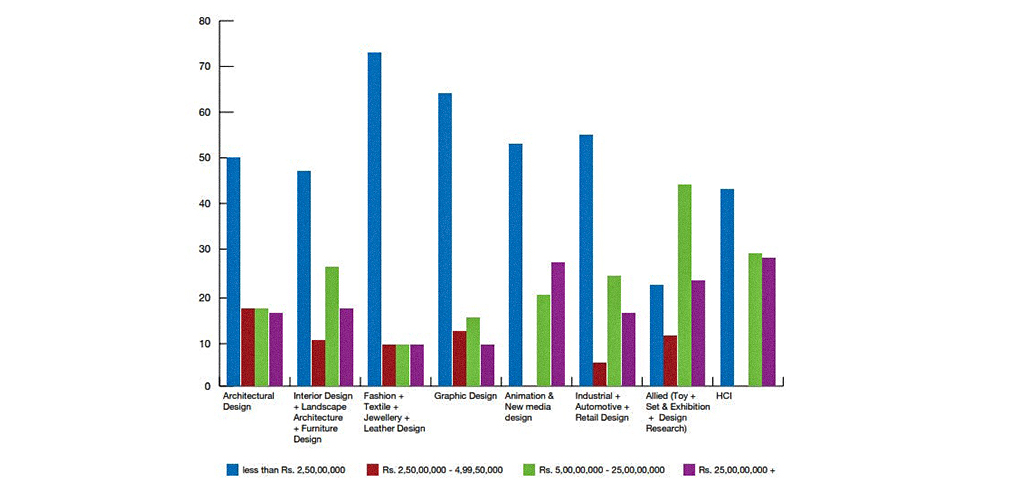
The India Design Report states that thousands of small and expanding businesses, many of which are already generating multi-crore turnovers in the fashion, interiors, digital, and communication sectors, represent the foundation of the country’s design economy.
Entrepreneurial Growth Across Design Sectors – At a Glance
This shows that design is not just about creativity, it is a financially rewarding and entrepreneurial career path. And this is exactly what happens when you choose design as your career option.
Why JD Institute?
Choosing the right institute is as important as choosing the right career. Here’s why JD Institute gives your child the best platform to succeed:
Pan-India Presence You Can Trust: With 36+ years of legacy and 35 campuses across India, we ensure design education is accessible no matter where you are.
Industry-Ready Diplomas: On the other hand, our 1-year Diplomas are designed for quick industry entry, making sure your child doesn’t just study but also earns opportunities faster.
Expert Mentorship: Our students work under real industry leaders like Sonia Jetleyy, an acclaimed fashion designer and a registered member of the FDCI (Fashion Design Council of India), Manjeet Bhullar, a pioneer of conceptual interiors and furniture, Rita Gangwani, an excellent personality-performance-pageant coach, to name a few.
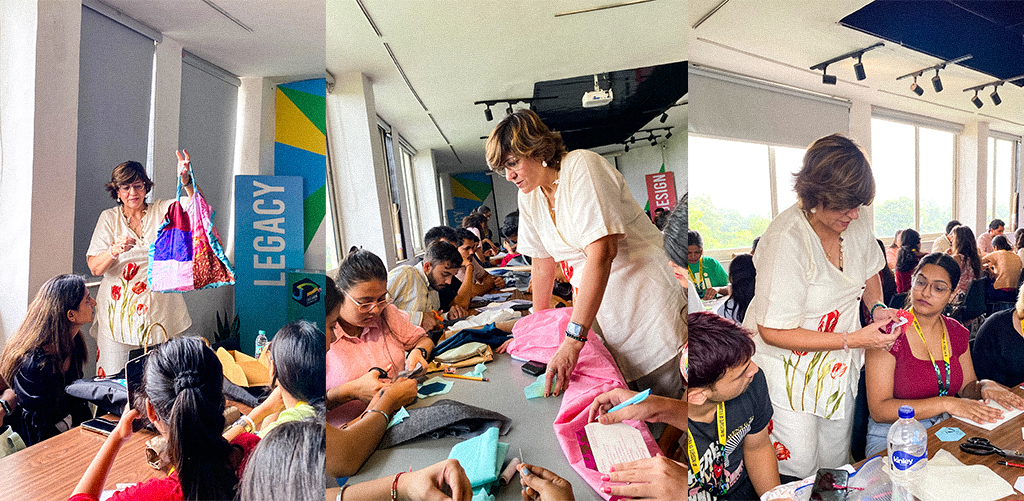
Our students learning from one of the fashion design experts, Sonia Jetleey, gaining direct industry insights regarding fashion sustainability and upcycling.
Global Opportunities, Real Exposure: As the first Indian design institute to launch residential programs in London, Dubai, and other international hubs, we give Jediiians unmatched global networks with embassies, buyers, and curators.
70% Practical Learning: With our 70% of learning focused on real-world exposure- industrial visits, field trips, modern art galleries, students graduate with skills that employers value most. Reflecting on her industrial visit, Priya, a B.Sc. Interior student expressed “Being at India Design Week felt unreal. Watching real trends unfold right in front of me was way beyond what any textbook could teach!”
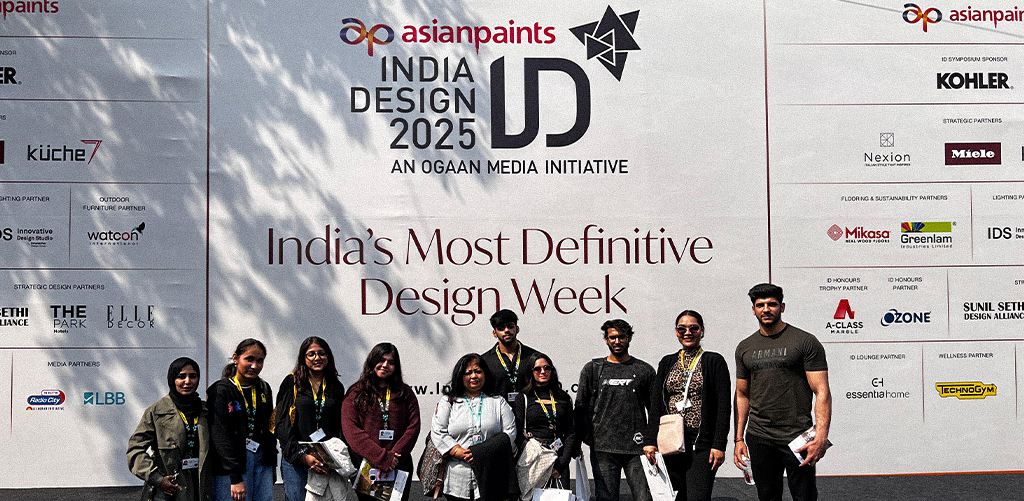
Our Interior Design students at India Design 2025. They experienced the newest in interior and product design and turned them into classroom practice. Now that’s real-world learning in action.
Campus Life: From sports, music, and poetry to iFestival, India’s Largest Student Design festival, lets students showcase their talent and prototypes on big platforms, even opening doors to Bollywood.
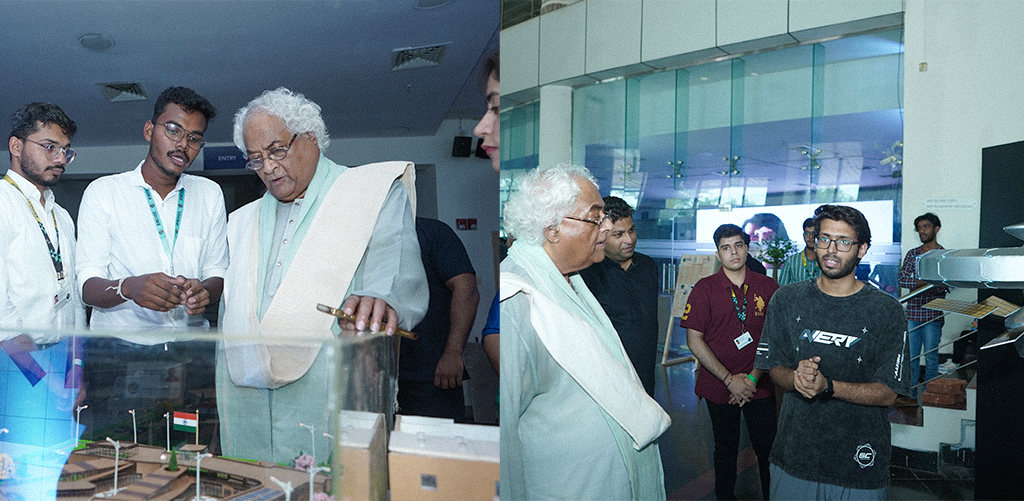
Students showcasing Project BioDyne- a futuristic space vision prototype at iFestival, and earning appreciation from Padma Bhushan Shri Rajeev Sethi.
Our Global Collaborations: Partnerships with India Fashion Week London & Dubai, GFDA, NABA (Italy), NCHS (Sri Lanka), Polimoda (Florence), and HTL (Barcelona) give students unmatched international exposure and networking opportunities.
Eligibility Criteria: No matter your stream- arts, science, commerce, or humanities, you can pursue design with us. All you need is 50% in Class XII creativity and problem-solving over textbooks.
These are a reflection of JD Institute’s teaching approach, where your student will get the right platform to thrive.
What Our Famous Alumni Have to Say
Jigar Mali – Fashion Design Batch 2019, Owner of JigarMali Designs Private Limited
“Back in my final year, I remember staying late in the lab, struggling with a design patttern. One of my mentors sat beside me for hours, walking me through the smallest details. That patience and real-world guidance gave me the confidence to eventually launch my own label, JigarMali Designs.”
Sanjyt Singh – Interior Design Batch 1996, Creative Director & Founder of Spaces + Objects
“One project we worked on at JD required us to transform a typical living room into a modern space. I still remember how my lecturers encouraged me to view design as a whole lifestyle, not just as walls and furnishings. I now approach each space I build differently because of that project.”
Padma Yangchan – Fashion Design Batch 2015, Designer at Namza Couture & Namza Dining and also a receiver of Nari Shakti Puraskar Award
“During a textile module, we had to work hands-on with local fabrics. I spent weeks experimenting with natural dyes and traditional patterns. It was tough, but the process gave me a deep respect for craft and storytelling through design- something I carry forward every day in my work.
Nitin Kartikeya – Fashion Design Batch 2013, Founder Director at Kartikeya
“We had to do some practical work using local fabrics during a textile workshop. For weeks, I experimented with traditional designs and natural dyes. Although the process was challenging, I gained a deep admiration for craftsmanship and design narrative, which I use in my work every day.”
Feeling inspired to choose design as your career?
Start your creative journey with us.
Frequently Asked Questions (FAQs)
Why Pick a Career in Design?
A profession in design provides freedom, creativity, international opportunities, and significant growth possibility in a variety of fields, including digital design, fashion, interior design, and communication.
Is a Career in Design a reliable choice for my child?
Absolutely. With possibilities in international markets, start-ups, and multinational brands, India’s design sector is growing quickly. JD Institute’s comprehensive academic programs and track record of placement assistance guarantee stability.
What kind of careers can I go for after studying design at JD Institute?
After graduating, you can become a designer, stylist, consultant, or even start your own brand. Our alumni have already taken all these routes.
Does JD Institute help students with placements?
Of course. Leading companies including Tommy Hilfiger, Pepperfry, Calvin Klein, Sabyasachi, and H&M have hired our students. We also get them ready for freelance work and business.
Why choose JD Institute over other design colleges?
JD Institute has been teaching design for 36+ years, with 35 campuses, global links, practical learning, great mentors, and a strong alumni base.
Can someone without a design background join JD Institute?
Yes, of course! You don’t need any prior design experience. Explore our diploma and short-term programs that are built to guide beginners into the industry.
Which programs are available at JD Institute for my child?
From degree programs like B.Des and B.Sc. to Diplomas and short-term courses such as Fashion Styling, JD Institute offers a wide range to match your interests.
Did you know Steve Jobs wore the same black turtleneck every day, not because he lacked options, but because he understood the power of simplicity? That’s the same principle driving capsule fashion. When you’re starting a fashion brand, it’s not about creating everything at once. It’s about creating something small, sharp, and memorable. That’s why capsule collections are often the smartest move for new fashion startups.
And here’s where it gets exciting, this isn’t just a design decision, it’s a full-on business strategy. In fact, courses likeFashion Business Management at JD Institute teach upcoming entrepreneurs how minimal fashion choices can actually build maximum impact in today’s market.
What Exactly Is Capsule Fashion?
Capsule fashion is the art of designing a small collection of versatile pieces that can be mixed, matched, and worn in multiple ways. Think of it as the “playlist” version of fashion instead of a massive wardrobe, you curate just the hits.
For startups, this approach means lower production costs, less inventory stress, and a stronger brand story. When you put out fewer pieces, every single one has to count. And that’s exactly what customers love in today’s minimal fashion-driven world.
Small Collection Ideas That Built Big Brands
Take Everlane, for example. When they first launched, they didn’t try to sell hundreds of items. They focused on well-crafted basics like T-shirts and denim. That capsule-style start created trust and loyalty before scaling up.
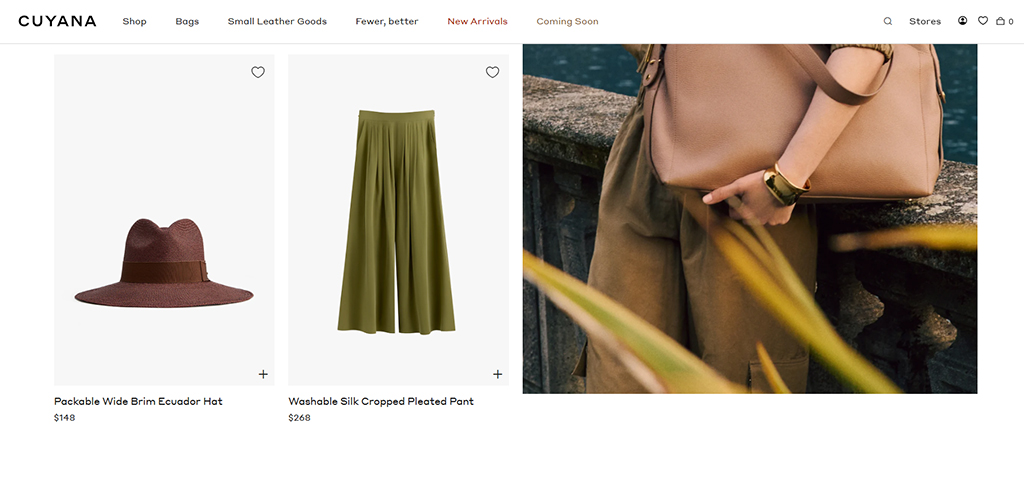
Or look at Cuyana, their slogan “Fewer, Better Things” isn’t just catchy; it’s their entire business philosophy. By starting small with a capsule collection, they built a brand around timelessness instead of chasing every trend.
These examples show how new fashion startups can use small collection ideas to stand out in a crowded market. It’s proof that less really can mean more.
Sezane: From Online Capsule Drops to Global Fame
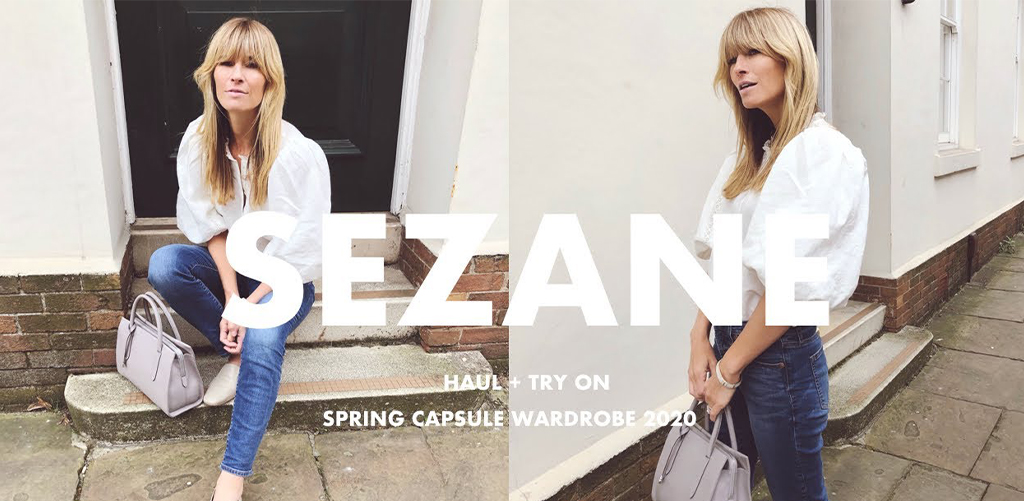
French label Sezane also started with capsule fashion drops online. Instead of releasing huge seasonal collections, they curated limited-edition capsules that sold out quickly. This not only reduced waste but also created urgency and exclusivity.
What began as a small experiment with capsule fashion has now grown into a global brand known for sustainability, quality, and community. The key lesson? A focused small collection can scale into a large business, if it’s built on clarity and purpose.
Minimal Fashion = Maximum Storytelling
In today’s world, consumers aren’t just buying clothes, they’re buying into a story. Capsule fashion gives startups the chance to craft that story more tightly.
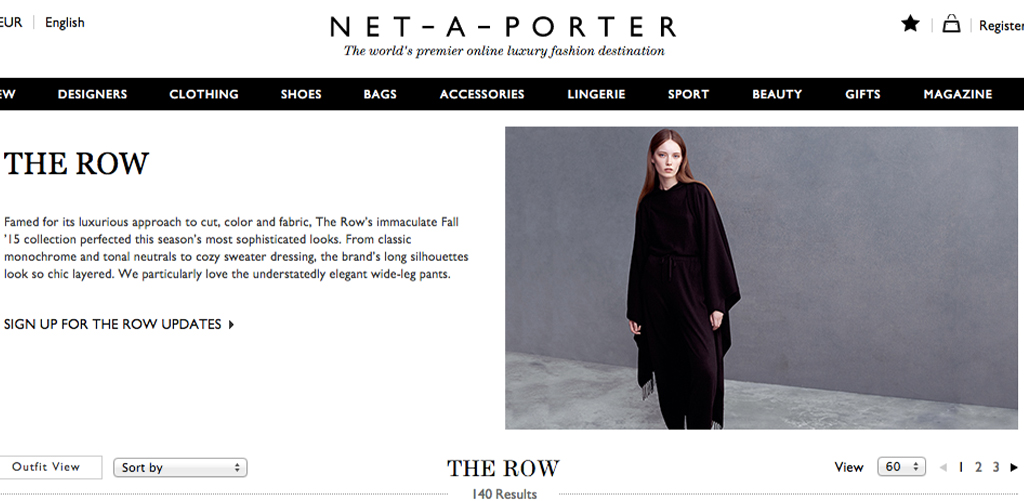
Take The Row by Mary-Kate and Ashley Olsen. They began with a capsule of just the perfect white T-shirt and leggings. That small start positioned them as minimal fashion icons, and today The Row is one of the most respected luxury labels in the world.
Your capsule collection can do the same. By focusing on fewer, stronger pieces, you communicate thoughtfulness, sustainability, and purpose.
What Fashion Students and Entrepreneurs Should Learn
For anyone dreaming of launching their own brand, the lesson is clear: don’t start with a warehouse, start with a capsule.
Aspiring entrepreneurs should learn:
How to identify timeless, versatile pieces
How to control costs without cutting creativity
How to market minimal fashion as a lifestyle, not just clothes
This is why business-focused training is so important. The Fashion Business Management program at JD Institute teaches how to balance creativity with financial planning, so students don’t just design clothes, they design successful businesses.
A Smarter Start to Fashion
So, why capsule collections are perfect for new fashion startups? Because they give you focus, save you money, and help you tell a stronger brand story. They prove that fashion doesn’t have to be loud to be noticed.
If you’re an aspiring fashion entrepreneur, remember this: the next big fashion empire might not begin with 500 products. It might begin with just 5, carefully chosen, beautifully made. And if you want to be that entrepreneur, don’t just dream it, learn it. Start where fashion meets business at JD Institute, and craft the kind of smart, minimal fashion story the world is waiting to wear.
Ever noticed how the “like” button on Instagram somehow makes you tap it without thinking? Or how Netflix’s bold red “Play” button feels almost magnetic? That’s not magic, it’s design. Behind every clickable button lies a set of smart tricks that designers use to influence your click behavior. Welcome to the fascinating world of CTA design (Call-To-Action design), where psychology, color, and interactive design meet to create UI elements you simply can’t ignore.
At JD Institute, this kind of sharp design thinking is what students across Fashion, Interior, and Communication Design explore, because whether it’s a button, a garment, or a space, what gets people to “interact” is the ultimate design test.
Why Buttons Matter More Than You Think
A button isn’t just a rectangle with text, it’s the gateway to action. In UI terms, buttons are the bridges between user intention and digital outcomes. The smoother and more inviting the bridge, the higher the interaction.
Think of Amazon’s“Buy Now” button that is bright, bold, and perfectly positioned. A single click, and millions of transactions happen daily.
Similarly, fashion design plays with visual cues in the same way. Take the little black dress made iconic by Audrey Hepburn, its design was so inviting, it became the “button” that made women across the world adopt a timeless style. Design after all is, about guiding human behaviour.
Why Shades Make Us Click
Color psychology is no gimmick, it’s real science. Red means urgency (YouTube’sred play button dares you to act instantly), while green reassures (“Proceed to Checkout” on many shopping sites).
Interior designers use this same trick. Ever noticed how Pantone’s Color of the Year often becomes a must-have for furniture and decor? It’s because color doesn’t just decorate, it directs.
Students at JD Institute experiment with this by testing how a simple color change in a UI prototype can increase click rates, or how a shade in an interior space can set the emotional tone for the entire room.
The Silent Persuaders
Big buttons get noticed, rounded corners feel friendlier, and motion draws attention. The subtle wiggle of a Spotify “Shuffle Play” button or the expanding “heart” on Twitter when you like a tweet? That’s interactive design doing its job.
Fashion has its equivalent: remember Lady Gaga’s meat dress at the MTV Awards? It wasn’t subtle, it was big, bold, and impossible to miss. The same rule applies to clickable design: make it visible, make it memorable.
This principle is something design students must experiment with when they create campaigns, testing how interactive ads and motion graphics influence user engagement.4
Right Place, Right Time
Even the best-designed button fails if placed poorly. Placement guides the user’s eye and action. Google’s clean search homepage is iconic because the “Google Search” button is right where your eyes land, front and center.
In interiors, this is like putting a statement chandelier right in the entryway. It sets the tone and directs attention. Placement, more than decoration, decides interaction.
Students must learn that in both digital and physical design, context shapes behavior, whether it’s a button on a screen or the flow of a room.
The Future of Buttons: Beyond the Click
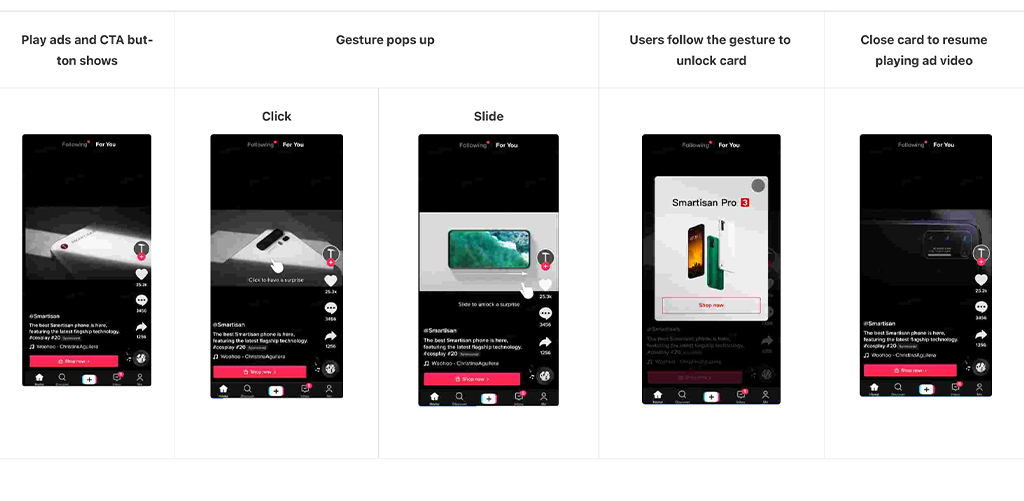
Today, buttons aren’t just rectangles, they’re voice commands, gestures, and even invisible zones. Think about how TikTok’s swipe-up gestures replaced buttons entirely but still drive massive engagement.
The next frontier of interactive design is about making the action so natural, you don’t even notice it. And that’s exactly what design education is preparing future creators for, because being ahead of the curve is the real trick.
At JD Institute, students aren’t just learning design, they’re learning how to create those moments of interaction that the world can’t resist clicking. Because in the end, whether online or offline, great design always gets a response.
So here’s your call-to-action: don’t just click- design the click.