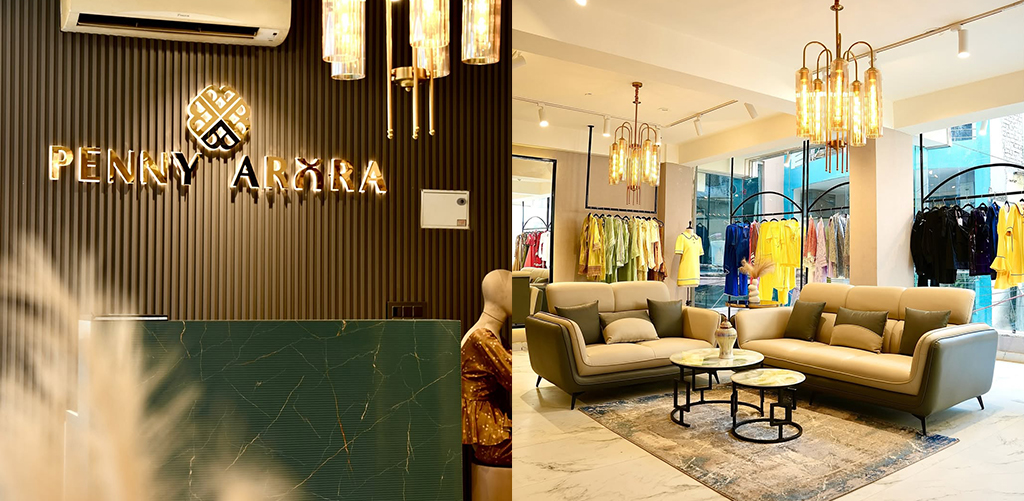
We often talk about the “JD Edge”- that unique blend of innate perspective and raw creative autonomy. Penny Arora is the living embodiment of that edge. From the class of 2015, Fashion & Apparel Design, Penny has officially opened the doors to her debut store, a physical manifestation of her core philosophy: “Wear Your Emotions.”
Penny’s work has always existed in that beautiful, liminal space where architectural structure meets fluid sensibility. Her store is a sensory experience where modern minimalism acts as a canvas for human narrative. What began as an uncompromising respect for detail at JD Institute has now evolved into garments that preserve memory.
We take immense pride in Penny’s evolution, and congratulate her on defining what it means to lead with a powerful, singular voice.
Whether you’re inspired by Penny’s architectural minimalism or want to find your own unique cultural expression, our expert faculty and industry-aligned training are here to guide you through.
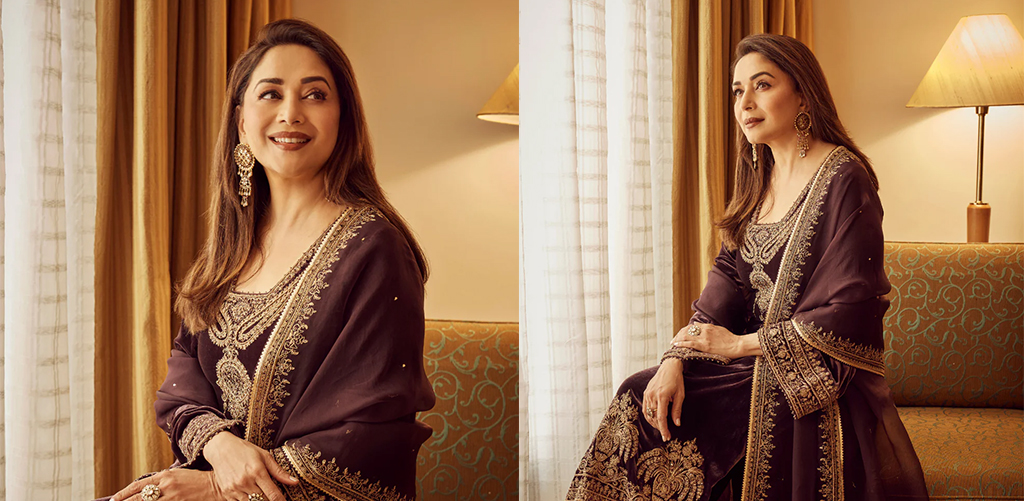
Fashion is a journey of evolution, one that begins with a single sketch and culminates in moments that define a legacy. For JD Alumnus Jigar Mali (Fashion Designing Class of 2010), that journey recently reached a stunning new milestone. The legendary Madhuri Dixit Nene was seen in the ‘Meheroon’ suit, a signature creation by Jigar Mali. Crafted in rich velvet and paired with a delicate organza dupatta, the ensemble shone with intricate antique gold dori and exquisite hand-embroidery, a testament to Jigar’s refined design language.
At JD Institute, we’ve watched Jigar transition from a focused student into a designer who commands the industry’s respect. Seeing his work adorn a global icon like Madhuri Dixit Nene is a proud moment for our community. It reaffirms our core mission of providing the creative foundation that allows our alumni to reach the pinnacle of the global fashion stage.
Jigar Mali isn’t just dressing stars, he is defining the future of Indian couture.
If you aren’t here to change the game, you’re in the wrong place. Join the ranks at JD Institute.
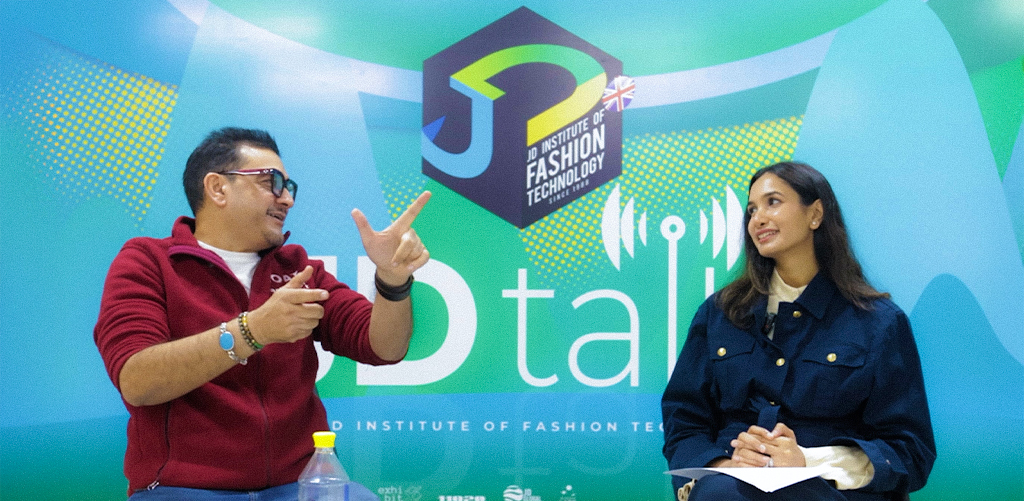
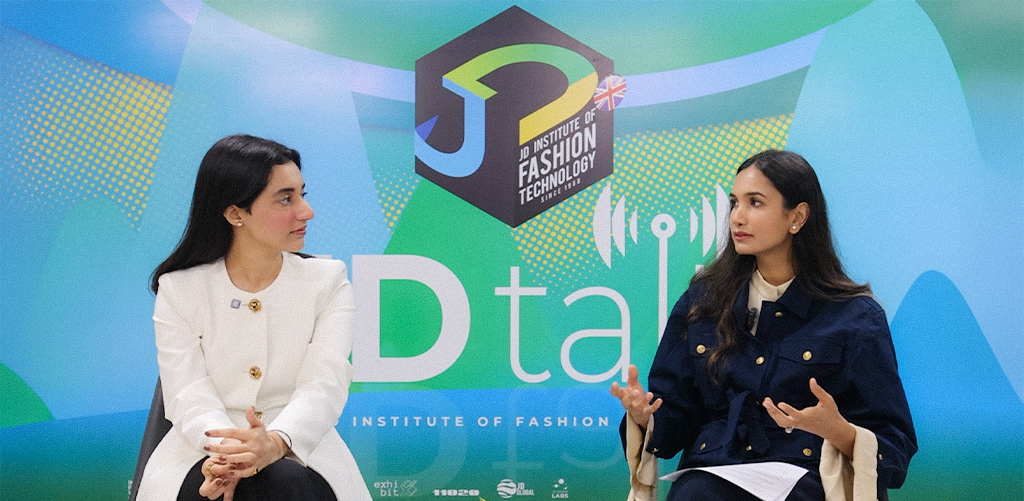
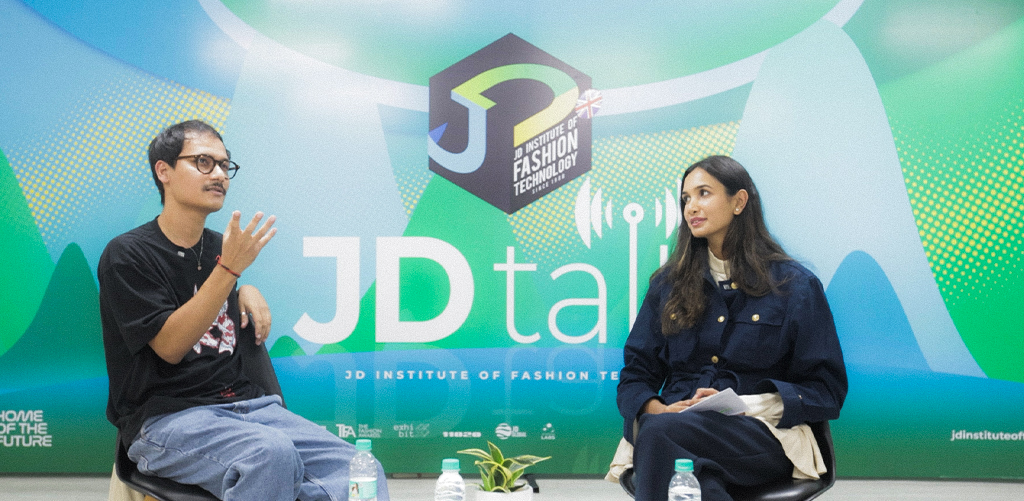
At JD Institute of Fashion Technology, we believe that education must go beyond the classroom. It should be a gateway to real-world wisdom and industry disruption. This vision comes to life through JD Talks, a thoughtfully curated knowledge-sharing platform that brings together visionaries, makers, and disruptors for sharp, human-centered conversations. These sessions explore the “why” behind creativity and the “how” behind innovation, moving Jediiians to think beyond fleeting trends and build with purpose.
Recently, our Hauz Khas Campus hosted an inspiring edition of JD Talks titled that featured a powerhouse panel of changemakers: Abhaia Sharma (Fashion Lawyer and Founder of Regally Legal), Babar Afzal (Ex-McKinsey consultant and Founder of the Pashmina Goat Project), and Ashish Kaprawan (Visual Artist and AI Workflow Engineer at DCverse). Together, they decoded the business of creativity and the mindset required for long-term success.
Redefining Value: Entrepreneurship with Babar Afzal
The conversation kicked off with Babar Afzal, whose journey from a McKinsey consultant to a TIME & WIRED Fellow has been nothing short of extraordinary. Focusing on Entrepreneurship and Brand Building, Babar offered a roadmap for students looking to shape their creative futures.
He challenged the traditional definition of “value,” urging students to look at sustainability not as a buzzword, but as a core business model. By balancing passion with practicality, he explained how capital acts as a fuel for growth and scalability.
His advice for young dreamers was clear: to move from a “creative idea” to a “creative enterprise,” one must understand how to manage investments and build a brand that stands for something meaningful.
Legal Foundations: Why Fashion Law Matters with Abhaia Sharma
The creative world often overlooks the “boring” paperwork, but Abhaia Sharma demonstrated why legal literacy is now a survival skill for designers. As a pioneer in fashion law, she covered the essential pillars of copyrights, trademarks, and digital commerce.
Abhaia explained that before finalizing a brand identity, designers must navigate potential trademark conflicts and understand the Designs Act. For those starting on a tight budget, she highlighted key legal recourse strategies to protect their intellectual property. Her session provided a solid legal foundation for startups, emphasizing that a brand’s identity is only as strong as its legal protection.
AI as the Ultimate Creative Partner: Ashish Kaprawan
The talk then shifted toward the future with Ashish Kaprawan, who demystified the world of Artificial Intelligence. Rather than viewing AI as a threat, Ashish presented it as a Problem Solver, a system that learns and adapts to perform cognitive tasks, from recognizing images to generating complex data.
While many fear that AI will replace human designers, Ashish argued that it is actually a partner that extends our human capabilities. It enhances accuracy and imagination, allowing designers to work faster and dream bigger.
However, he was quick to point out that AI still lacks empathy, intuition, and emotional storytelling, the very things that make art “human.” For students caught between curiosity and confusion, his journey offered a clear vision of how human-AI collaboration will evolve into a powerful tool for creative storytelling.
The Jediiian Experience: Learning Beyond the Textbook
The atmosphere at the Hauz Khas campus was electric as students moved from being passive listeners to active participants. This JD Talks session offered a unique moderated format where Jediiians could:
Listen to real-life industry experiences: Hearing the struggles and triumphs of a TEDx speaker, a fashion lawyer, and an AI engineer provided a reality check on the industry.
Gain clarity on purpose-driven design: Students observed how creativity translates into tangible innovation when it is backed by a strong “why.”
Reflect on their own journeys: The interactive discussion allowed students to question current trends and focus on meaningful, long-term outcomes.
Broaden professional perspectives: By engaging with diverse experts, students gained a holistic understanding of the design ecosystem- from the pashmina goats of the Himalayas to the digital servers of the future.
Building a Purpose-Led Creative Future
This edition of JD Talks at the Hauz Khas campus successfully bridged the gap between creative thought and professional execution. By bringing together the legal expertise of Abhaia Sharma, the entrepreneurial spirit of Babar Afzal, and the technological foresight of Ashish Kaprawan, JD Institute of Fashion Technology continues to nurture thinkers and disruptors. These honest, thought-led exchanges inspire our students to look past the surface of the fashion industry and build careers rooted in purpose, innovation, and integrity.
Are you ready to turn your creative spark into a lasting legacy?Join the conversation at JD Institute and discover how we empower the next generation of global design leaders to build with vision and lead with heart.
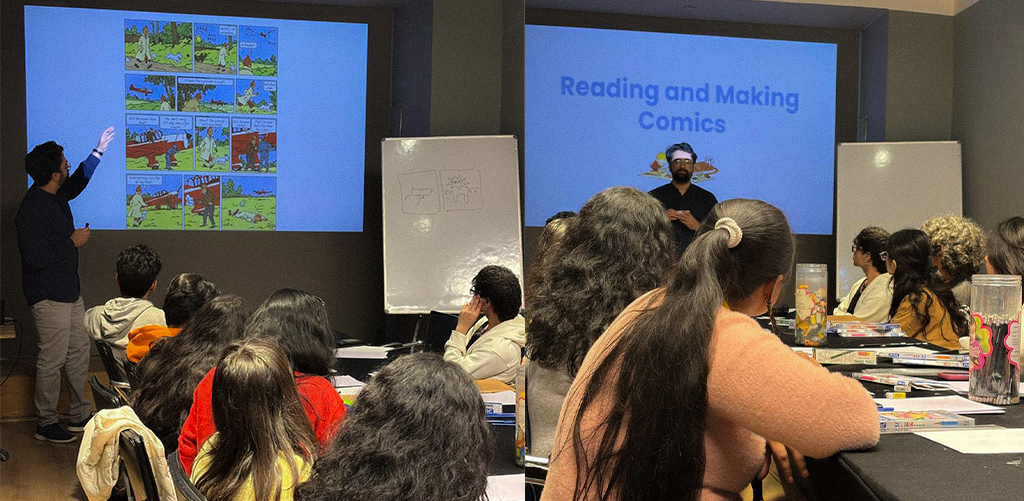
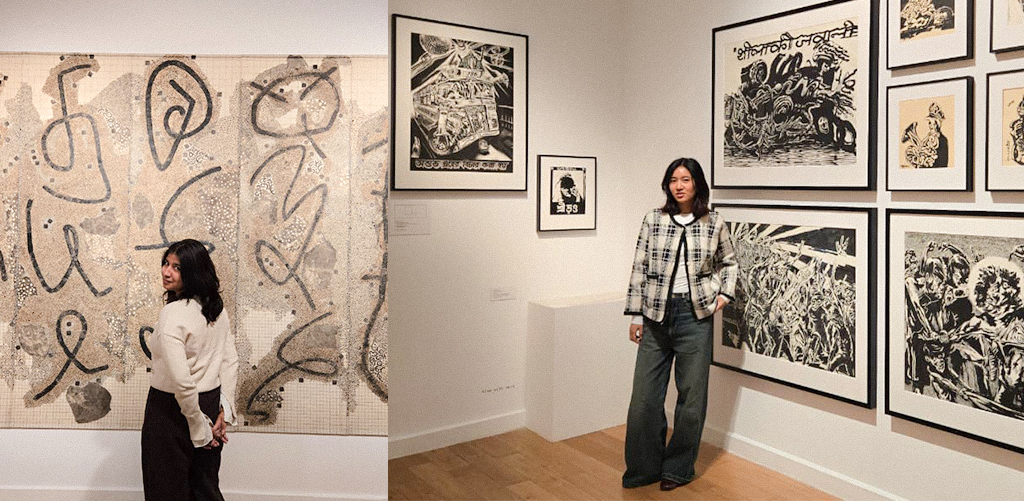
In the modern creative landscape, the boundaries between different artistic disciplines are becoming increasingly fluid. For the Fashion Design Jediiians from the Kamla Nagar campus of JD Institute of Fashion Technology, this reality was brought to life during an immersive “Decoding Comics” workshop at the Kiran Nadar Museum of Art (KNMA).
This session was not just about drawing; it was a deep dive into the sophisticated world of sequential art and its profound applications in the realm of fashion and visual narrative.
The Master Behind the Panels: Anupam Arunachalam
The workshop was facilitated by Mr. Anupam Arunachalam, a highly regarded Delhi-based writer, illustrator, and comic book artist. With a career spanning prestigious publishers like Penguin Random House India, Hachette India, and Tinkle, Mr. Arunachalam brought a wealth of professional expertise to the students. His background in creating both fiction and non-fiction comics provided a unique academic bridge, showing students how the interaction of words and images can create powerful narrative possibilities.
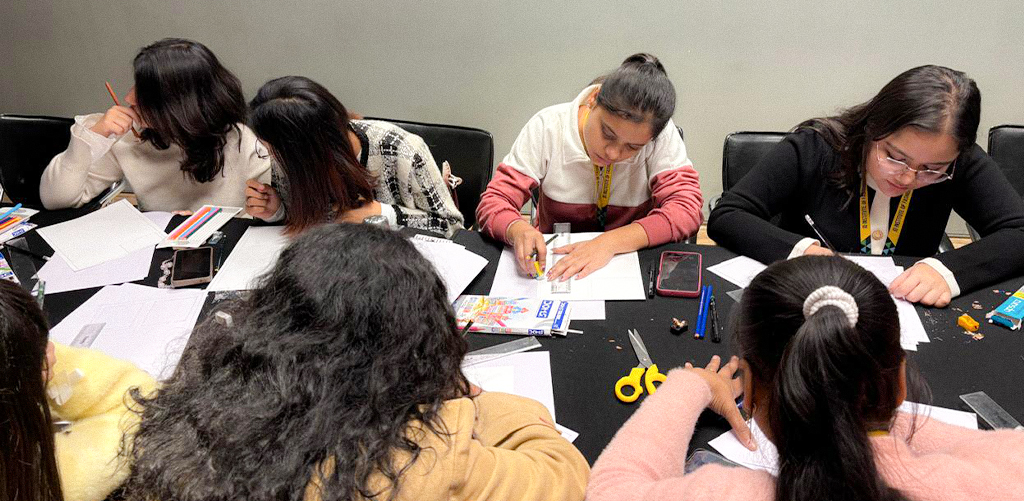
Under his guidance, students explored the fundamental question: how do comics work as a medium? Through short, low-pressure exercises, the Jediiians began to see comics not merely as entertainment, but as a structured language of visual communication.
The Building Blocks: Symbols, Conventions, and Visual Vocabulary
Every medium has its own “grammar,” and comics are no different. The students spent time deconstructing what comics are made of, moving beyond the surface to understand creative deviations and established Comics Conventions.
A significant portion of the workshop was dedicated to mastering Symbols and Visual Cues, which are essential for conveying information without excessive text. These included:
Emotion Symbols: Subtle facial cues and icons that signal a character’s internal state.
Motion Lines: Stylized marks that indicate the speed and direction of movement.
Bubble Variations: How the shape of a speech or thought bubble can change the “tone of voice” of the narrative.
By learning how to integrate these symbols into their art, fashion students gained a new set of tools to add dynamism and emotional depth to their own fashion illustrations and storyboards.
Mastering the “Gutter”: The Art of Panel Transitions
One of the most academic yet practical segments of the workshop focused on the concept of sequential movement. In comics, the space between the panels, known as the “gutter”- is where the reader’s imagination completes the action. To guide this process, students learned about the six primary types of panel transitions popularized by comic theorist Scott McCloud:
Moment-to-Moment: Slowing down time to focus on a single, subtle action.
Action-to-Action: Showing a single subject progressing through a series of specific movements.
Subject-to-Subject: Changing focus from one person or object to another within the same scene.
Scene-to-Scene: Transporting the reader across significant gaps in time or space.
Aspect-to-Aspect: Moving the viewer’s eye across different parts of a scene to establish a specific mood or “tone”.
Understanding these transitions is vital for fashion designers, as it teaches them how to “storyboard” a collection or a fashion film, ensuring a logical and engaging flow of visual information.
Character Creation: From Concept to Character Sheet
For a fashion student, a character is often the “muse.” The Character Creation Exercise taught students how to build a consistent visual identity for their creations. This was achieved through the development of a Character Sheet, a standard industry tool used to ensure a character looks the same from every angle.
Students worked with a model that included:
Front and Side Views: Essential for understanding the silhouette and construction of clothing.
Key Expressions: Showing how the character’s personality influences their posture and look.
Props and Signature Items: Small details that add layers to the character’s backstory.
Clothing Details: A deep dive into textures, folds, and how garments react to movement.
Bringing it All Together: Sequencing Exercises
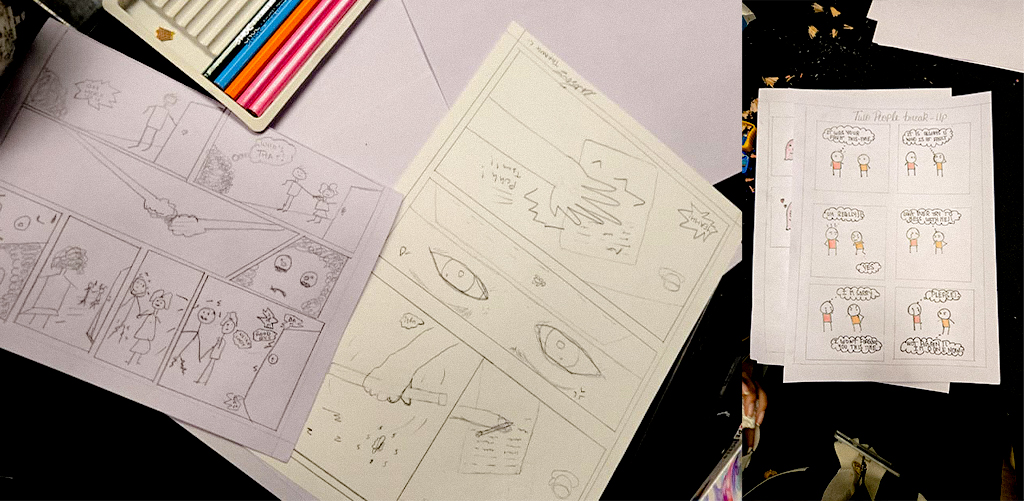
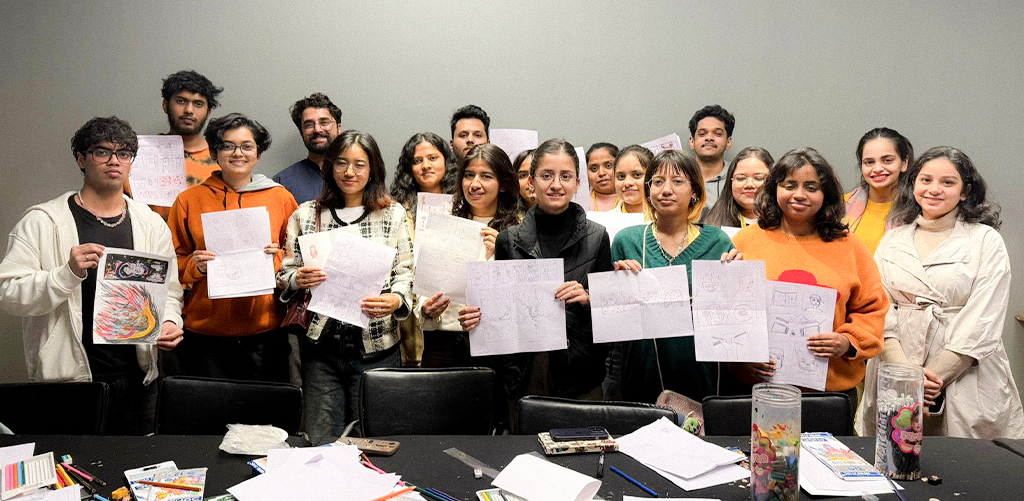
The workshop concluded with Comics Sequencing Exercises, where students had to apply everything they had learned. By combining character design, symbols, and transitions, they created short visual narratives.
This hands-on practice reinforced the idea that fashion is not just about the final garment, but about the story the garment tells and the world the character inhabits.
A New Perspective on Narrative Design
The “Decoding Comics” workshop at KNMA provided the Kamla Nagar Jediiians with a transformative experience that extended far beyond traditional fashion illustration.
By mastering the language of sequential art, these students are now better equipped to communicate their creative visions with clarity, emotion, and technical precision. They leave the museum not just as designers, but as visual storytellers ready to weave complex narratives into the very fabric of their future collections.
Are you ready to illustrate your own future?Join us at JD Institute of Fashion Technology and discover how multi-disciplinary workshops can turn your creative passion into a professional career.
In the fast-evolving world of modern design, the most innovative ideas often come from looking back at our deepest roots. Recently, the JD Institute of Fashion Technology, Hauz Khas, New Delhi, turned its creative focus toward the high altitudes of South America for a specialized event.
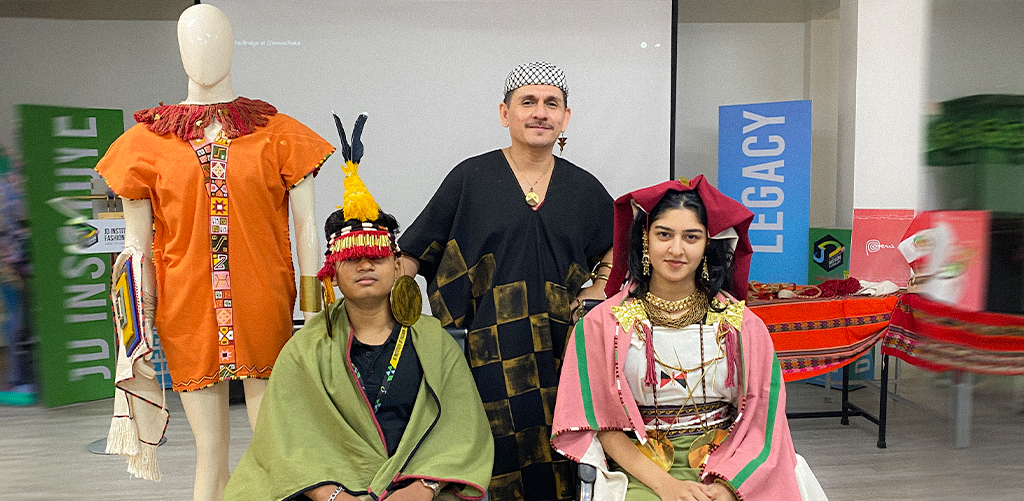
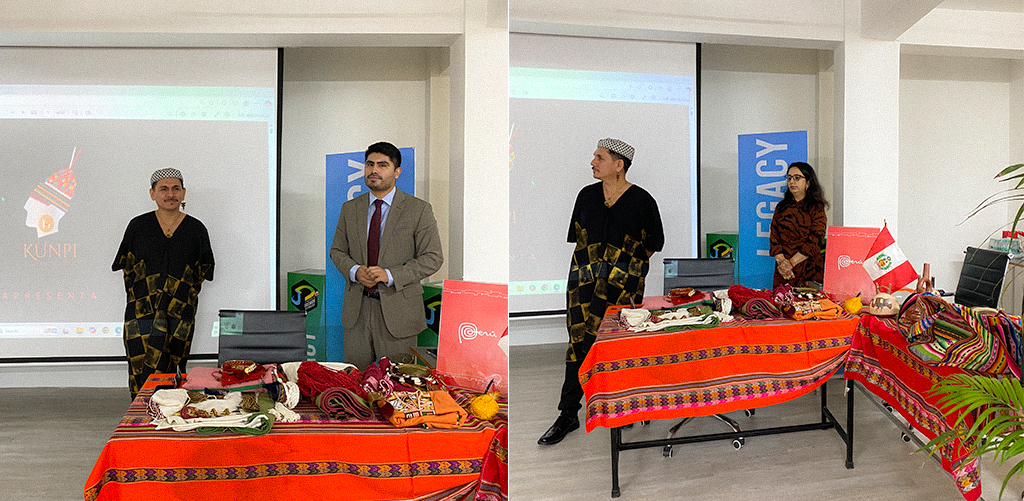
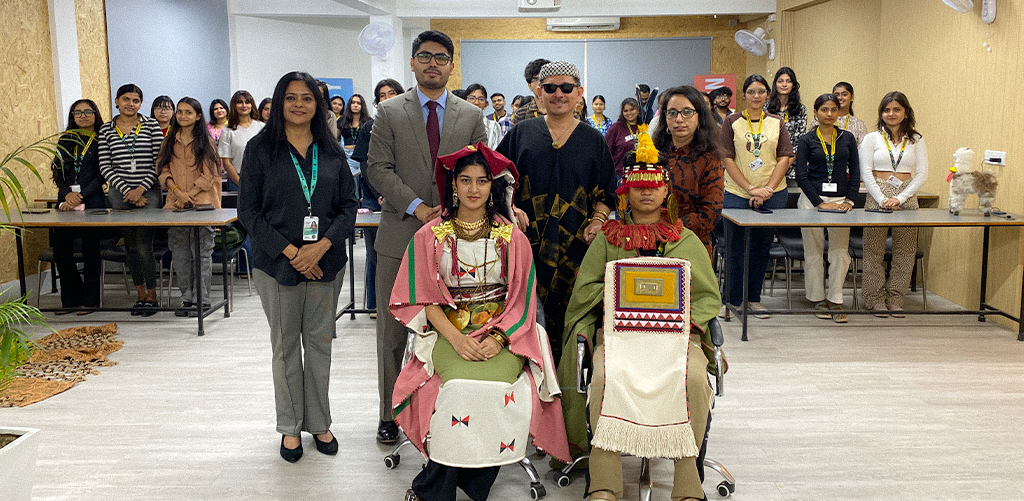
The talk and workshop titled “History of Andean Fashion and Its Application in Arqueomoda Andina” offered students a rare window into a civilization where every thread and knot held a sacred meaning.
The Vision of KUNPI – Arqueomoda Andina
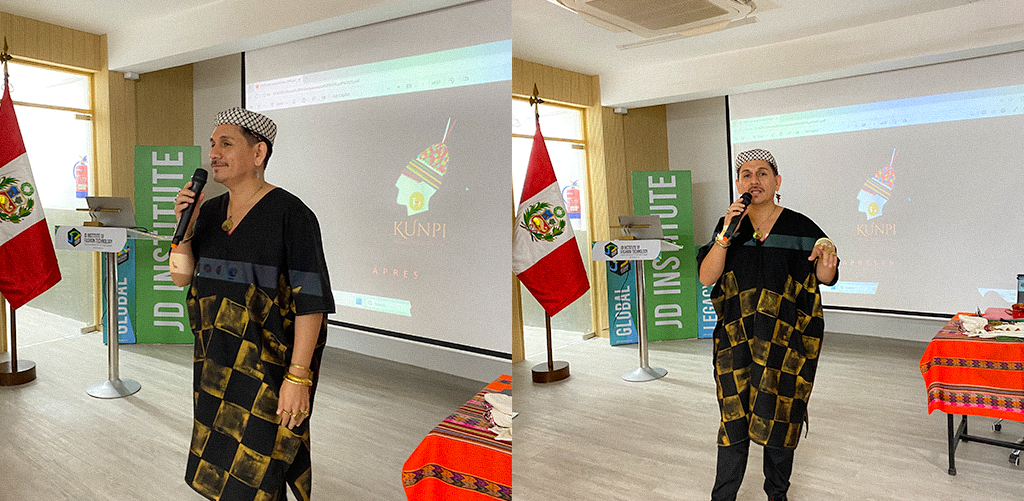
The workshop was led by the visionary Mr. Adrian Llave Inka, the founder of KUNPI – Arqueomoda Andina. KUNPI is more than a fashion brand; it is a Peruvian cultural initiative dedicated to reviving ancient Andean textile traditions through the lens of contemporary design. Based on rigorous archaeological, anthropological, and spiritual research, KUNPI reinterprets the complex clothing systems of the Inka and Pre-Inka eras for a modern audience.
For our Fashion Design jediiians, this brand served as a masterclass in how heritage and sustainability can merge. By using research-driven practices, KUNPI proved that the fashion of the past is not just an artifact-it is a living system of knowledge that can lead the way toward a more ethical and mindful design future.
From Caral to Inka: A 6,000-Year Fashion Journey
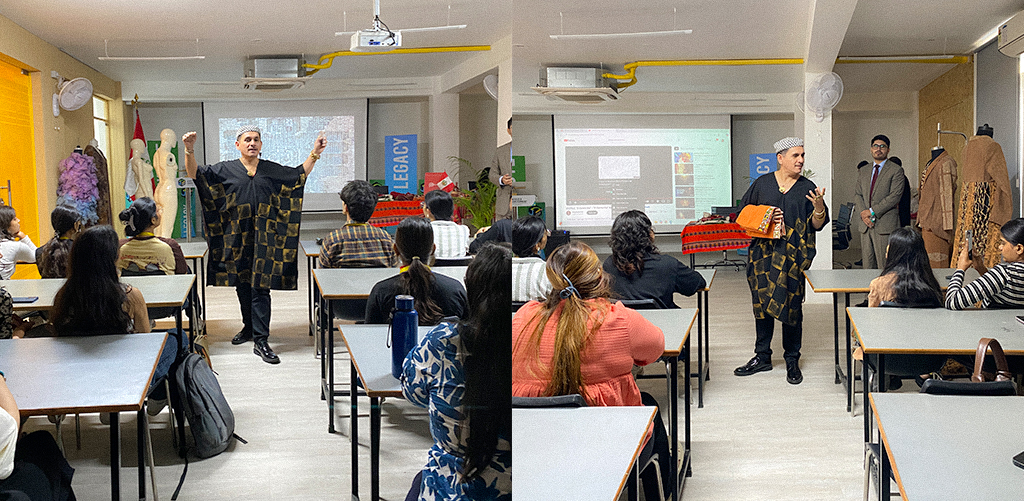
The educational portion of the session took students on a journey through time, starting with the ancient Caral civilization (6500 BCE), which is one of the oldest known societies in the Americas. Mr. Llave explained how Andean clothing evolved over six millennia, serving as a profound reflection of cultural identity and social status.
Students learned that for the Inka people, textiles were more valuable than gold or silver. Clothing was a multidimensional language. The session detailed the symbolism behind the materials and colors used in these ancient garments:
Materials: While everyday clothing was made from cotton or llama wool (awaska), the finest textiles, known as qompi or cumbi, were reserved for royalty and made from soft vicuna hair.
Colors: Red symbolized life force and war; yellow represented the sun (Inti) and maize; and black was associated with ancestral wisdom and the earth (Pachamama).
Patterns: Geometric designs called tocapus functioned as a coded grid that communicated the wearer’s clan, family, and social rank.
A Collaboration of Global Heritage
The event was graced by distinguished guests who highlighted the diplomatic and cultural importance of this exchange. In attendance were:
Mr. Adrian Llave Inka: Founder of KUNPI and a pioneering artist known for using Inka-style fashion shows as a medium for cultural revival.
Mr. Jimy Trujillo Chuquihuaccha: Second Secretary of the Embassy of Peru.
Ms. Kavita Malhotra: Consular Assistant at the Embassy of Peru.
The presence of these experts and officials allowed students to engage in an interactive Q&A session, fostering critical thinking about how research-driven design can protect and celebrate global heritage.
Shaping the Future of Design
By exploring the “History of Andean Fashion,”JD Institute students have gained more than just historical facts; they have learned a new philosophy of design. This workshop demonstrated that a garment can be a carrier of memory, history, and spiritual power. As these young designers move forward, the lessons from Arqueomoda Andina will inspire them to create fashion that is not only beautiful but also deeply meaningful and rooted in the stories of humanity.
Ready to weave your own narrative?
Step into a world where your creative vision meets global heritage, enroll in our next design immersion and transform the threads of history into the fabric of your future career.
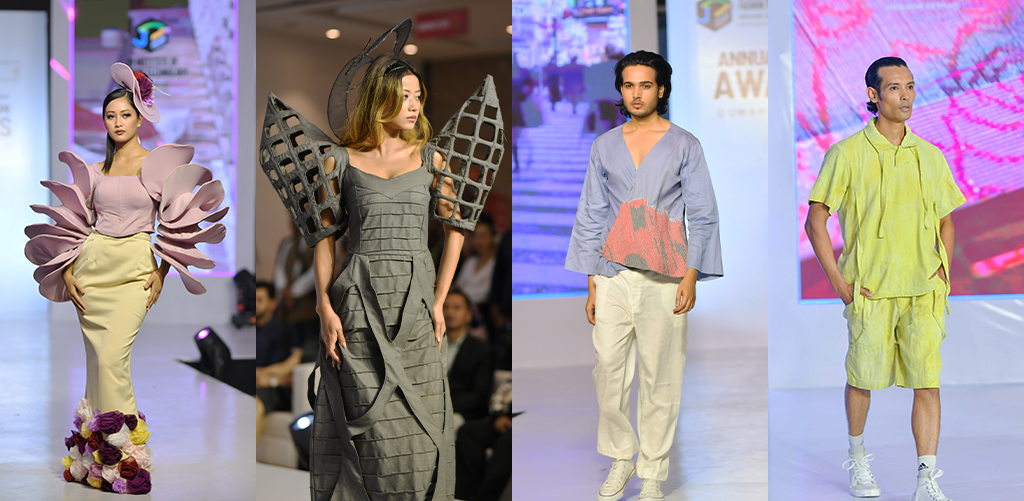
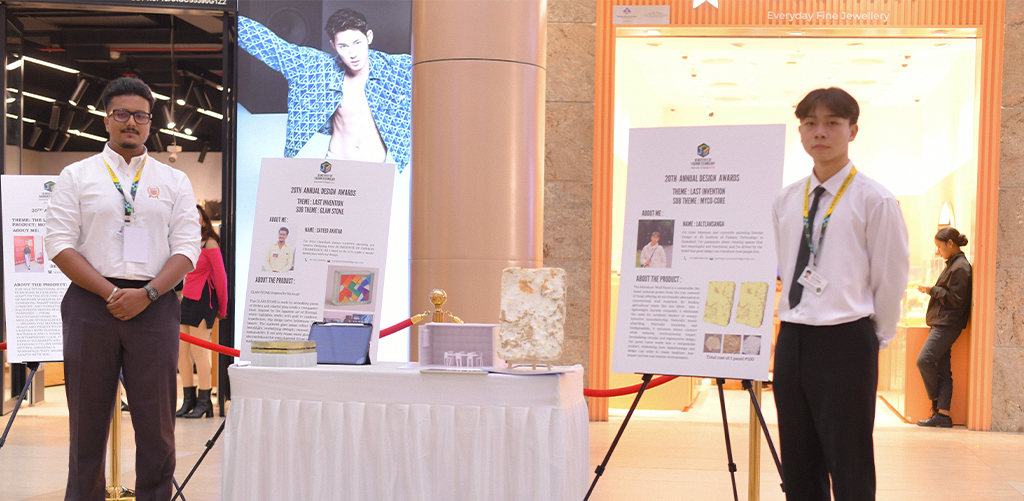
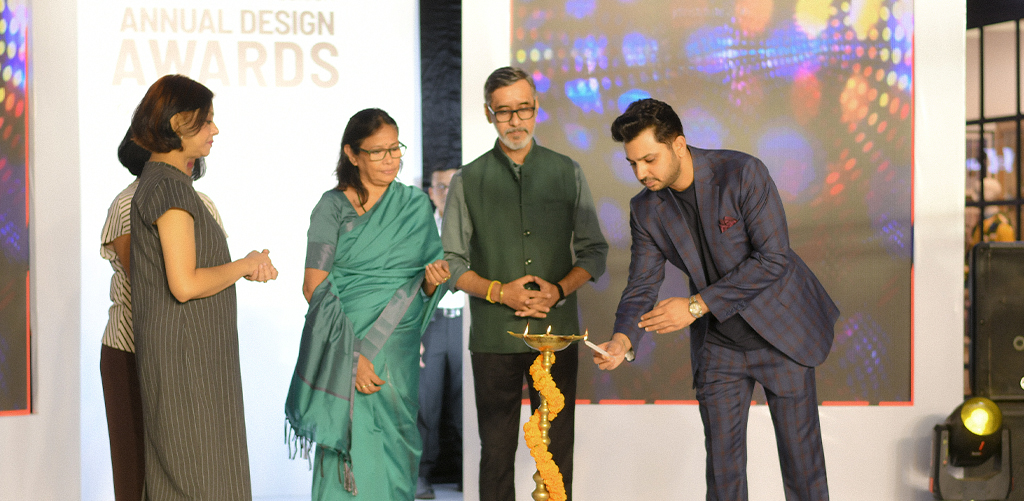
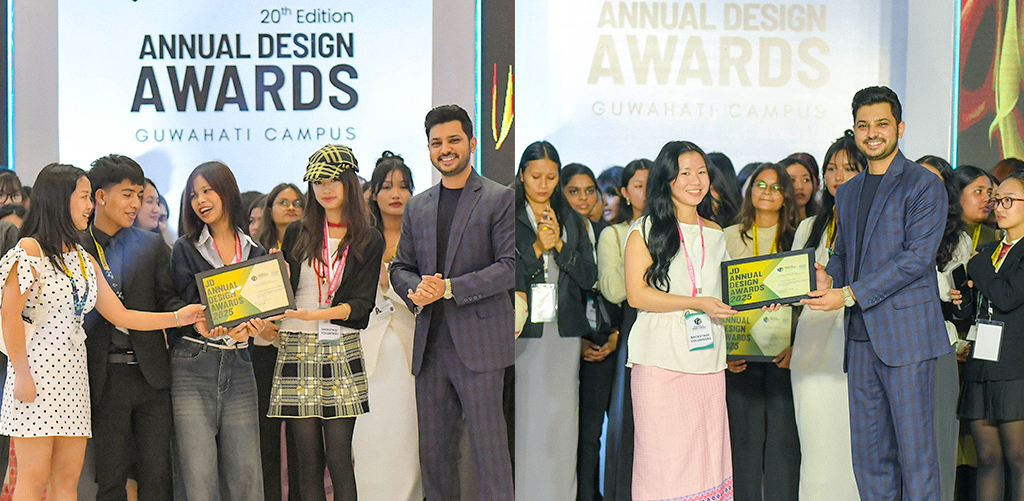
The pursuit of excellence and innovation culminated at the 20th edition Annual Design Awards (ADA), for JD Institute Guwahati, held at the CITY CENTER, GS ROAD, GUWAHATI, this November. This landmark event celebrated two decades of design education, transforming the venue into a dynamic showcase where students unveiled their final, industry-ready projects in both fashion and interior design. The atmosphere was charged with creative energy, collaboration, and a spirit of healthy competition, truly reflecting the transformative journey of the students.
Showcasing Vision: Fashion and Interior Design Narratives
The Annual Design Awards provided an essential platform for students to present their products and collections to a broad professional audience. This was far more than an exhibition; it was an exercise in creating a concept from initial ideation to the finished piece.
Fashion: Mastering the Runway Process
Students specializing in Fashion Design showcased cohesive collections that demonstrated mastery of the entire industry process. They were responsible for the full execution of the show, managing intricate sequences and coordinating the complex logistics of backstage operations.
Their work earned significant recognition, including one highly successful collection that secured the prestigious title of “Best Innovative Design” for two consecutive years, highlighting their ability to consistently deliver visionary, well-executed concepts. This practical exposure taught invaluable lessons in time management, process control, and the collaborative hustle required for large-scale fashion presentations.
Interior Design: Transforming Materials and Concepts
The Interior Design showcase focused heavily on sustainability, innovation, and thoughtful, responsible design. Students pushed creative boundaries by developing unique products that addressed modern environmental challenges and leveraged traditional craftsmanship.
Key concepts presented included:
MycoCore: An innovative product that focused on exploring sustainable materials, presenting an ecologically sound alternative for interior applications.
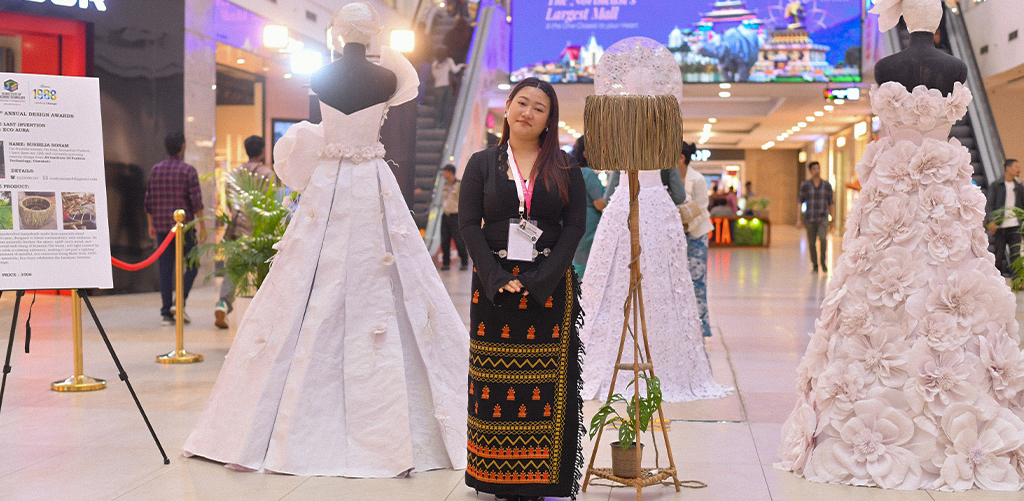
Eco Aura: An award-winning concept that successfully combined the values of nature and sustainability with a forward-thinking, futuristic design aesthetic.
Designs in this category demonstrated practical collaboration, with some students working directly with local weavers and carpenters to combine traditional skills with modern design thinking.
Industry Validation and Expert Collaboration
The integrity of the awards was ensured by a distinguished panel of judges, including the renowned architect and owner of “Akriti,” Ar. Ritul Sarma and Ar. Alpana Sarma, alongside Director Mr. Harsh Dalal from Delhi, and the Centre Directors of Guwahati, Ms. Ushmita Hazarika and Ms. Sumita Dey Deka.
The judges were particularly impressed by the interior students’ commitment to sustainability. Ar. Ritul Sarma specifically appreciated the efforts to transform the concept of ‘The Last Invention’ into meaningful and visionary design narratives. He highlighted two remarkable examples: the exploration of developing an acoustic panel with mushroom and the creation of a sustainable lamp using lemongrass, a natural insect repellent. This expert feedback validated the students’ innovative approach and focus on functional, eco-conscious materials.
The event’s success was also supported by key collaborations that enhance the students’ overall learning ecosystem:
Rajasthan Lime Udyog: This company actively promoted the exhibition and has, over time, hosted interior students for site visits to study their vast range of kitchen, bathroom, interior, and tile products.
Skytrack Group of Institute: As an event supporter, they previously contributed to the students’ holistic development by conducting professional makeup and grooming sessions, preparing them for public occasions and professional interviews.
Other critical event supporters included FINESSE Institute, HOTEL DAAYSCO, RENT & RIDE.COM, DELTA PUBLICITY, and GSR.
The Core Learning Experience
Participating in the Annual Design Awards was a complete learning experience that strengthened core professional skills. Students gained valuable knowledge through one-on-one interactions with judges, offering insights into real market expectations.
The process of taking a product from concept to final presentation taught essential lessons in teamwork, problem-solving, and aligning academic creativity with commercial viability. Winning recognition, even just being appreciated for one’s work, served as a powerful motivator, cementing confidence and inspiring students to pursue thoughtful, responsible design careers.
Setting the Benchmark for Future-Ready Design
The 20th Annual Design Awards underscored JD Institute’s Guwahati commitment to providing a platform where innovation is celebrated and sustainable practices are prioritized. By merging challenging design briefs with direct industry validation and mentorship, the institute ensures that its graduates are not merely skilled, but are visionary thinkers and creators.
The level of innovation showcased, from groundbreaking ethnic fabrics to pioneering sustainable furniture, confirms that JD Institute is actively preparing the next generation of designers to be leaders in the dynamic and evolving creative industry.
This program was designed to significantly boost teachers’ expertise in textile design concepts, modern processes, and curriculum-based teaching methods. The goal was simple but vital: ensure educators stay updated with essential industry standards, design processes, and practical applications, enabling them to deliver structured, concept-driven lessons and enhance student learning outcomes.
Empowering Skill Education Through Collaboration
This specialized Capacity Building Programme was organized by the Central Board of Secondary Education (CBSE) – Department of Skill Education. The department’s core mission is to actively develop and promote vocational competencies across schools nationwide. By focusing on Textile Designing, CBSE sought to strengthen teachers’ technical understanding and pedagogical approach, directly integrating updated industry insights into the classroom curriculum.
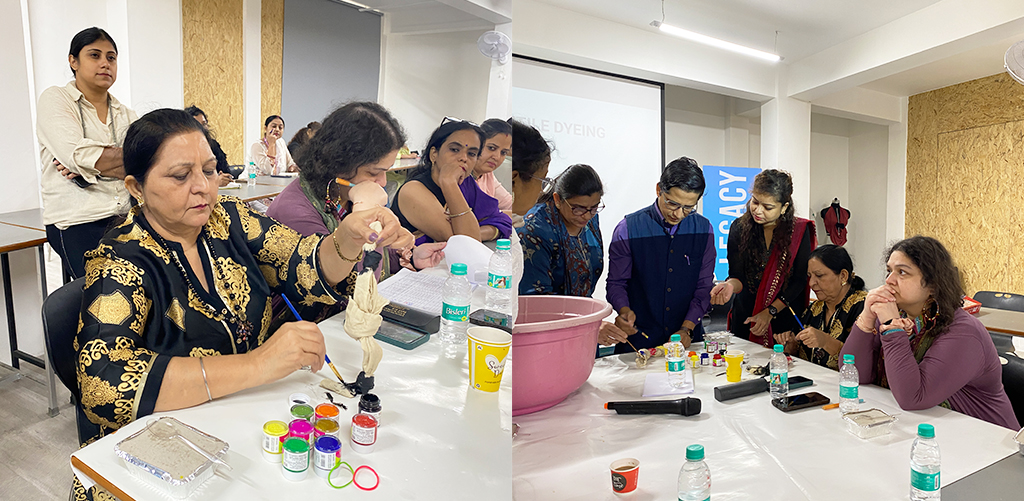
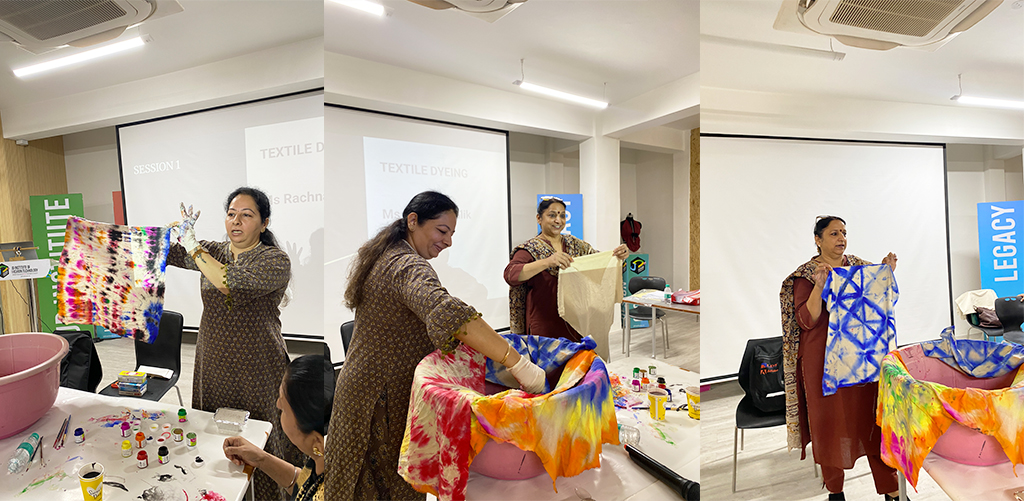
The comprehensive session covered modern textile techniques, effective colour applications, essential fabric science fundamentals, and contemporary design development practices vital for successful classroom teaching. The programme effectively combined technical knowledge with hands-on demonstrations, ensuring that teachers gained a comprehensive understanding of textile design fundamentals and their immediate relevance in vocational education.
Activities and Key Learning Outcomes
The workshop was intensely practical, maximizing the learning potential for the participating teachers through detailed demonstrations on foundational and advanced aspects of textile designing.
Key hands-on activities included:
Fabric Analysis: Learning to examine and understand material composition and behavior.
Colour Theory Application: Practicing effective colour combinations and their impact.
Motif Creation & Surface Design: Developing unique patterns and exploring various surface treatments.
Dyeing Procedures & Pattern Development: Engaging in core practical exercises like managing colour absorption and structural design.
Teachers explored the various tools, materials, and methodologies used in professional textile design, directly learning techniques for effective real-time classroom implementation.
The hands-on modules allowed them to experience the behavior of fabrics and design placement firsthand. Crucially, the forum provided space for educators to discuss common teaching challenges, strategies for syllabus alignment, and best practices for improving student learning outcomes.
Guidance from CBSE Skill Education Experts
The high-quality training was delivered by leading resource persons from CBSE Skill Education, providing specialized expertise and mentorship:
Ms. Rachna Malik: As a Resource Person and expert in textile design education, she expertly guided teachers through structured demonstrations and provided valuable practical insights throughout the program.
Ms. Poonam Sharma: Also a Resource Person for CBSE Skill Education, she delivered in-depth technical explanations and took the lead on the crucial hands-on training modules concerning specific textile designing techniques.
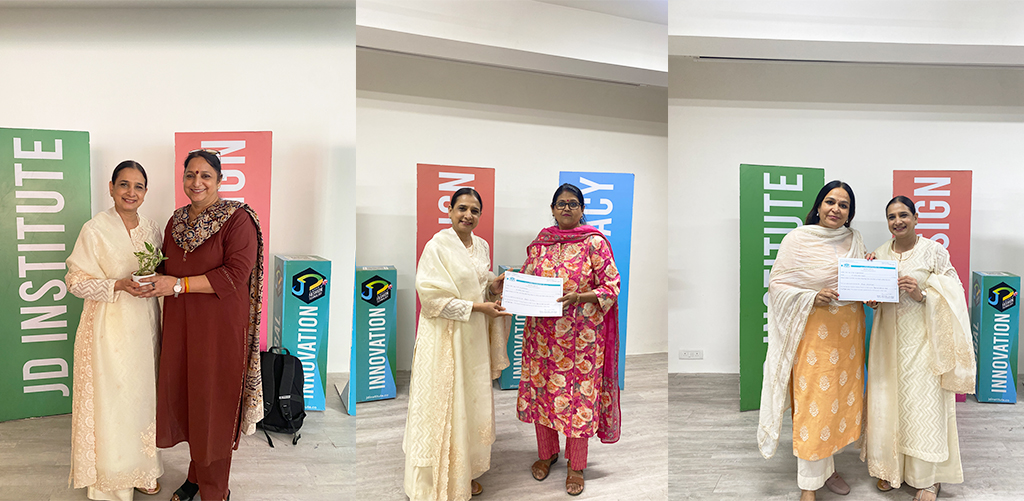
The successful completion of the CBSE Capacity Building Programme, prepared them effectively for successful careers in the dynamic textile and fashion industry.
The JD Institute Difference: Cultivating Industry Leaders of Tomorrow
By lending its expertise, facilities, and real-world methodologies to upskill educators, JD Institute solidifies its pivotal role in national skill development and vocational training.
The partnership with the CBSE Department of Skill Education underscores JD Institute’s dedication to not just reacting to industry needs, but proactively shaping the foundation of design education, ensuring that textile learning nationwide is both modern, practical, and truly career-focused.
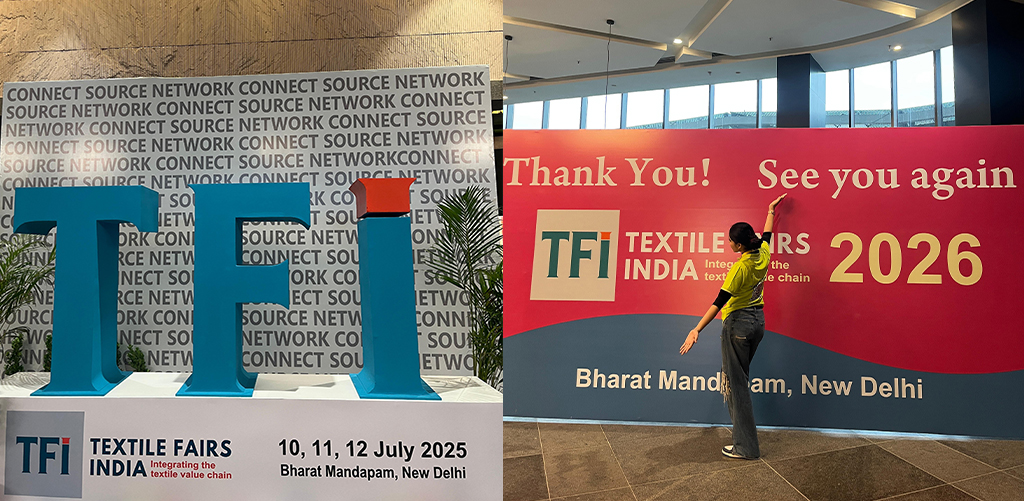
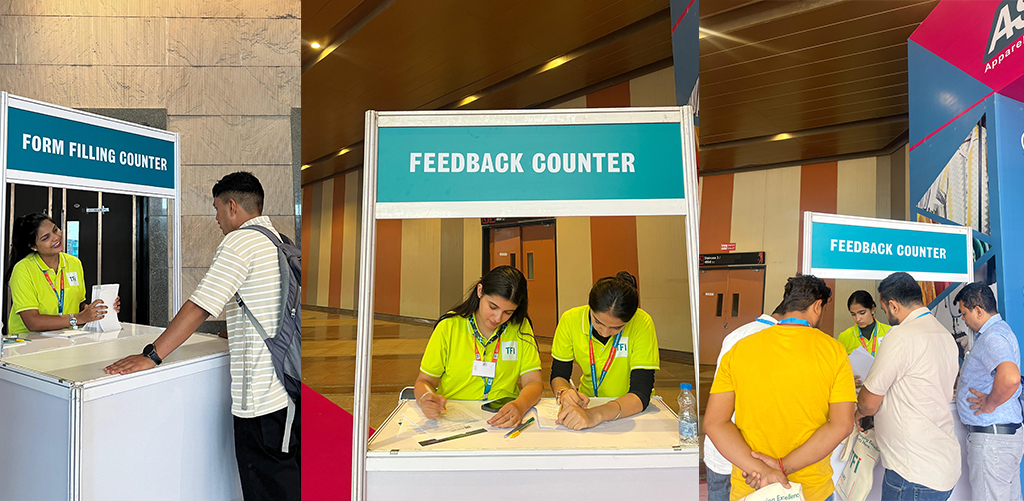
The transition from classroom theory to professional practice is the defining moment in a designer’s education. For students at JD Institute of Fashion Technology, this transition was accelerated through a highly effective dual collaboration at the Textile Fairs India (TFI) – Yarnex, F&A Show, ASF, Homtex 2025. Held over three days- Thursday, Friday, and Saturday, July 10th, 11th, and 12th, 2025, Pragati Maidan, New Delhi, this event provided an immersive education unlike any textbook could offer.
TFI is recognized as a leading trade platform globally, designed specifically to connect manufacturers and suppliers of core textile products, including yarns, fabrics, home textiles, and accessories with professional buyers worldwide. JD Institute leveraged this massive industry convergence to give its students pivotal hands-on experience, bridging the gap between academic learning and real-world application.
The Scope of India’s Largest Textile Sourcing Platform
Textile Fairs India is not just a single event; it is a powerful cluster comprising four essential industry segments, each vital to the global supply chain:
Yarnex: Dedicated to fibers and yarns.
F&A Show: Focusing on Fabrics & Accessories.
ASF (Apparel Sourcing Fair): Concentrating on garment and apparel sourcing.
Homtex: Showcasing Home Textiles & Decor.
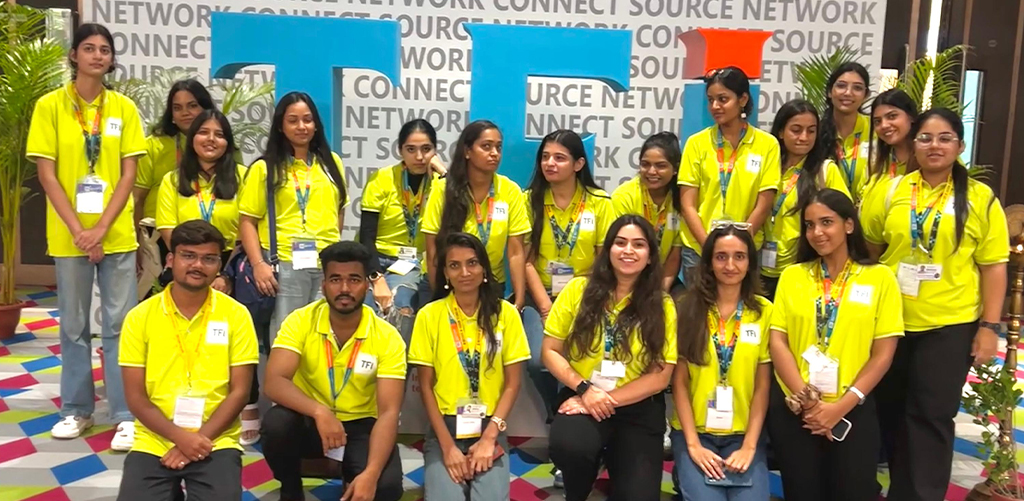
Students from JD Institute of Fashion Technology participated across all these segments, volunteering their time and expertise in various domains crucial to the smooth functioning of a major international trade show.
JD’s Dual Advantage: Volunteering and Strategic Collaboration
The student participation was strategically designed to maximize learning, offering two distinct paths to professional development.
Mastering Event Management and Coordination
JD students volunteered across the TFI event, gaining vital exposure to how massive international trade shows operate. Their core activities included:
Trade Show Functioning: Assisting in visitor coordination and managing the registration process.
Exhibitor Support: Managing inquiries and providing hands-on help to exhibitors setting up their booths.
Public Relations: Selected students were entrusted with dedicated PR tasks, learning professional etiquette and communication skills required to manage guest flow and media interactions.
This extensive role allowed students to understand textile sourcing, large-scale professional conduct, and the logistics of B2B events firsthand.
Direct B2B Exposure with ADI-TEX
In a parallel and highly enriching collaboration, JD Institute partnered with ADI-TEX, a specialized textile firm founded by Mr. Aditya Dwivedi. ADI-TEX is known for its focus on fabric manufacturing and export, often collaborating internationally, including with Chinese partners.
Mr. Dwivedi specifically invited two selected JD students to work full-time at the ADI-TEX booth at the F&A Show 2025. This was an opportunity for deep, product-level engagement and professional mentoring.
Key Learning at the ADI-TEX Booth:
The students received unprecedented B2B experience, working directly alongside the brand’s team:
They actively interacted with Indian and international buyers, witnessing global trade negotiations in real time.
They learned intimately about the product range, different fabric types, and the intricate requirements of commercial buyers.
They assisted the team by taking detailed client notes and providing support during the fair’s busiest hours.
Significantly, Mr. Aditya Dwivedi, CEO & Founder of ADI-TEX, personally guided the students. He offered mentorship and answered complex queries related to fabric development, garment manufacturing, retail strategy, and the nuances of international trade. This unique access to a founder’s perspective offered invaluable insight into entrepreneurial decision-making within the textile export industry.
Empowering Visionary Professionals
These interactions with Mr. Dwivedi and other senior professionals and exhibitors from top textile firms present at the fair helped JD students solidify the bridge between classroom theory and real-world execution. The experience ensured they gained not just technical knowledge but also essential behavioral skills, professionalism, and industry contacts.
The collaboration at Textile Fairs India 2025 served as a powerful testament to JD Institute’s commitment to creating career-ready graduates. By participating in the Textile Fairs India (TFI) event, students secured foundational experience in event coordination and achieved direct, high-level B2B interactions that will shape their future careers in design, sourcing, and trade. JD Institute continues to lead the way in providing industry collaborations that empower the next generation of visionary professionals.
In the world of creative arts, understanding how a character’s clothes tell their story is the difference between a simple outfit and a masterpiece of design. This crucial skill was the focus of an intensive Workshop on Character, Costume and 3D Illustration recently held at the JD Institute of Fashion Technology.
The exciting event, brought students face-to-face with global creative excellence through a collaboration with the internationally recognized University of the Arts London (UAL).
This partnership is a testament to JD Institute’s commitment to providing students with valuable exposure to global pedagogy and contemporary industry standards in creative design.
Understanding the Aim of the Workshop
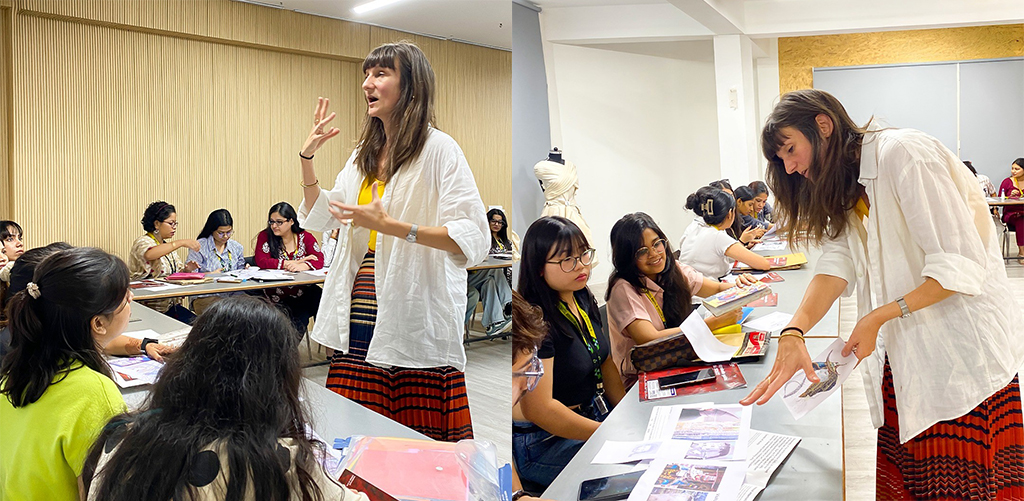
The Workshop on Character, Costume and 3D Illustration was designed to help students understand how costumes are more than just clothing. They carry personality, identity, and stories. Prof. Amy Hare introduced students to the process of character development and how costumes play a central role in visual storytelling.
The workshop focused on three core areas:
Character Development: Learning how to build a story around a character and using costume to enhance that personality.
Costume as a Storytelling Tool: Understanding how materials, textures, colours, and silhouettes communicate emotions and traits.
3D Illustration: Exploring how costume forms evolve from sketches to three-dimensional structures.
Through step-by-step demonstrations, Prof. Hare helped students see how designers use research, observation, and experimentation to bring characters to life.
This global exposure aligned with JD Institute’s commitment to offering advanced and international learning opportunities to its students.
Hands-On Experience
One of the strongest parts of the workshop was the interactive learning environment it created. Students actively participated in:
Conceptualization: The session began with intensive visual research, sketching, and concept discussions, helping students solidify the theoretical foundations of their character designs.
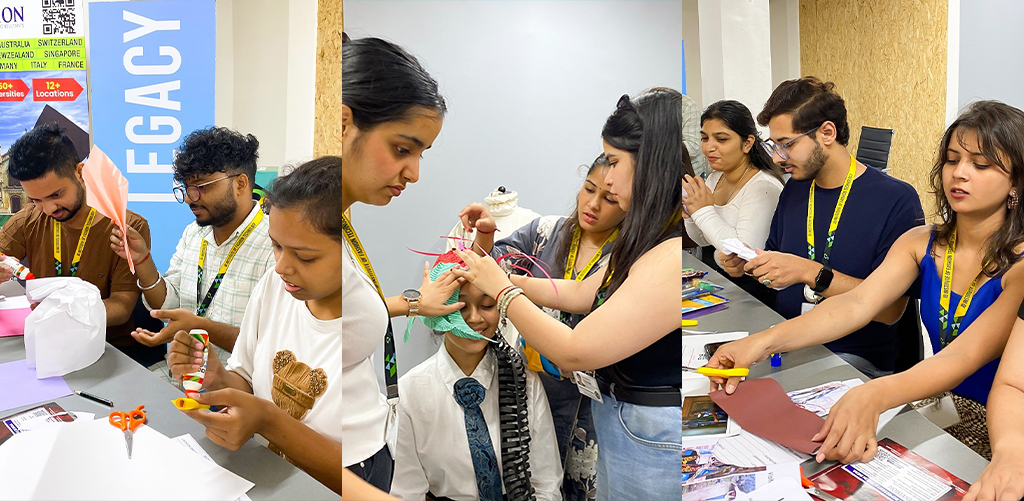
Hands-On Construction: Students then transitioned to hands-on costume construction tasks. They worked collaboratively to build expressive headpieces and experiment with materials, learning how different fabrics and components interact to create desired effects.
Applying 3D Thinking: The most transformative part of the workshop involved applying 3D thinking on a live model. This exercise allowed students to study proportion and character expression in real-time, moving their ideas from flat sketches into dynamic, wearable forms.
With personalized guidance from Prof. Hare, students were able to effectively transform their abstract design ideas into compelling, effective costume forms.
About the Expert: Prof. Amy Hare
The presence of Prof. Amy Hare made the workshop truly impactful. She is a distinguished lecturer at University of the Arts London (UAL) and an expert in Costume History and Craft Practice.
Her experience spans across major creative industries, including:
Film
Theatre
Television
She has contributed as a tailor in several renowned institutions such as Sands Films, Angels, Birmingham Repertory Theatre, and the BBC.
Prof. Hare holds a postgraduate degree in the History of Design from the University of Oxford. She has taught at prestigious places including the Royal School of Needlework, University of Oxford, and Shanghai Institute of Visual Art. She is also working on an AHRC-funded PhD focusing on period costume making.
A Step Toward Global Learning
The Workshop on Character, Costume and 3D Illustration demonstrated JD Institute’s dedication to offering students international exposure and industry-relevant learning.
By interacting with a globally renowned academic professional, students gained a practical understanding of costume construction, storytelling through design, and 3D creative thinking. Workshops like this not only build creative confidence but also prepare students for careers across fashion, costume design, film, theatre, and digital character design.
Wish to bring stories alive through costume and design? Begin your path at JD Institute.
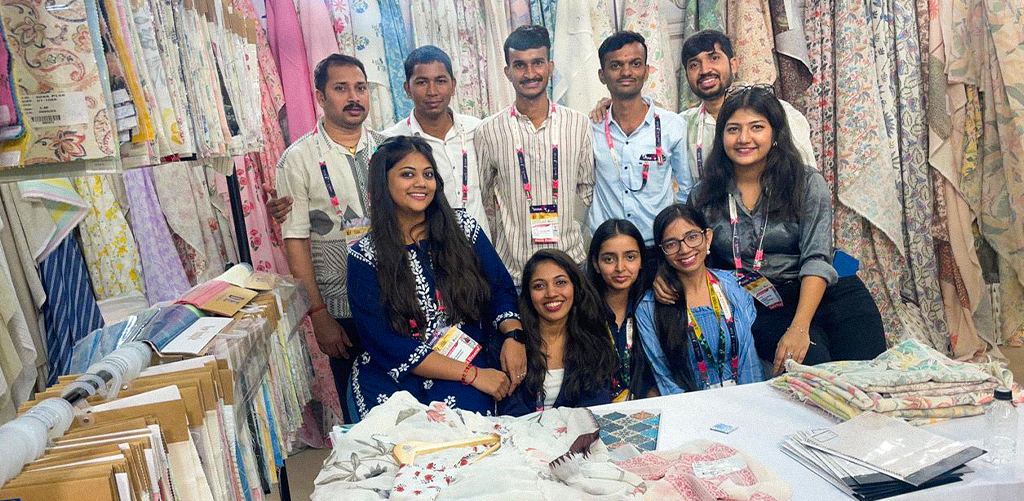
Discovering the heart of Indian fashion often means going straight to the source: the fabrics that tell stories of tradition, craft, and innovation. The students of Fashion Design department recently got the chance to explore one of India’s most vibrant textile events- the Surat Dreams International Ethnic Expo, held in Noida, Uttar Pradesh. This grand event celebrated ethnic fabrics, weaving traditions, and innovative textile trends shaping the future of Indian fashion.
Unpacking Trends in Ethnic Fabrics and Textiles
The Surat Dreams International Ethnic Expo served as a large-scale venue for textile manufacturers to showcase their most exclusive collections. For fashion and design students, it was a crucial learning ground that provided direct exposure to the latest fabric innovations, traditional weaving techniques, and the key market trends currently defining ethnic wear globally.
The event’s true value lay in observing how leading fabric manufacturers present their intricate work at a professional trade show. This process enhances students’ understanding of textile quality, cultural relevance, and strategic market positioning—skills vital for bridging academic learning with effective real-world practice in the fashion sector.
Spotlight on Diya Enterprises: High-Quality Design
A major highlight of the expo was the strong presence of Diya Enterprises (Mumbai). This well-known textile brand specializes exclusively in beautiful ethnic fabrics for women and kids. Diya Enterprises has built its reputation on a commitment to high-quality fabric production and for pioneering innovative ethnic designs that are widely utilized across both Indian and international fashion markets.
Observing a brand like Diya Enterprises at the expo offered the students an in-depth lesson in commercial textile curation—seeing how traditional patterns are adapted, refined, and marketed for mass consumption while maintaining their core cultural integrity.
Students’ Hands-On Experience
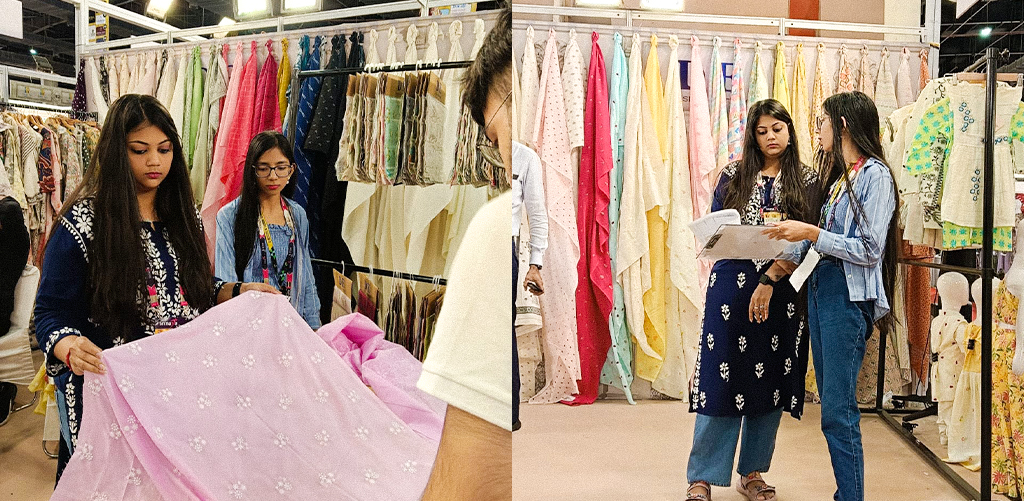
The JD students didn’t treat the exhibition as a mere viewing gallery; they actively transformed it into a live classroom. Equipped with professional tools, including iPads, sketch papers, and colors- they meticulously documented what they observed.
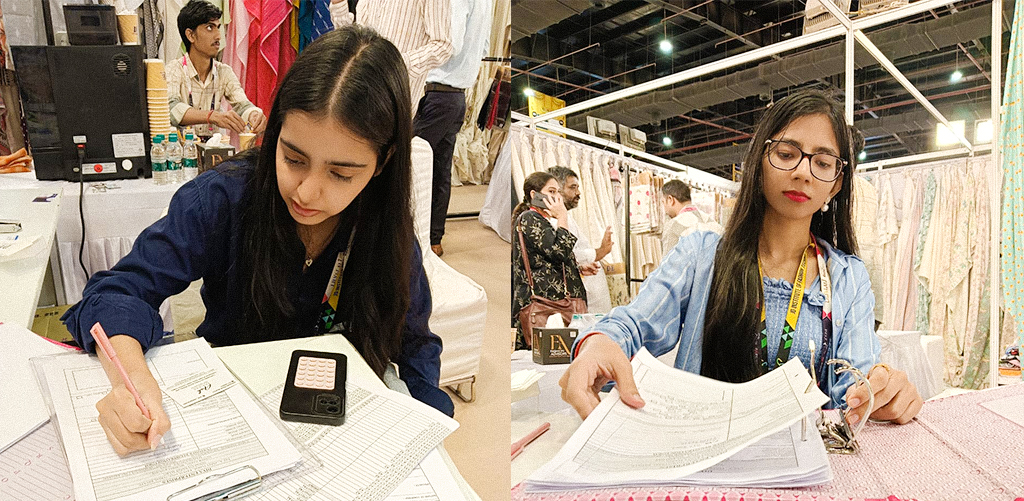
Students engaged in live sketching and creative note-taking, diligently recording the intricacies of fabric patterns, unique textures, and ethnic design inspirations as they explored the extensive range showcased by Diya Enterprises. By observing the meticulous textile displays, color combinations, and craftsmanship directly from the industry representatives, their design development processes received a significant boost.
A major learning outcome was the students’ ability to understand the entire supply chain process, specifically how ethnic fabrics are curated, professionally presented, and ultimately marketed in the high-stakes environment of large international expos. This practical, real-time documentation is essential for developing a designer’s eye for detail and market viability.
Professional Engagement and Future Insights
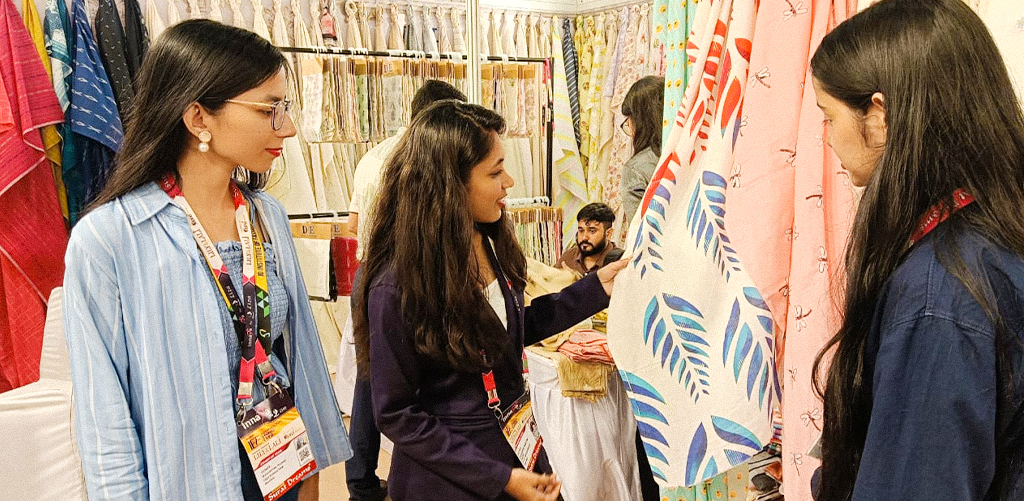
The event provided valuable opportunities for students to connect with industry representatives from Diya Enterprises (Mumbai). These professionals were available for targeted interaction, offering concrete insights into specialized areas such as fabric sourcing, design application, and emerging trends in ethnic fashion.
These direct interactions served to instantly bridge the gap between academic theory and the practical needs of the commercial textile industry. Post-event, the students’ dedication and valuable exposure gained will be officially recognized with experience certificates, marking their successful participation in a major industry milestone.By leveraging platforms like the Surat Dreams International Ethnic Expo, JD Institute ensures that its graduates are not just conceptually aware, but are practically ready to engage, innovate, and lead in the dynamic and culturally rich world of ethnic fashion.