
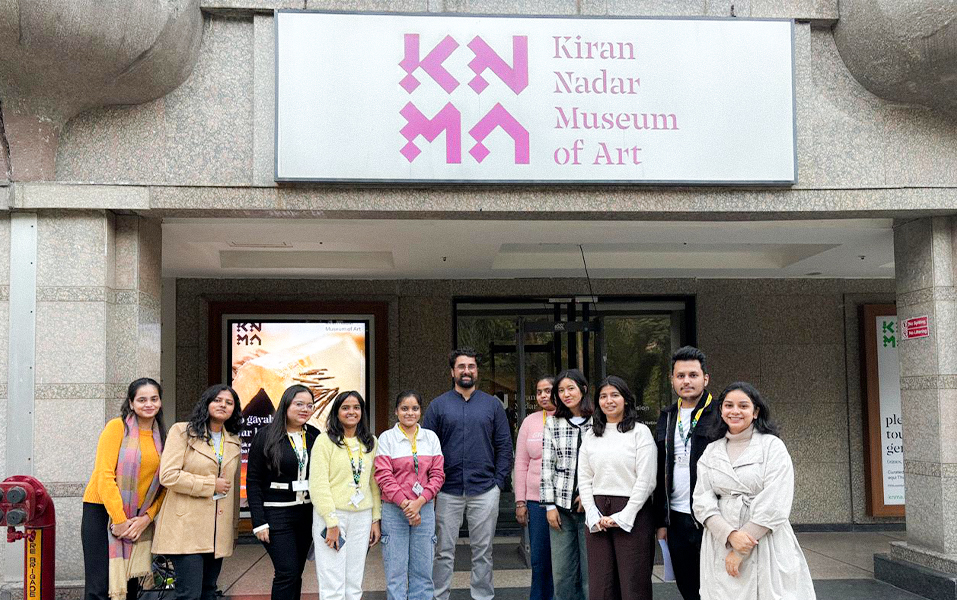
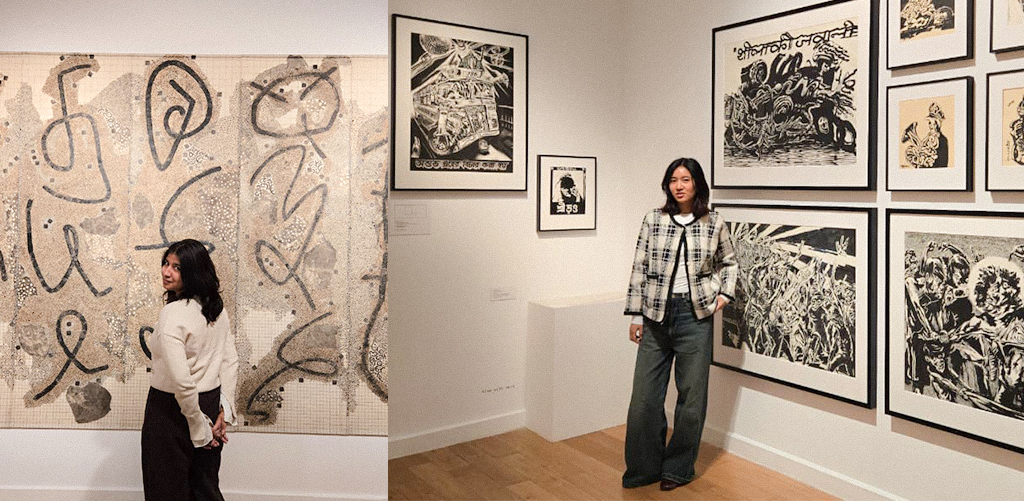
In the modern creative landscape, the boundaries between different artistic disciplines are becoming increasingly fluid. For the Fashion Design Jediiians from the Kamla Nagar campus of JD Institute of Fashion Technology, this reality was brought to life during an immersive “Decoding Comics” workshop at the Kiran Nadar Museum of Art (KNMA).
This session was not just about drawing; it was a deep dive into the sophisticated world of sequential art and its profound applications in the realm of fashion and visual narrative.
The workshop was facilitated by Mr. Anupam Arunachalam, a highly regarded Delhi-based writer, illustrator, and comic book artist. With a career spanning prestigious publishers like Penguin Random House India, Hachette India, and Tinkle, Mr. Arunachalam brought a wealth of professional expertise to the students. His background in creating both fiction and non-fiction comics provided a unique academic bridge, showing students how the interaction of words and images can create powerful narrative possibilities.
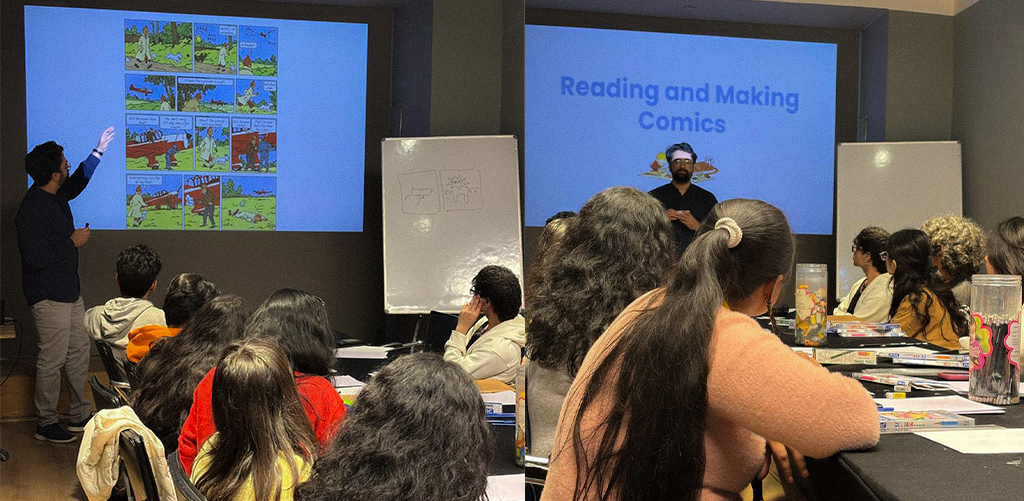
Under his guidance, students explored the fundamental question: how do comics work as a medium? Through short, low-pressure exercises, the Jediiians began to see comics not merely as entertainment, but as a structured language of visual communication.
Every medium has its own “grammar,” and comics are no different. The students spent time deconstructing what comics are made of, moving beyond the surface to understand creative deviations and established Comics Conventions.
A significant portion of the workshop was dedicated to mastering Symbols and Visual Cues, which are essential for conveying information without excessive text. These included:
Emotion Symbols: Subtle facial cues and icons that signal a character’s internal state.
Motion Lines: Stylized marks that indicate the speed and direction of movement.
Bubble Variations: How the shape of a speech or thought bubble can change the “tone of voice” of the narrative.
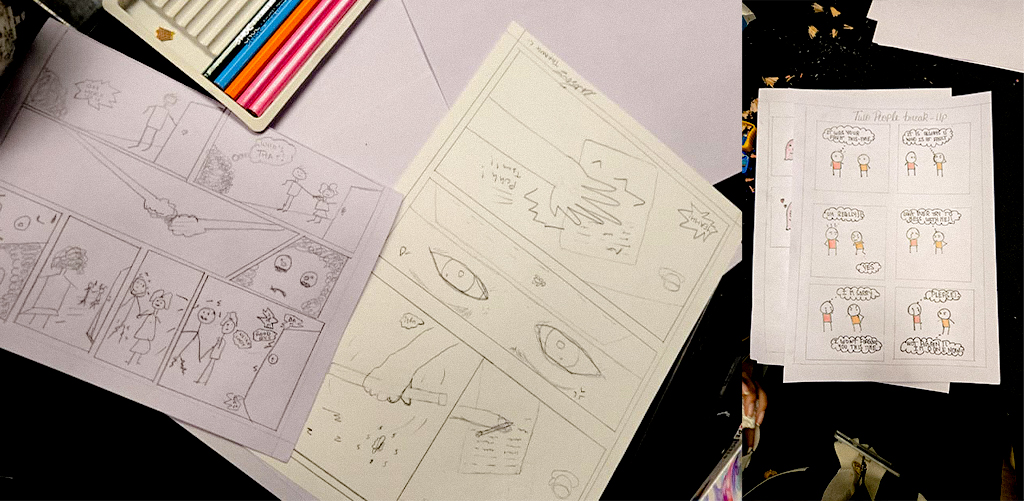
By learning how to integrate these symbols into their art, fashion students gained a new set of tools to add dynamism and emotional depth to their own fashion illustrations and storyboards.
One of the most academic yet practical segments of the workshop focused on the concept of sequential movement. In comics, the space between the panels, known as the “gutter”- is where the reader’s imagination completes the action. To guide this process, students learned about the six primary types of panel transitions popularized by comic theorist Scott McCloud:
Moment-to-Moment: Slowing down time to focus on a single, subtle action.
Action-to-Action: Showing a single subject progressing through a series of specific movements.
Subject-to-Subject: Changing focus from one person or object to another within the same scene.
Scene-to-Scene: Transporting the reader across significant gaps in time or space.
Aspect-to-Aspect: Moving the viewer’s eye across different parts of a scene to establish a specific mood or “tone”.
Understanding these transitions is vital for fashion designers, as it teaches them how to “storyboard” a collection or a fashion film, ensuring a logical and engaging flow of visual information.
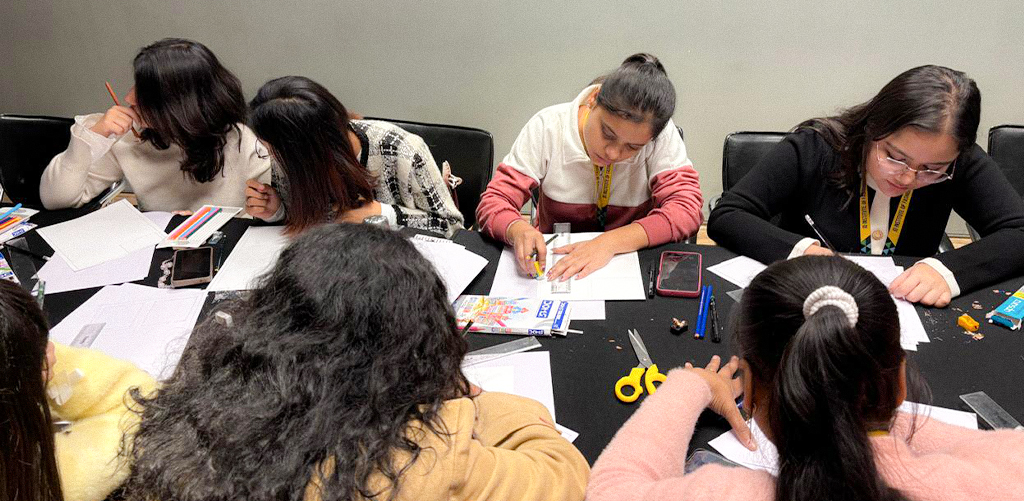
For a fashion student, a character is often the “muse.” The Character Creation Exercise taught students how to build a consistent visual identity for their creations. This was achieved through the development of a Character Sheet, a standard industry tool used to ensure a character looks the same from every angle.
Students worked with a model that included:
Front and Side Views: Essential for understanding the silhouette and construction of clothing.
Key Expressions: Showing how the character’s personality influences their posture and look.
Props and Signature Items: Small details that add layers to the character’s backstory.
Clothing Details: A deep dive into textures, folds, and how garments react to movement.
The workshop concluded with Comics Sequencing Exercises, where students had to apply everything they had learned. By combining character design, symbols, and transitions, they created short visual narratives.
This hands-on practice reinforced the idea that fashion is not just about the final garment, but about the story the garment tells and the world the character inhabits.
The “Decoding Comics” workshop at KNMA provided the Kamla Nagar Jediiians with a transformative experience that extended far beyond traditional fashion illustration.
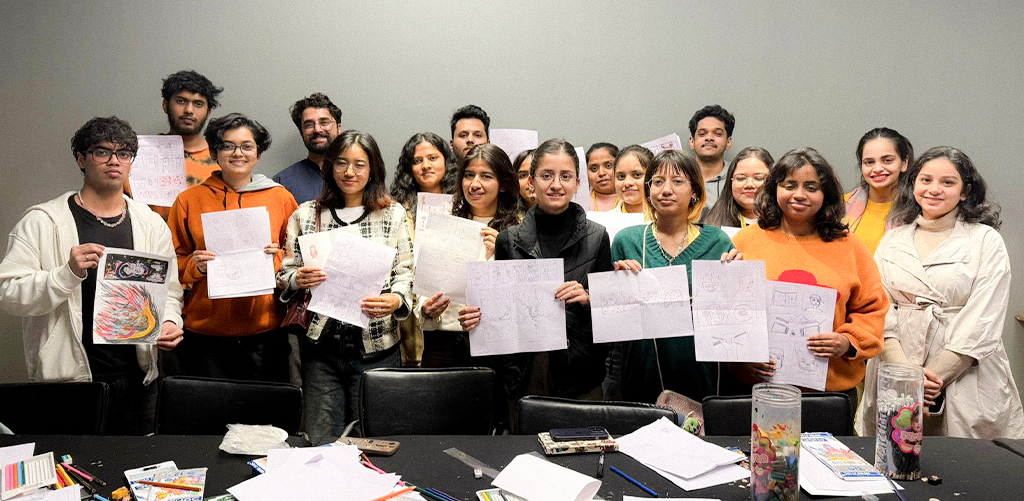
By mastering the language of sequential art, these students are now better equipped to communicate their creative visions with clarity, emotion, and technical precision. They leave the museum not just as designers, but as visual storytellers ready to weave complex narratives into the very fabric of their future collections.
Are you ready to illustrate your own future?Join us at JD Institute of Fashion Technology and discover how multi-disciplinary workshops can turn your creative passion into a professional career.
 Design Blogs
 Watch on youtube


 Downloads

Copyright © 2025 JD Institute of Fashion. All Right Reserved
Designed by




 Quick Menu