


“The world was hers for the reading.” – Betty Smith, A Tree Grows in Brooklyn.
Step into a room bathed in the warm glow of antique lamps, where bookshelves tower with leather-bound classics, vintage portraits gaze from dimly lit corners, and rich, deep-hued curtains frame the windows. This isn’t just a setting from a 19th-century novel—it’s the Dark Academia aesthetic, and it’s everywhere on social media.
But why are so many people drawn to this moody, intellectual home style? Let’s uncover the literary and historical influences that have turned Dark Academia interiors into a viral phenomenon—and what designers can learn from it.
Dark Academia interiors directs the old-world charm of libraries, study rooms, and classic universities like Oxford and Cambridge. Think of the grand, dimly lit halls of the Bodleian Library or the rich woodwork of Trinity College’s Long Room. These spaces have long been associated with knowledge, literature, and introspection, making them the perfect inspiration for modern-day intellectuals and book lovers.

What Designers Can Learn: The key takeaway is how to blend functionality with aesthetics. Creating reading nooks, maximizing natural light with warm-toned fixtures, and using antique elements can make spaces feel immersive yet livable.
The Hogwarts library from Harry Potter embodies the essence of Dark Academia—mystical, scholarly, and atmospheric.
The revival of Dark Academia interiors is deeply tied to a longing for the past. The aesthetic takes cues from 18th and 19th-century European art, literature, and architecture. Vintage furniture, gothic details, and antique trinkets bring a sense of nostalgia that resonates in an age of digital overload.
Understanding the balance between antique and contemporary elements is a crucial skill for interior designers. JD Institute’s Interior Design course teaches students how to incorporate vintage aesthetics while maintaining modern functionality.
The study rooms in Dead Poets Society reflect this aesthetic with wooden desks, dim lighting, and walls adorned with poetry.

Platforms like Instagram, Pinterest, and TikTok have fueled the Dark Academia trend by providing a space where users can curate their ideal moody, bookish lifestyle. The aesthetic is more than just decor—it’s a way of living, embracing classical literature, handwritten notes, and slow, thoughtful existence.
What Designers Can Learn: Social media influences interior trends more than ever. Designers must stay updated on viral aesthetics and learn how to translate online inspiration into real, functional spaces.
The Parisian apartment of writer Ernest Hemingway, with its deep-toned furnishings and overflowing bookshelves, continues to inspire Dark Academia lovers.

A signature aspect of Dark Academia decor is its rich, muted color palette—deep browns, forest greens, burnt oranges, and midnight blues. Pair these with heavy drapes, dark wood, leather-bound books, and candlelight, and you’ve got an interior straight out of a gothic novel.
JD Institute emphasizes the psychology of colors and how textures influence spatial perception, helping students craft immersive, atmospheric interiors.
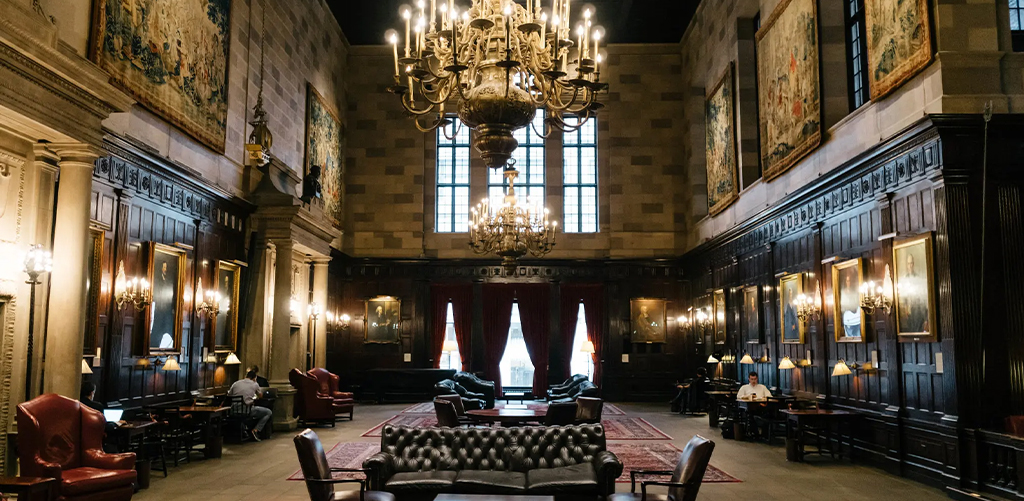
The interiors of the Harvard Club of New York exude Dark Academia with their mahogany walls, leather chairs, and dimly lit chandeliers.
There’s something alluring about a space that feels like a secret waiting to be discovered. The dim lighting, vintage pieces, and intellectual ambiance create a world that feels separate from modern distractions. It’s a place to escape, dream, and create.
Interior design is about storytelling. A well-crafted space evokes emotion and transports people to another time and place, much like a beautifully written novel.
Sherlock Holmes’ study in 221B Baker Street—filled with peculiar artifacts, dark wood furniture, and a lingering air of mystery—captures the essence of this aesthetic.
Dark Academia isn’t just a trend—it’s an immersive experience, a way of bringing history, literature, and artistry into everyday life. Its moody yet inviting aesthetic proves that great design is not just about arranging furniture but about storytelling, emotion, and identity. At JD Institute, students don’t just learn Interior Design—they learn how to craft spaces that evoke emotion, intrigue, and timeless beauty.
So why wait? Enroll Yourself Now!
 Design Blogs
 Watch on youtube


 Downloads

Copyright © 2025 JD Institute of Fashion. All Right Reserved
Designed by




 Quick Menu