

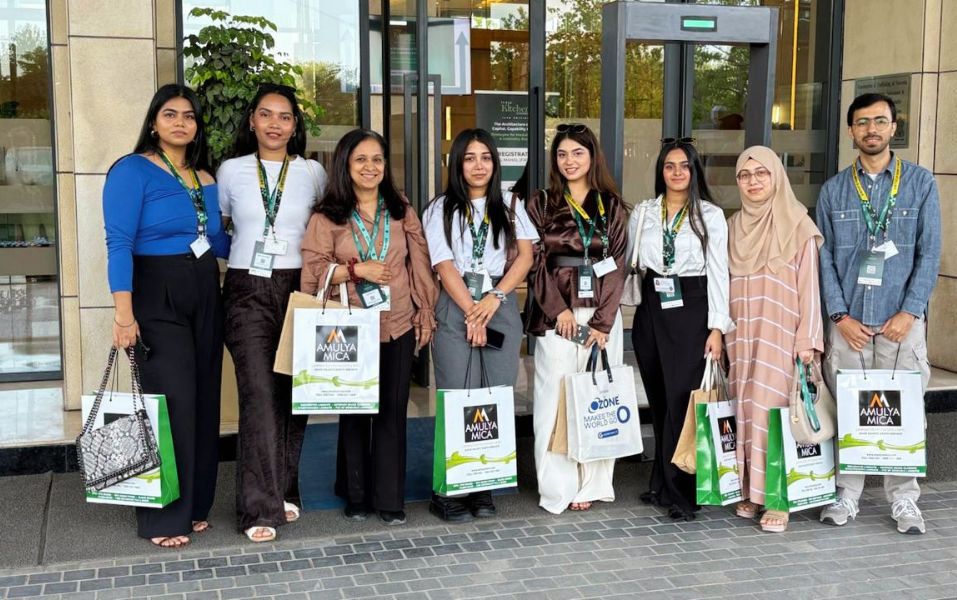
Design trends evolve in conversations, showcases, and industry spaces and that’s exactly what our Interior Design Jediiians stepped into, at the India Kitchen Congress (IKC) 2026, where ideas, materials, and market realities come together to shape the future of interior design.
Students from the HKV campus attended IKC 2026 at WelcomHotel by ITC, an industry platform organized by the Furniture and Fittings Skill Council. The event brought together leading brands, designers, and professionals from the modular kitchen and furniture sector, offering students a closer look at how the industry is evolving.
A key highlight of the visit was the opportunity to interact with established brands such as Greenply Industries, RR Living, Amulya Mica, and Samet.
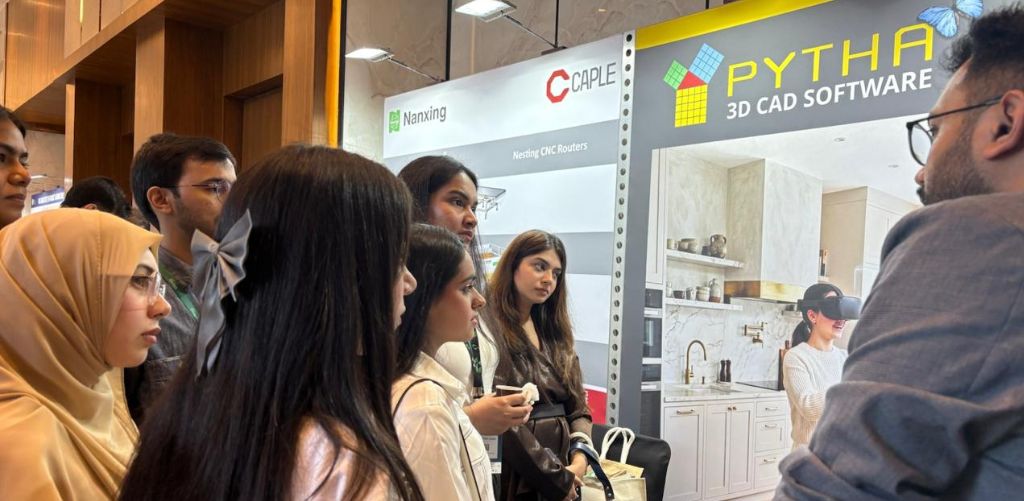
Through these interactions, students explored:
This exposure helped students connect academic knowledge with real products and industry practices.
Beyond exhibits, students attended curated master sessions that focused on design thinking and trend analysis.
These sessions highlighted:
Students were encouraged to think not just as designers, but as professionals who understand why trends emerge and how they influence user experience.
One of the most insightful aspects of the visit was the unveiling and discussion around the India Trend Report, which provided a structured view of evolving design directions.
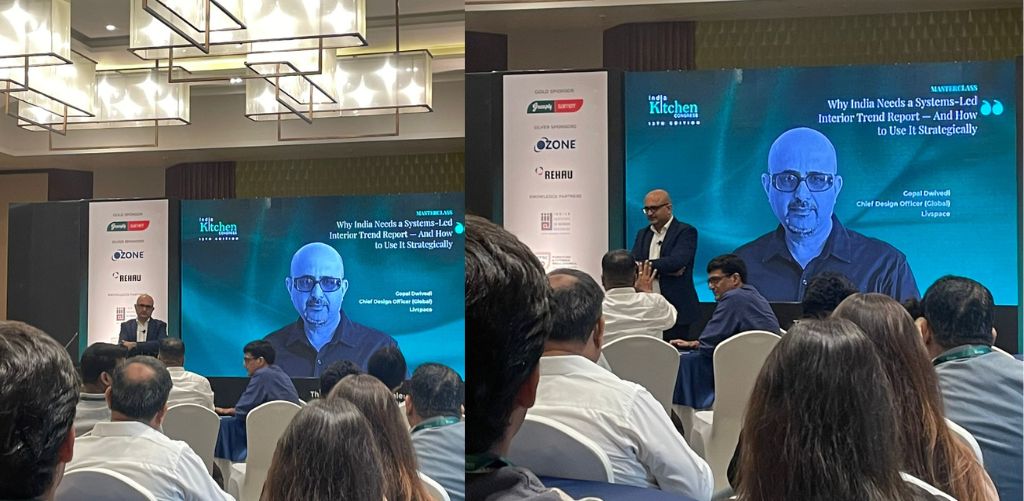
This helped students understand:
This made the learning more current, relevant, and forward-looking.
Throughout the event, a recurring theme was the growing importance of sustainability and user-focused design.
This reinforced the idea that interior design must respond to:
Students observed how materials, layouts, and systems are being developed to meet both environmental concerns and changing lifestyles.
By the end of the visit, students developed a clearer understanding of how the interior design industry operates at a professional level.
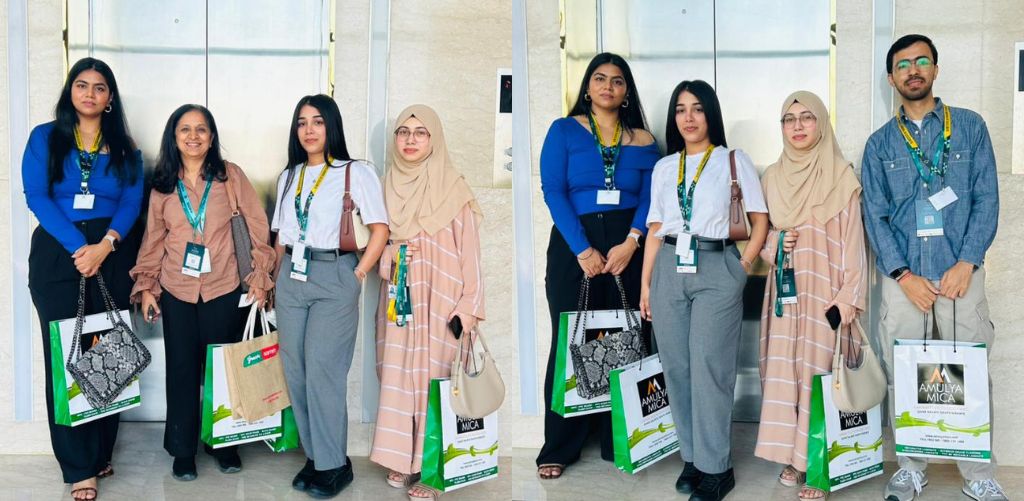
They gained:
At JD Institute, students are encouraged to step into industry platforms where design is actively being discussed, debated, and developed. By engaging with professionals, brands, and real-time trends, they begin to understand design as a dynamic field shaped by multiple influences. This approach helps students move beyond concepts and develop a perspective that is both informed and adaptable.
To design for the future, you must first understand where the industry is heading.
 Design Blogs
 Watch on youtube


 Downloads

Copyright © 2025 JD Institute of Fashion. All Right Reserved
Designed by




 2026 at WelcomHotel by ITC, Gurugram)

 Quick Menu