
Apply Now

Author Archive

Accelerators of Global Change in the Fashion Industry

Wednesday, May 12th, 2021

The fashion industry has undergone significant change in its functioning in the past couple of years due to more technology and now due to the coronavirus pandemic. The COVID-19 pandemic has completely altered daily life across the globe. This has accelerated a number of strategic shifts and created a new business landscape. While companies are discovering more flexible ways of working, the pandemic is driving fashion companies to adapt at a rapid speed. Work-life has changed drastically as self-isolation has shown how successful businesses can operate from their employee’s own homes or other unconventional environments. We will be looking at some fashion accelerators that have adapted to this new world, while some have completely transformed themselves! If you are interested to know what new changes fashion designers will have to adapt themselves to and the new breed of fashion designers that will emerge from these changes, read on!

The Scenario of Fashion Designing Teaching

In terms of fashion education, even the world’s most renowned colleges go for a simple approach to fashion design teaching. This means a traditional way of teaching using manual skills that are used in drawing and illustration, paper pattern-making and draping fabric on mannequins. They don’t want to forget the old techniques that made fashion designing what it is today. There is another reason for this too. While the tools of communication have become digital in the past decade or so, the new designers’ creative process remains mostly manual. This means that even though our machines have changed rapidly, our mind requires more time to adapt to these changes. And because fashion designing is such a creative field, it is best to use resources that actually stimulate the brain juices. 

But slowly and steadily, we need to change according to the rapidly evolving industry. There are students who are willing to learn these new techniques. The industry is on the verge of digital change, and some colleges are helping students who want to learn digital design and coding, the skills they need to drive new fashion industry solutions and experiences. Due to this, there have become two distinct streams in the fashion industry. One is the ‘creative’ part, and the other one is ‘technical’. The creative stream involves raw designing. At the same time, the technical stream involves pattern-making and garment construction using the new digital tools. One problem with this is that the digital solutions required for the new world need an amalgamation of both streams. So a new world fashion designer will be needed to serve a fashion industry now aiming to deliver end-to-end digital fashion from design to showroom! What an enormous change! The lockdown has generally facilitated upskilling. The more skills you have, the more valuable you are considered for any job or in the industry in general. 

If you, too, are looking for different types of fashion designing courses online, check out JD Institute’s website for up-and-coming fashion avenues like Fashion Photography! Learning virtual digital design software like Clo3D is actually beneficial to the student’s career-wise too. It is used by many fashion giants and makes the designing of garments and 2D garment patterns work simultaneously while giving real-time updates every time a design detail is changed in 3D. Virtual fitting of the garment can also be done. 

Startup Accelerators

Startup accelerators are companies that invest in and fund new and sustainable startups as per their fashion priorities. They organize accelerator programs for fashion startups with a proven minimum viable product. But these programs are nothing new. They used to be common in the fashion industry even before the pandemic. The key is that these have also adapted according to changing needs. They have started to deliver their whole programs virtually, unlike earlier, when they used to take place in major metropolitan cities of the world. Their motto is that ‘Innovation is long-term success in the market is critical, and early-stage startups often need assistance to prosper.’ Along with monetary and career support to these startups, they have started providing health support as well, which is crucial in these times. However, there is a gap between creative and technical knowledge as design and pattern-making have been isolated historically, but new 3D design solutions that are being rapidly embraced by the market necessitates expertise in both fields. Being responsible for becoming accelerators, they offer startups much needed support to improve their solutions to solve industry problems and are functioning online, even when pitching for investment!

Moving Towards Sustainability

As we know, fast fashion has come with an enormous environmental toll. Changes in the environment also need to be kept in mind while generating fashion. Several brands have refused to sacrifice the environment for their profits. Instead, they are practising “sustainable fashion.” By using organic and recycled materials, producing locally, minimizing water usage, getting rid of harmful chemicals, and more, these brands are prioritizing the future of our earth. So much so that this has turned into a full-fledged sustainable fashion movement! To survive in the current fashion industry, we need to find innovative ways to better work together and bring sustainable goods to market.

Overview

Here are some final pointers on how the fashion industry is changing to cope up with the digital changes as well as the pandemic:

  • Digital transformation is taking up speed—not just for consumer-related solutions, but for design and manufacturing fields too. 
  • Consumer sentiment has become dynamic, driven by concerns of climate change and awareness of social sustainability issues, so brands must respond accordingly. 
  • Sustainability initiatives were all put on a halt when COVID-19 hit, but for previously reckless brands and manufacturers, there will be increased speed and focus on digitalization, reduction in waste and overproduction.
  • We might be headed for a global recession, so we need to be prepared for consumers who will be more selective over brand choices but will at the same time be very price sensitive.

These are the challenges that face the fashion industry. If you are someone who is curious to learn different skills and want to know more about types of fashion designing courses at JD, check out the website! You will find all details regarding our amazing professional courses and the GAT exam required for entrance.

ORIENTATION 2021

Tuesday, May 11th, 2021

The institution would firstly like to acknowledge that the last year hasn’t been easy, some for more reason than others but the fact that you are here following your passion in the face of one of the biggest humanitarian crises makes us proud of you already. Before we welcome you officially through this note, always remember you could only be a good designer if you are a good human being, dedication and hard work will pay off in abundance, and observation and empathy are imperative for any designer.

Now, a big shout out to our class of 2021. For our readers let me take you through what our “becoming Jediiian” ceremony looked like. To ensure safety protocols and social distancing were met, the management decided to work with PVR Sangam to provide a breathtaking experience. The in-Audi session was for 1.5 hours wherein our representative spoke about the values of Jd institute of fashion technology, curriculum overview, industry exposure, and most importantly opportunities provided for the students. Our first representative was the Head academic counselor who spoke about the institution followed by our campus manager who briefed us about the typical journey of a jediian. The HOD of fashion and senior professor – interior department spoke about the curriculum in-depth and how it is industry-relevant. An exciting pictorial representation was given by Our industrial manager on some field trips -domestic/international, industry lectures, and factory visits. A brief description of our global mentors was included. Jediiians showed a keen interest in the global classroom initiative in collaboration with the University Arts London where their seniors did a residential program with London college of fashion and Chelsea school of art. Their journey was shown through an exciting after-movie that documented their final projects done at the respective UAL campus.

The management also discussed another valuable opportunity with India fashion week London where current jediiians could participate under the banner of “house of jediiian”.All participating students also get one-on-one time to interact with the finale designer. Last year we had Mr. Samant Chauhan as the finale designer, who was also on the jury panel for the RC dalal memorial award (to know more about this check our Jd global page). At Jd institute of fashion technology, each student is part of the creative community that keeps growing, this network keeps growing through our new jediiians and our honourary members of the jediiian design council from the creative industry (more information on our website ). The management to make this session more interactive hosted a panel discussion where our representatives answered the frequently asked questions developed by the admissions team, further jediiians were invited to ask questions.

The “becoming jediiian” event was concluded with a thank you note and orientation work details. However, the event was not over yet, our representatives interacted with jediiians in an informal setup over refreshment snacks at PVR itself. It was an exciting day for the institution and our lovely jediiians. Once again congratulations on becoming jediiians

The Fashion Industry’s Post-Coronavirus Road to Recovery

Tuesday, May 11th, 2021

Fashion may pretend that there aren’t two sides of the same coin when it comes to development, diversity and structural problems, but they are if the reality is seen. Exclusion is at the core of the industry’s problems. And an emphasis on profiting from individuals without humanising them might result in out-of-touch corporations being steadily cut off from their prized wealth. JD Institute (which reflects a legacy of over 32 years in the field of art or creativity and is one of the oldest premium institutes) is here with an analysis of the fashion Industry post the pandemic:

In this age of companies claiming to be socially and environmentally aware, it’s worth thinking about how sustainable a business can be solely based on the customer narrative. The storey of trees was planted for every tee, and corn husk fibre was woven into the gold standard of organic fibre. By the same way, how diverse would an organisation be if it highlights Black artists for a few seconds before mistreating the garment workers in its supply chain, the vast majority of whom are people of colour?

Both are global — and structural — challenges that the sector must resolve in ways that go beyond greenwashing and what we might term color washing, which is a parallel pattern of making surface-level declarations in favour of diversity without making adequate, holistic promises to reform.

Companies have been made mindful of the obstacles and compelled to respond in one direction or another as a result of each. Fashion has been chastised for the use of natural resources, overproduction, and pollution, and it has responded with water-saving measures, emission-reduction targets, and chief sustainability officers.

In recent months, one irony of fashion has come to light: people of colour have never upstream or downstream and had a spot at the table. If you’re a painter or a garment worker. These vital elements of fashion’s growth increasingly claim their right to the same weigh-in as everybody else on both sides.

Even in the middle of a near-post-pandemic period, apparel, which has been rocked by lower demand due to store closures and changing market priorities, would need a real fix to continue to recover. There is a bottom-line advantage of getting new customers and backgrounds into the fold and ensuring that such people are considered across the supply chain, as brands and retailers have been reminded many times.

“Ultimately, what the customer needs is a genuine, truthful brand to associate with, so I believe that the first of many holes in fashion recovery will be those that just reflect on their downstream message and neglect their upstream relationships,” said John Thorbeck, chairman of consultancy Change Capital. “It really ties in with the pre-pandemic issues.

Digitalization, retail experience, personalization, new calendars, nearshoring, resizing or closing shops, automation, cutting assortments or SKUs, I believe there has been a shortage of alternatives — the alternatives have been attempted as a means to regenerate growth and profit: none of these has what it takes. There are just band-aid solutions to a systemic issue.”

Furthermore, as Doug Stephens, a retail futurist and author known as the Retail Prophet, explained, progress in the post-COVID-19 period would necessitate a complete realignment of brands and suppliers to resolve the system’s issues.

“In general, surviving in the post-pandemic world would necessitate seeing the pandemic as a tool for substantive systemic transformation rather than a cataclysm,” he added. “The customer, their shopping preferences, and the competitive environment have all irreversibly changed. We can anticipate more fluid, fun, and human-like experiences online, as well as much more motivation, content, and entertainment in stores.”

According to Stephens, this would require any retailer to become a content business.

“The primary commodity is material. And that means businesses must assess whether they have the manufacturing capabilities and artistic horsepower to create and sustain a steady stream of content that supports their archetypal positioning on a regular basis.”

That means they’ll need convincing ties on both ends of the value chain, which is something fashion has lacked in the past. Upstream, the global producer group is banding together to fight for its interests and against the kinds of buyer-driven terms that put it at risk after the pandemic forced brands and suppliers to cancel orders or force payment terms back. Leaving factories that pay for products like fibre and cloth upfront without funds when COVID stepped in for the first time, suppliers from nine usually competitive countries across Asia and beyond ( China, Cambodia, Vietnam, Myanmar, Pakistan, Bangladesh, Turkey, Morocco and Indonesia are banding together in a new project on “Manufacturers Payment and Delivery Terms.”

“A lot of the changes we want to see in this business are just out of reach because there isn’t enough confidence. Where does the funding for environmental investments come from? How do you hope to change if the rates you get only cover if at all, the costs of manufacturing compliance?” he continued. “If you make deposits but still work like a bank, funding the buyers’ collections because the payment periods are too lengthy, you’ll end up spending the little margin you have on financing costs. What is the source of the improvements? If you really want the kind of relationships that exist between brands, manufacturers, and their vendors, you must have a long-term outlook, make changes, and invest in ways that can help you maximise sales and margin in the long run. And you can only do so if the buyer-supplier partnership is more equitable and trustworthy.”

The same partnership, which will see vendors stocking extra fabric to encourage the kind of fast replenishment Stephens listed and lead to increased sales, would also help fashion players be more nimble and better able to get supply and demand more together with more quickly.

If you are interested in fashion designing, JD Institute Of Fashion technology is just the right place for you, offering various types of fashion designing courses etc. All of which are industry-based so that their students are ready for the real world beforehand. Due to this unique approach or exceptional contribution to education, record-breaking placement of 99%, etc., JD Institute has won several awards such as leaders in education award etc., the candidates are selected through GAT or general aptitude test to assess the creative skills followed by an interview. Enroll now!

Fashion’s Future Strategy: Domestic and International Business

Tuesday, May 11th, 2021

In the past five years, manufacturing in the United States has exploded. While the United States has historically had a manufacturing past, we saw a major change to the world marketplace in the 1950s and as we look at the industrial transition, going into the 1970s, 1980s, and 1990s. A competitive market arose when we widened our borders and began to export more globally. It encouraged U.S. businesses and product developers to collaborate with manufacturers in other countries, diversify our talent pool, and gain access to lower-cost labour.Most startups prefer to begin with domestic production, and the rationale behind this is centred on oversight. If you work for an organisation in Los Angeles and live in Miami, it’s certainly better to get into the same time zone or hop on a plane and see what the maker is up to. When you’re producing in another country, and you’re on the phone at midnight or 1 a.m., negotiating or overseeing your distribution in India, China, or other nations, this gets a lot more difficult.

Branding  

When it comes to branding vs. price point, many young fashion startups make the mistake of assuming, “Well, I’m manufacturing my goods here in the United States, so surely I can charge a high price.” That is not always the case. The “Made in the USA” brand mark is a good addition to your industry, but it is not strong enough to build your company on. Your name, how you put yourself, and all of your marketing activities can all be part of your corporate identity. Not just the USA label, but all of the outward-facing customer knowledge and advertised touchpoints eventually become the reason why someone buys from you.

Transparency 

Unfortunately, countries like China and India have a poor name when it comes to large-scale production, and while we can’t guarantee that all factories are compliant, the reputation is undeserved. More and more manufacturers are making a concerted attempt to become more competitive, open, and capable of adhering to even healthier working standards in order for domestic U.S. businesses and multinational labels to do business—and feel confident about doing business—in China, India, and other foreign markets. Although we’re still a long way from complete accountability, this move is a clear sign that the globalised economy is getting more open.

Although sustainability and transparency are essential to your market, domestic manufacturing is not the only way to be sustainable or transparent. In reality, on a more globalised basis, having a solid business model and understanding where the goods are manufactured is definitely possible.

Talent 

When it comes to stuff like talent procurement and finding globalised talent, on the other hand, things like embroidery and getting access to quality silk come into play. Manufacturers who have gained access to certain types of raw materials may consider outsourcing production to China.

The artisan marketplace has a lot to sell in terms of skill sets and experience. In India, for example, some regions specialise in block printing or hand embroidery. When it comes to multinational production, certain nations have local and exclusive skills that you won’t find everywhere else. So, not only do you have the ability to lower the cost of goods by using foreign expertise, but you also have the opportunity to bring a certain essence and genuine authenticity to your products that you wouldn’t get if you produced them locally.

Scalability

When it comes down to it, the cost of products, labour, and productivity should be the primary deciding factors. Companies operating in the United States are more likely to be able to meet lower minimum quantity requirements, so you may be able to find a producer in Los Angeles that can deliver 10 to 25 units per piece. This will be a good place to launch new fashion businesses. 

On the other hand, the requirements for such minimum amounts would be even greater when it comes to overseas export and processing. Suddenly, you’re dealing with 100 to 500 units. And the higher you will sell on a large scale, and the lower your price would be. So, if exporting abroad appeals to you right away, and you can meet the minimums, the cost would be worth it. Your cost of goods will continue to decrease as you scale up. When it comes to scalability, international is a great place to start if you want to increase your benefit and bottom line.

Verdict 

One thing is obvious now that you have an understanding of the benefits and drawbacks. There is no simple solution to the manufacturing issue. Making the best decision would necessitate any in-depth consideration of the brand’s requirements.

Although there are several different approaches to domestic production, the bottom line is that the “Made in USA” name can not be seen as a major differentiator in the industry. Choose to manufacture domestically if it makes sense for other business purposes such as providing oversight, being able to visit the factory, and particularly if you plan to own a manufacturing space in the future. At Scaling Retail, we’ve had some incredible brands that have worked with local manufacturing on a market and acquisition level to take advantage of having domestic and local production— and when they own the whole supply chain, they still have a significantly lower cost of products.

On the other hand, if you want to expand and rise fast, you should consider moving internationally. International markets are the best way to diversify talent, get better cost of products on higher minimum orders, and schedule the output more ahead of time. Many foreign distributors collaborate with the most well-known brands in the market so they can prepare ahead of time to make those partnerships very beneficial to them in the long run.

The fashion world or fashion designing reflects neck to neck competition due to which proper education is required to stay out of the box. J.D. Institute Of Fashion Technology is just the right place for you with a legacy of over 32 years in art or creativity and being one of the oldest premium institute offering various types of fashion designing courses etc. which are industry-based so that its students can make a mark in their respective fields by being ready for the real world beforehand. This approach has led to J.D. Institute winning several awards for their outstanding contribution to education and record-breaking placement of 99%. Enroll now!

Importance of Quality to Be Successful

Monday, May 10th, 2021

Quality can be defined as the degree of excellence of the product. The main aim behind quality control is to improve the final products and services and systems and perform the best for their stakeholders. For a brand to thrive and survive in the industry, it is important for a company to maintain highest standards of quality to build strong brand reputation and maintain customer loyalty.

A brief introduction of Mr. Manjit Singh Saini
Mr. Manjit Singh is the CEO & Executive director of Paramount Instruments Pvt Ltd. He has undertaken Textile Testing Trainings from UK and USA. He has also undertaken various management training at IIM-Ahmedabad and MDI-Gurgoan. JD Institute of Fashion Technology, one of the leading design institutions of India hosted another interactive session with people from the fashion & lifestyle fraternity having great exposure and expertise. Our mission again is focused on uplifting the students and motivating them to keep at their creativity and imagination. With over 30 campuses PAN India JD Institute puts its foot forward to keep the students mentally engaged in a thought provoking environment through Industry lecture on Importance of Quality Control to be successful

Paramount has more than 180 Instruments for the Textile Industry for textile testing, yarn testing, footwear colour matching, fabric inspection and many more. Paramount is regarded as the Pioneers and leaders in Textile Testing Instruments.

Mr. Manjit Singh Saini eloquently talked about the importance of quality to be successful, as an entrepreneur or as an employee of a company. He highlighted the following points during his interaction with the Jediiians :

  1. Importance of quality control in the fashion industry
  2. Good quality translates into regular business orders from the client
  3. It helps you save time and money
  4. It helps the brand gain Customer loyalty. This is a very big asset for any company
  5. This strengthens the brand image
  6. This boosts the confidence of the brand to diversify its product range
  7. This culminates in the growth of the brand

The Jediiians who missed watching the session with the expert on quality control can definitely access the video on the You Tube channel -JD Institute of Fashion Technology- Corporate. Check it out to see and learn more about the products of Paramount Instruments and their approach towards the different sectors of quality control in the apparel industry.

Sustainable Practices in Zero-Waste Design

Monday, May 10th, 2021

The word “sustainability” has gained traction in the last couple of years understandably due to the evident climate change, conscience end-user, and ethical design practices but still, its application in design is not uniform. Jd Institute firmly believes that the next generation of designers is key in making the world a better place to live, no matter even if we develop a colony on Mars (thank you Elon musk ), the earth will still be home.
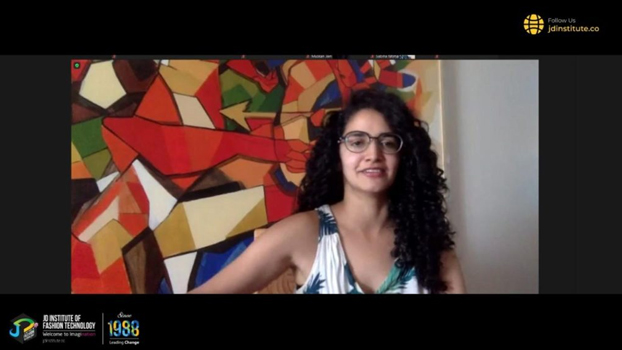
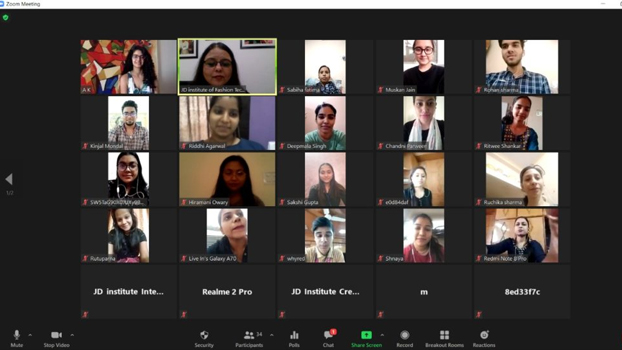
In the effort of finding industry insight regarding the applicability and profitability around sustainable practices, we invited Ms. Akriti Kumar to talk to our Jediiians.

A brief introduction of Ms. Aakriti Kumar-
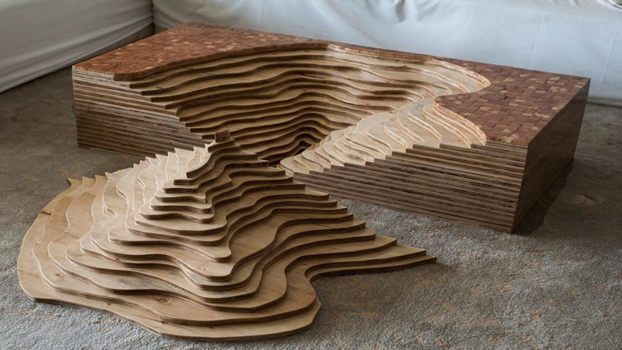
Aakriti Kumar is an alumna from Parsons school of design, New York. It was there that she got introduced to the world of woodworking along with understanding how important it is for a designer to have a sustainable outlook. Taking all that she had learned she moved back to India after working in Germany after graduation and started her own sustainable furniture design brand in 2015, by the name, Differniture.

Ms. Aakriti’s sustainable work at Differniture got her several awards and recognition such as the Interior Lifestyle Award for best product designer by Ambiente Frankfurt in 2016, The Perspective magazine, Hong Kong 40 under 40 in Product design in 2017, The Forbes Asia 30 under 30 lists of 2018 to name a few.
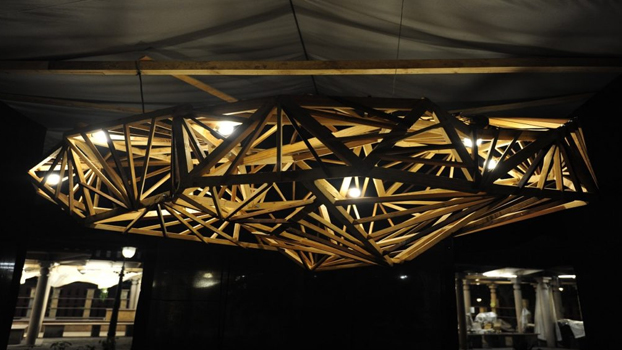
The main design philosophy of her brand Differniture is to merge the sculptural integrity of art with the functional values of design into a sustainably manufactured product, with the help of using reclaimed and salvaged materials and adopting a zero or minimal waste design philosophy (and mind you, along with finishing the products using natural and non-toxic oils and waxes).

Differniture is in the process of creating homes in the Himalayas following the same philosophy of reclaimed and locally sourced materials, and local artisans and masons from neighboring villages to help in creating an eco-conscious community in the mountains.

Ms. Aakriti’s interaction with jediiians highlighted the following points around zero waste design –

  1. Practicing sustainability is a way of life and should not be restricted to only design.
  2. Equal importance should be given to form and function, things that look beautiful should also have a definite practical function.
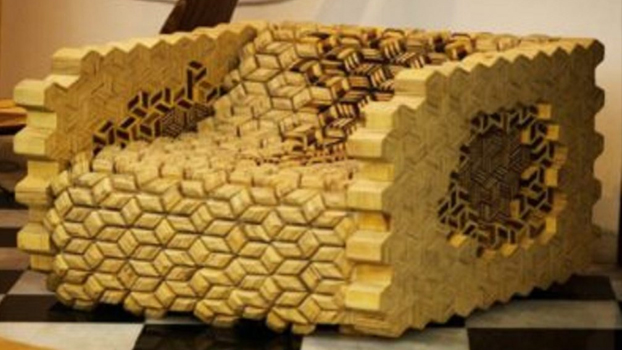
  3. Don’t be afraid to take form in a crazy direction just like one of her projects where her design re-imagined wood as upholstery.
  4. Products identified for end-use could be repurposed as raw materials for new products, adopting a circular design process.
  5. Designers should reach out to non-toxic finishes to avoid more environmental damage that may be caused when the product is discarded or destroyed.
  6. Zero-waste practice should be considered in all phases of design right from design, sourcing, production, and distribution.
  7. Nature and its processes could inspire our action so be aware of the ecosystem you live in.

To our Jediiians who missed this session, don’t worry we have it uploaded on our Youtube channel -JD Institute of Fashion Technology- Corporate. Check it out to see and more about Differniture products and their approach towards design.

Reconnecting in a World of Contactless Fashion

Monday, May 10th, 2021

This year, plenty of us have looked at our closets and wondered, “When will I wear that dress again?” When will I wear those shoes? What about the tie? The fashion industry is seeing these questions firsthand, and the answers aren’t good. After just a 4% increase in 2019, the industry’s profit is expected to plummet by 93 per cent in 2020-21. Simultaneously, the sombre mood of apparel executives polled in last year’s study has given way to a firm resolve to steer the industry through the COVID-19 pandemic. During the recession, many apparel firms reshaped their corporate models, streamlining processes and sharpening consumer propositions.

Mixed pattern globally

Over the next year, as the epidemic becomes more effectively regulated and people become more secure travelling and collecting, cautious hope is justified. Globally, the outlook is mixed: if China’s consumer demand continues to improve, revenues could increase by 5 to 10% in 2021 relative to 2019. In Europe, where pre-crisis levels of market demand are unlikely to return until the third quarter of 2022, revenues in 2021 are expected to fall 2 to 7% from 2019. Sales in the United States may decline 7 to 12 percent in 2021 relative to 2019, with only a moderate recovery expected before the first quarter of 2023.

Digital as The King

The inability of shoppers to visit stores has boosted the popularity of digital outlets, which were still common prior to the crisis. Digital will be the primary traction engine in the coming year, according to 22% of executives. In comparison to 2020, we foresee annual digital growth of more than 20% globally in 2021 (with 30% in Europe and the United States).

Innovation Being the Queen

Many businesses are re-establishing contact with their supply chains and making difficult decisions—for instance, difficult decisions—for instance, difficult decisions—for example, on return on investment at the store level—as a result of the latest shocks, and then ramping up omni channel offerings. Around the same moment, both brands and customers have a renewed desire for local interaction and a personal connection. On the other hand, the cosmetic industry has been largely immune to the pandemic, providing shoppers with a soothing pick-me-up.

Fashion-forward

Our recent study delves into the apparel industry’s key issues and evaluates a variety of potential solutions. Many who grasp the patterns transforming the fashion landscape will be the most influential as policymakers begin to navigate the confusion. That means stressing the importance of sustainability in the supply chain while concentrating on digital and omnichannel. Consumers (and, increasingly, investors) will value businesses that handle their employees and the world with dignity, and the resulting stronger relationships will benefit agility and responsibility.

How Can Companies Meet Their Customers After Shifting to Online Platforms?

Even in the most conservative sectors and in B2B, the COVID-19 crisis has intensified digital and consumer experiences. We are approaching a time where any customer is a digital customer, so businesses who consider their customers to be either digital or not will soon be obsolete.

E-commerce and remote marketing, for example, have been the predominant ways of doing business across industries, with just 30% of B2B consumers showing an interest in communicating with sales representatives in person after the pandemic. Similarly, in recent months, remote self-installation of some technologies have more than doubled, and aftermarket services may remain relatively contactless. For the most part, CIOs and their organisations incorporate technology and have grown up representing and delivering internally. 

They are now expected to perform on the external client, whose preferences are influenced by how we all use Amazon, Google, and Apple—that is the kind of service consumers want.

In terms of goods and services, organisations should pay more attention to the consumer interface and position them in the framework of the customer’s workflow. Many banks, for example, have increased the number of internet platforms available to consumers in order to minimise the demand for in-person banking. In response to the COVID-19 crisis, several Asian banks introduced contactless and smart services, enabling consumers to conduct a wide range of financial transactions through an app, including simple banking transactions, asset management, insurance, foreign exchange, and more.

How Can IT Facilitate the Interactions of Business with Customers?

A goods person, salesperson, and finally the consumer are the usual roles of IT. There are at least three hops between IT and the client when there should only be one hop or direct touch. To bridge the divide between technology and the consumer, effective CIOs collaborate with the company to follow agile practices and make other strategic improvements.

Many companies currently lack the capacity to gather and analyse data in order to properly appreciate consumers, their cultures, and their needs. You’ll need a way to keep track of consumer contacts through all purchases. It’s difficult to work, heavy lifting, and time-consuming, but the rewards are enormous. It’s important to adopt a customer-centric approach. Tech companies are accustomed to producing predictable results based on parameters, but this is evolving. Any tech company should consider itself a B2C company, with the consumer being a real human rather than a static, amorphous, sterile body. The more intimacy and empathy a company has with its customers, the better it can be at satisfying — and not failing — their needs.

If you wish to pursue a career in fashion designing, schooling or the appropriate training is an important factor to consider. JD Institute Of Fashion Technology is one of the best institutes in the country, with a 32-year history in the field of innovation and a wide range of various types of fashion design courses, all of which are industry-based and prepare students for the real world. They have received many honours for their exceptional contributions to the field of education and record-breaking placement rate of 99 percent, including the international glory award and others. Become a part of a better future by enrolling today!

Putting Diversity and Inclusion First in the Fashion Industry

Monday, May 10th, 2021

There has been a noticeable, though steady, change in the market over the last five years. Edward Enninful, the first black editor-in-chief of British Vogue, was appointed in 2017. Tyler Mitchell, the first black photographer to take a cover for American Vogue, fired Beyoncé for the September issue last year. Virgil Abloh became the first black artistic director at an LVMH-owned brand on the other side of the Atlantic.

Meanwhile, according to data collected by The Fashion Spot, the proportion of marketing ads showcasing models of colour increased from 15% in the spring of 2015 to 35% in the spring of 2019. A similar change has been seen on the runways of London, New York, Paris, and Milan. The statistics also reveal that older, plus-size, bisexual, or non-binary women are most often seen on fashion week runways.

In order to appeal to a larger and more varied customer base, designs are evolving. Retailers such as Marks & Spencer and H&M have experimented with conservative fashion pages, aiming at Muslim customers and those who want to escape the rising hemlines and plunging necklines that dominate mains.

In February, 11 Honoré, an inclusive-sizing online retailer, debuted at New York Fashion Week for the first-ever runway show at an event showcasing plus-size women dressed in high-end designer clothing. And there’s an increasing understanding of customers’ needs with mobility or health issues: Nike, Tommy Hilfiger, and Target, for example, have all created special functional collections and products.

However, much of the transition has been cosmetic; it has been more about marketing than actual change. Beyond the facade of its major glossy promotional ads, the industry is still trying to adapt its way of working to embed inclusivity in the way it runs. Céline Semaan is the founder of Slow Factory, a beauty think tank and a non-profit organisation. seminar the Library Study Hall is a series, said, “An inclusive industry is not just an inclusive spread of models of varying sizes and skin colours; it’s a C-suite that’s as diverse, inclusive, that has welcomed different cultures.”

That’s a difficult discussion to have in a market that has largely relied on selling exclusivity. Though power players have been eager to bend to customer appetite for more diverse faces, there is near-monthly proof that they cannot cede power to add more voices to the decision-making table.

The bulk of the world’s largest apparel corporations’ CEOs and C-suites are white and male.

“What’s lacking right now is a recognition that the obstacles to integration are structural, and that the change must be Ben Barry, chair of fashion… at Ryerson University in Toronto, said it’s important to be structural. “Inclusion isn’t a box to check.”

Although businesses are paying more attention to the subject — Burberry, Gucci, and other fashion houses-have recruited diversity and equality officers this year — substantive progress has been sluggish and arduous.

Economic Imperative

It’s also logical from a corporate standpoint. The US Census Bureau estimates that about 40% of the country’s population is non-white. In the coming years, it is expected to become more culturally and ethnically diverse. Meanwhile, developed and developing markets in Asia, Latin America, and Africa is increasing the pressure on brands to appeal to a wide range of customers.

According to Coresight Research, the women’s plus-size industry in the United States alone is worth $30.7 billion.

The worldwide demand for adaptive footwear, which is tailored primarily to meet the needs of people with disabilities or chronic illnesses, is expected to be worth approximately $290 billion. According to a survey by Reuters and DinarStandard, Muslim consumers invested $270 billion in clothing and accessories in 2017. By 2023, the figure is estimated to rise to $361 billion.

“For years, fashion has been able to uphold one standard of beauty as the norm and almost impose it on people, but the public now needs something different,” said June Sarpong, a TV personality and diversity advocate. “If you want to future-proof your market, diversity and inclusion are no longer a nice-to-have; they are a must-have.”

Brands have taken a long time to realise this. Ghizlan Guenez approached scores of designers for her initial edit of high-end, high-coverage garments when she launched e-tailer The Modist in 2017. They were completely unconcerned.

 Role of Social Media 

The internet’s game-changing impact extends well beyond the development of new sales channels to target underserved audiences. Social media has totally transformed the fashion landscape, bringing exposure and a voice to audiences that the fashion industry has previously neglected.

Since 2008, CeCe Olisa has been writing a blog about plus-size models, exercise, eating, and body positivity. When she first started, plus-size clothing choices were minimal. Where brands did appeal to bigger bodies, they mostly kept to dark colours and shapeless fits. Women had few opportunities for celebrating their bodies and having fun in their clothing because of the choices available. “It’s difficult for those designing for plus-size women to have no idea what a plus-size woman feels or wants,” Olisa said. “It’s the male gaze; it’s body-shaming; it’s fatphobia,” says the author.

She credits social media for transforming the dialogue and giving plus-size people a voice to show what they want and demonstrate a demand for it.

If you want to enter the world of fashion designing, education or the right kind of training is an element you should focus upon. JD Institute Of Fashion Technology is one of the best institutes, reflecting a legacy of over 32 years in creativity and offering various types of fashion designing courses, all of which are industry-based. Students are ready for the real world beforehand. They have won several awards due to their outstanding contribution to education and record-breaking placement of 99%, such as leaders in education award etc. Enroll now to a brighter future!

What Will Fashion Be Like In The Future?

Sunday, May 9th, 2021

What is the concept of fashion design?

Fashion design is a style of art that focuses on the development of clothes and other accessories that are a part of a person’s daily routine. Ready-to-wear and haute couture are the two broad divisions of contemporary fashion design.

  • The haute couture collections are created for a select group of consumers and custom-sized to suit certain individuals.
  • To count as an haute couture studio, a designer must be a member of the Syndical Chamber of Haute Couture and display a new collection twice a year, showing at least 35 different types of outfits each time.
  • Since ready-to-wear collections are standard-sized and not custom-made, they are well suited to wider manufacturing runs.

There are two types of confection collections: creator/designer and confection collections. Designer collections are often of higher quality, with a smoother finish and a distinctive design. They are often embodiments of a certain ideology, and they are usually made to make a point rather than to be sold. As international catwalks take place, both haute-couture and ready-to-wear collections are showcased.

What would fashion be like in, say, ten years? What would it be like in the twenty-first century? Since the end of my first year of university, I’ve been reading and researching various fields. A LOT, in fact, one of my favourite things to do is conduct research, and writing about fashion is just a small part of a larger, let’s call it, “hobby” that I can’t seem to stop doing during the academic year (but which I hope I can focus once I finish the Architecture degree). When it comes to reading, I’ve been engrossed in a book written by professor Alberto Campo Baeza called “I Want to Be an Architect” for the past week. He explains why we should be serious about design and why it is necessary to continue working with correction and rigour in whatever area we want to participate in this book (which is super light and enjoyable to read).

I’ve always tried to apply the same discipline and habits I use in architecture to everything related to blogging, particularly fashion blogging. This requires a lot of forethought on what is yet to come in the world of fashion. If anything, I believe three main elements characterise the matter, and that would fail if any one of them is missing: products, workflow, and the final stage and receiver in the case of fashion retail: the customer.

To begin, there is a great deal to tell about potential fashion fabrics. Synthetic, eco-fibres and recycled fabrics will pave the way for innovative approaches to fashion design that do not harm the environment. When we no longer use the item in our closet, it can be made in a manner that is similar to zero waste, and the source products used will be so technologically sophisticated that they will either maximise the amount of oxygen present in the air or transform into some sort of plant.

The upcoming apparel modelling workflow will be aided by technology that will enhance and accelerate all production processes. We would be able to print our own custom and high-tech fabrics at home using 3-D printing. Design is about more than just the artistic process; it’s all about improving culture and the economy. Designing for the future, hopefully, would result in a more equitable, egalitarian, and productive supply chain. That would also imply that fashion designers consider the first buyer of a completed fashion garment and the many lives that a piece of clothing will have by reusing and recycling. Even in the early stages of production, fashion would be more participatory and personalised. If it is already possible to make almost any concept into practice simply by sketching it, it will go much further in the future.

Last but not least, designing for the future can almost entirely be done by and by people. Create for a future that has yet to be created. To seek out the most efficient means of achieving objectives while maximising the use of usable materials and services. Designing for the future is an open portal to a world of possibilities.

If you want to be successful in fashion designing, education or correct training in it should be your primary goal. JD Institute Of Fashion Technology, which reflects a legacy of over 32 years and is one of the oldest premium institutes in the field of art and creativity, provides you just that with its various types of fashion designing courses and other courses. All of which are industry-based so that the students can get a hold of the real world and become ready for it accordingly, for example, through seminars from the industry leaders, international exchange programs, etc. JD Institute shares a vision of providing the best infrastructure, resource library etc. so that no external factor becomes a barrier in the journey of their students. 

Due to their out-of-the-box teaching methods or contribution to the field of education and record-breaking placement of 99% with their students working for top organizations and making a name for themselves in their respective industries. JD Institute has been awarded various tokens of recognition such as the international glory award, the times’ power icon award, leaders in education award, etc., and your brighter future is waiting for you. Enroll now!

People Would Be Absolutely Crazy with Virtual Fashion

Saturday, May 8th, 2021

According to digital fashion designer Amber Jae Slooten, people are discovering new ways to wear their online avatars, which has sparked a surge of interest in a virtual fashion, especially during the coronavirus pandemic.

“We got a lot of attention,” said Slooten, co-founder of The Fabricant, an Amsterdam-based virtual fashion house. “In my whole life, I’ve never dressed so many people.” Digital fashion, according to Slooten, allows people to play out their dreams digitally. She inquired, “How do we want to represent ourselves in the virtual space?” “Will we really try to be ourselves if we can do anything?”

According to visualisation creators, the increasing popularity of photographs portraying fantasy worlds that “give a chance to marvel and escape,” according to visualisation creators, mirrors the growing popularity of virtual outfits.

“With the current state of the world, the need for escapism is at an all-time peak,” Charlotte Taylor, an interior designer and artistic director, told Dezeen earlier this summer. Slooten spoke with Dezeen as part of a live panel conversation during London Craft Week. Slooten was part of a panel discussion called Textile Intelligence that included Seetal Solanki, the founder of London studio Matter, as well as textile artist Celia Pym and multimedia artist Lauren Godfrey.

The Fabricant, who Slooten refers to as “the world’s first global fashion house,” creates digital-only garments.

The bespoke pieces were painstakingly created using 3D modelling software and are designed to drape and shift as though they were alive. On social media sites, game experiences, and virtual worlds, customers’ avatars will “wear” the pieces. Slooten said, “We produce clothes that only exist in a digital environment and never exist in the real world,” adding that immersive fashion helps shoppers to escape the waste and pollution associated with conventional fashion.

“We’re attempting to build a modern fashion narrative for the twenty-first century, and we think we ought to look in the mirror and ask ourselves if our greed really wants to harm the world in this manner.”

The Fabricant’s garments were formerly manufactured to order. However, in April, the studio released a beta version of Leela, a new app that allows users to download a variety of ready-to-wear pieces for their online personas.

“There were about 10,000 people who used the app to wear these items, which was totally insane to us,” Slooten said. “For the first time, people were able to build their own avatars and wear our clothing.” According to Slooten, virtual fashion comes easily to the millennial generation because they create separate real-world and web personalities.

She declared, “I’m a millennial.” “I grew up on both the internet and physical media. On the other hand, the generation after us doesn’t know the difference between physical and actual.”

According to Slooten, people adopt different personalities for different digital platforms, each of which necessitates different dress codes. “The digital identities look different everywhere,” Slooten said. “Your Instagram profile, for example, could be somewhat different from your LinkedIn profile.

Kerry Murphy and Slooten, who graduated from Amsterdam Fashion Institute and became the first-ever fashion student to graduate with an entirely digital collection, founded The Fabricant in 2018.

“I’m a typical fashion designer,” she said. “At my school, I learned everything: how to knit, how to create designs.” But I was getting tired of all the materials I was using. I’ve never been a big fan of the physical aspect of life. “The physicality makes me ill,” she said, “because of all the materials we were wasting.” “I feel a tremendous sense of guilt for the industry’s prospects, which is why I began to doubt physicality entirely.” “And then there were no positions in that subject until I graduated,” Slooten said. “It also convinced me that I wanted to make it.”

Thanks to the pandemic’s prohibitions, the Fabricant’s first virtual collection was introduced with a multimedia display featuring simulated scenery and models, pioneering a style that several companies have since embraced.

Slooten explained, “We didn’t have to ship any set, we didn’t have to recruit any artists, and we didn’t need any models.” “We didn’t even have to go to the desert to take pictures of it.” Last year, the Fabricant made history by auctioning a virtual dress for the first time, which sold for $9,500.

“The new owner flaunted it on Facebook and Instagram,” Slooten said.

Slooten predicts that in the future, real-world apparel will become more technological and ecological, with smart fabrics that can serve as a second skin and track the body.

“I believe the future lies in smart materials that can grow with us or even grow on us,” Slooten said, adding that the real world would empower people to express themselves “in a more sober manner.”

Parallel to this, virtual fashion will allow people to express themselves more freely.

“Then we will go fully insane in the digital world. We can wear a water dress, have lights all over us, and change our textiles according to our moods.”

Slooten predicts that, in the future, technology will make the digital and physical realms indistinguishable, with garments that have haptic input, making augmented reality more like the actual world.

“And this raises a metaphysical concern,” Slooten continues. “Is it really possible? How can we tell whether the virtual universe sounds, appears, and behaves like reality if it acts, looks, and behaves like fact?”

If you wish to enter the world of fashion designing, education or the right kind of training should be your first goal, and JD Institute Of Fashion Technology, which has a legacy of over 32 years in the field of art and creativity, gives just that with its various types of fashion designing courses etc. with each course being industry-based so that the students understand how the industry works and are ready for the real world beforehand for example through seminars by industry experts, industry-focused curriculum, international exchange programs etc. Enroll now!

Copyright © 2025 JD Institute of Fashion. All Right Reserved

Designed by Red Lemon

Whatsapp icon
Apply Now
Enquire
Quick Enquiry